 Jobboy

Introduction
Working from home has become the norm for millions of freelancers and remote professionals, offering unmatched flexibility yet creating persistent challenges with blurred personal and professional lines. In 2026, the rise of global teams and always-connected technology amplifies these issues, often leading to extended work hours that erode personal time. Setting healthy boundaries is no longer optional—it is a critical skill for sustaining productivity, mental health, and career longevity without descending into burnout.
This comprehensive guide delivers actionable frameworks tailored for beginners. It explores time-blocking methodologies in detail, provides customizable communication scripts for clients and teams, and reviews technology tools designed to automatically protect off-hours. Real-world case studies from digital nomads illustrate successful applications, while comparisons across time zones highlight adaptable tactics. A structured 30-day implementation plan guides readers through gradual adoption, and an expanded FAQ addresses frequent obstacles such as family interruptions and overcommitment. By the end, you will possess concrete strategies to reclaim control over your schedule.
Why Boundaries Matter for Remote Workers in 2026
Remote work environments lack the natural separation provided by a physical office commute or fixed hours. Without intentional limits, tasks spill into evenings, weekends, and even vacations. According to guidance from the World Health Organization, chronic overwork correlates strongly with increased stress, reduced sleep quality, and long-term health risks. For freelancers juggling multiple clients, the absence of boundaries frequently results in scope creep and diminished output quality over time.
Establishing clear limits also enhances professional reputation. Clients and colleagues respect individuals who communicate availability transparently, leading to more predictable collaborations. In practice, workers who maintain boundaries report higher job satisfaction and lower turnover intentions, creating a sustainable foundation for long-term success in the evolving 2026 remote landscape.
Time-Blocking Frameworks That Deliver Results
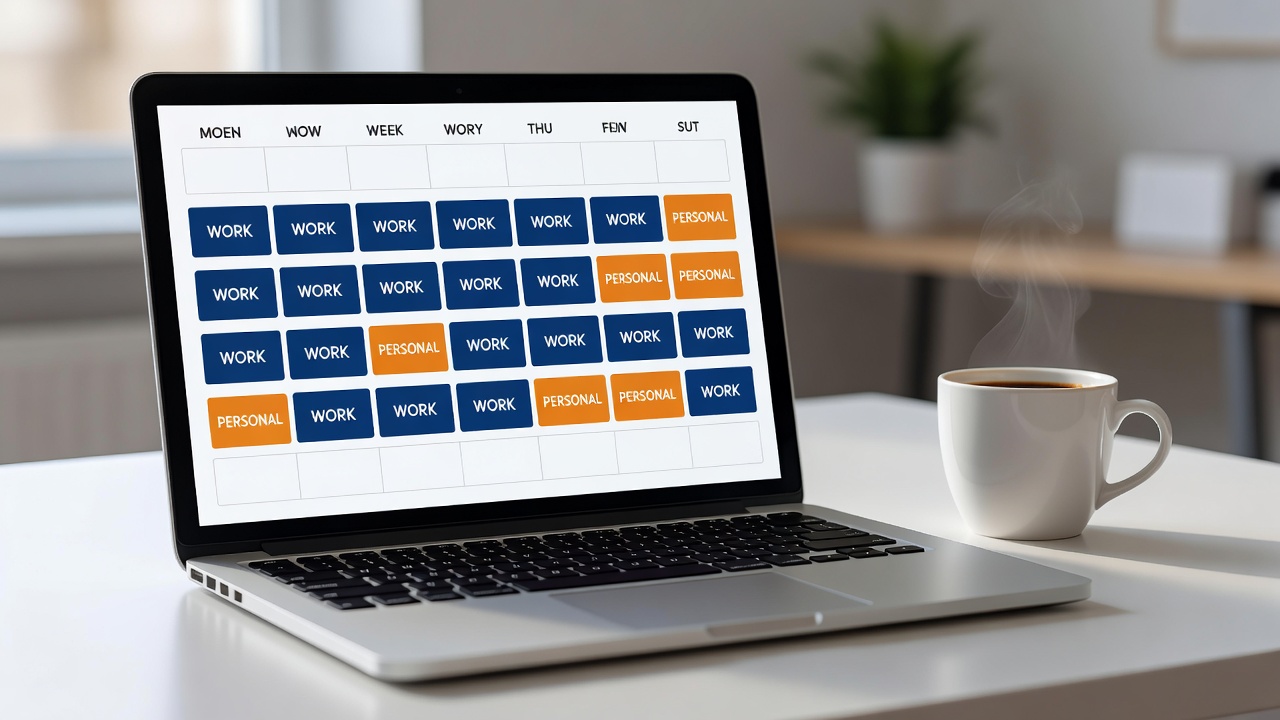
Time-blocking transforms vague intentions into structured routines by assigning specific periods to categories of activity. Begin with a one-week audit: log every task, noting duration and energy levels. Categorize blocks into deep work (creative or analytical tasks), shallow work (emails and admin), meetings, and protected personal time. Color-coding in your calendar reinforces visual separation—blue for focus sessions, green for collaborative calls, and orange for family or self-care.
Advanced variations include the Pomodoro-inspired micro-blocks of 25 minutes followed by five-minute breaks, or theme days where entire mornings focus solely on client deliverables. Adjust for energy patterns: schedule demanding work during peak alertness hours and reserve routine tasks for lower-energy periods. Weekly reviews allow refinement, ensuring the system evolves with changing project demands. This method prevents reactive firefighting and promotes consistent progress across all responsibilities.
Communication Scripts for Clients and Colleagues
Verbalizing boundaries prevents misunderstandings before they arise. Effective scripts are polite yet firm, offering alternatives rather than outright refusals. Sample templates include:
- Availability clarification: "My core working hours are 9 AM to 5 PM local time. I check messages outside these windows the following morning to maintain focus during dedicated periods."
- Deadline negotiation: "To ensure the highest quality, I allocate tasks within my scheduled blocks. Could we adjust the timeline to align with both our needs?"
- Scope management: "This request falls outside our agreed deliverables. Let's discuss how to prioritize it within the current project scope or add it to the next phase."
Practice delivering these in low-pressure situations first. Tailor tone to your relationship with each client—more formal for new engagements and conversational for long-term partners. Consistent use builds trust and reduces last-minute urgent requests.
Tech Tools to Enforce Off-Hours Automatically
Technology serves as a reliable enforcer when willpower alone falls short. Calendar applications allow recurring "focus" events with automatic status updates. Email tools with scheduled sending delay outgoing messages until the next workday. Focus-mode apps block distracting sites and mute notifications after set times. Experiment with integrations between your primary tools to create seamless handoffs, such as linking calendar events to communication platform statuses.
Start simple: enable built-in do-not-disturb features on your devices and test one additional automation weekly. Over time, these systems become invisible yet powerful allies that respect your defined limits without constant manual intervention.
Real-World Examples from Digital Nomads
Digital nomads provide living proof of boundary success. A freelance designer based in Bali coordinates with European clients during early mornings, then dedicates afternoons to local activities and family time. She shares a visible online calendar with household members, signaling deep-work periods to minimize interruptions. Another nomad operating between Portugal and U.S. clients uses asynchronous updates exclusively after 4 PM local time, allowing evenings for exploration while still meeting deliverables. These examples demonstrate that boundaries adapt to lifestyle rather than restricting it.
Comparing Boundary Tactics Across Time Zones
Time-zone differences demand customized approaches. Professionals whose hours overlap significantly with clients often enforce stricter evening cutoffs and rely on morning buffers. Those in distant zones leverage asynchronous norms more effectively, batching communications into one or two daily windows. For instance, Asia-based workers serving North American clients frequently front-load mornings and protect entire evenings, whereas European freelancers with mixed global clients may stagger availability across two short blocks. Testing small adjustments reveals which combination reduces friction most effectively for your specific network.
Step-by-Step 30-Day Implementation Plan
A phased rollout increases adherence and reveals what works best for your situation.
- Days 1–7: Conduct a detailed schedule audit. Define non-negotiable working hours and identify one recurring personal commitment to protect.
- Days 8–14: Introduce time-blocking across your calendar. Test two communication scripts with lower-stakes contacts and log responses.
- Days 15–21: Activate at least two tech automations and track interruption frequency daily. Adjust blocks based on observed patterns.
- Days 22–30: Conduct a full review, refine scripts and tools, and establish a monthly maintenance checkpoint to sustain progress.
Document wins and setbacks in a simple journal to reinforce momentum.
Addressing Common Challenges
Family interruptions often stem from unclear signals. Use visible cues like a dedicated workspace sign or noise-canceling headphones, and hold a brief household meeting to explain your schedule. Overcommitment arises from difficulty saying no; counter it by maintaining a running capacity tracker that lists current projects and available hours before accepting new work.
FAQ: Addressing Common Pitfalls
How do I handle family interruptions?
Communicate your schedule clearly in advance and use physical or digital signals during focused blocks. Involve family in planning personal time so everyone feels included.
What if I overcommit?
Build a weekly capacity review into your routine. Decline or defer requests that exceed available blocks, offering alternative timelines instead.
How do boundaries affect client relationships?
Most clients appreciate transparency. Clear limits often improve reliability and reduce last-minute crises.
Conclusion
Healthy boundaries convert remote work from a source of constant pressure into a sustainable, rewarding lifestyle. By applying time-blocking, refined communication, supportive technology, and the 30-day plan, freelancers and remote workers can protect their energy while delivering excellent results. Begin today with a simple audit, and watch your professional and personal life align more harmoniously throughout 2026.


No comments yet. Be the first!