 Jobboy

Introduction to Micro-Freelancing in 2026
Micro-freelancing offers beginners an accessible entry point into the gig economy through bite-sized remote tasks on platforms such as Fiverr and Upwork. These tasks typically involve quick deliverables that can be completed in under two hours, including short-form writing, basic graphic adjustments, data categorization, or simple video edits. This model differs from traditional freelancing by emphasizing volume and speed rather than lengthy contracts, allowing individuals to build income streams without quitting their day jobs.
The appeal lies in its low barrier to entry for those exploring side hustles while maintaining flexibility as digital nomads. As remote work continues to evolve, micro-freelancing provides practical opportunities to test skills, earn supplemental income, and transition gradually into full-time remote careers. This comprehensive guide walks through identifying marketable skills, creating optimized profiles, managing time across multiple gigs, and avoiding early mistakes to achieve sustainable growth.
Identifying In-Demand Micro-Skills
Market research forms the foundation of success in micro-freelancing. Popular categories include short content creation such as blog intros or social media captions, basic design services like resizing images or creating simple icons, transcription of short audio clips, and virtual assistance tasks including email sorting or calendar management. Beginners should examine platform search trends and completed order data to pinpoint skills with consistent demand.
Conduct a personal skills audit by listing abilities like language fluency, familiarity with tools such as Canva or Google Docs, or attention to detail in data handling. Test these against client requests by browsing active gigs and noting patterns in buyer needs. Prioritize tasks that align with your strengths and can be delivered rapidly to build momentum through repeat orders and positive feedback loops.
Setting Up Profiles on Major Platforms
Strong profiles convert browsers into clients by showcasing reliability and expertise. On Fiverr, create multiple gig listings with clear titles, detailed descriptions, and tiered packages that highlight fast delivery options. Include a professional headshot, banner image, and portfolio samples even if drawn from personal or volunteer work. On Upwork, craft a compelling overview that emphasizes quick turnaround and niche micro-services while completing the skills tests and account verification steps.
Incorporate relevant keywords naturally throughout descriptions and tags to improve visibility in platform searches. Respond promptly to inquiries and set clear expectations around revisions and delivery timelines. Verified payment methods and connected accounts further enhance credibility from the first day.
Pricing Your Services Competitively
Effective pricing balances accessibility for new clients with long-term profitability. Begin by reviewing comparable offerings in your chosen categories and positioning your rates to reflect value through speed and quality. Focus on package structures that encourage initial purchases while allowing room for upsells based on complexity.
Adjust pricing gradually as reviews accumulate and demand increases. Transparent communication about what each tier includes prevents misunderstandings and supports positive client relationships. Competitive positioning helps secure early momentum without compromising perceived quality.
Real-World Examples of Successful Micro-Freelancers
Many remote workers have scaled from micro-tasks to sustainable careers. One individual started with product description writing on Fiverr, completing short assignments for e-commerce sellers before expanding into full content strategies through referrals. Another began offering quick social media graphic edits on Upwork, using consistent delivery to secure ongoing contracts with small businesses seeking regular updates.
A third example involves a data entry specialist who focused on spreadsheet organization and formatting, eventually automating parts of the workflow to handle higher volumes efficiently. These cases illustrate how targeted micro-services can generate recurring income and open doors to broader opportunities when paired with strong client communication.
Time Management Techniques for Juggling Gigs
Balancing multiple short projects requires structured routines. Implement time-blocking by assigning specific hours each day to focused work sessions, separating client tasks from administrative duties like invoicing or profile updates. Use priority matrices to rank gigs by deadline and complexity, ensuring urgent deliverables receive attention first.
Establish buffers between tasks to accommodate revisions or unexpected issues. Digital nomads benefit from syncing calendars across devices and setting daily limits on active projects to prevent overload. Regular reviews of completed work help refine estimates for future gigs and maintain work-life balance.
Comparisons of Top Tools for Task Automation
Automation tools reduce repetitive effort and increase capacity. Zapier connects platforms for automatic notifications and file transfers, streamlining order management. Canva enables rapid creation of visuals with templates that speed up design micro-tasks. Google Workspace supports collaborative editing and document sharing for writing or data projects.
Evaluate options based on integration ease, learning curve, and relevance to your services. Start with free tiers to test workflows before committing. Effective tool selection frees time for higher-value activities such as client outreach and skill development.
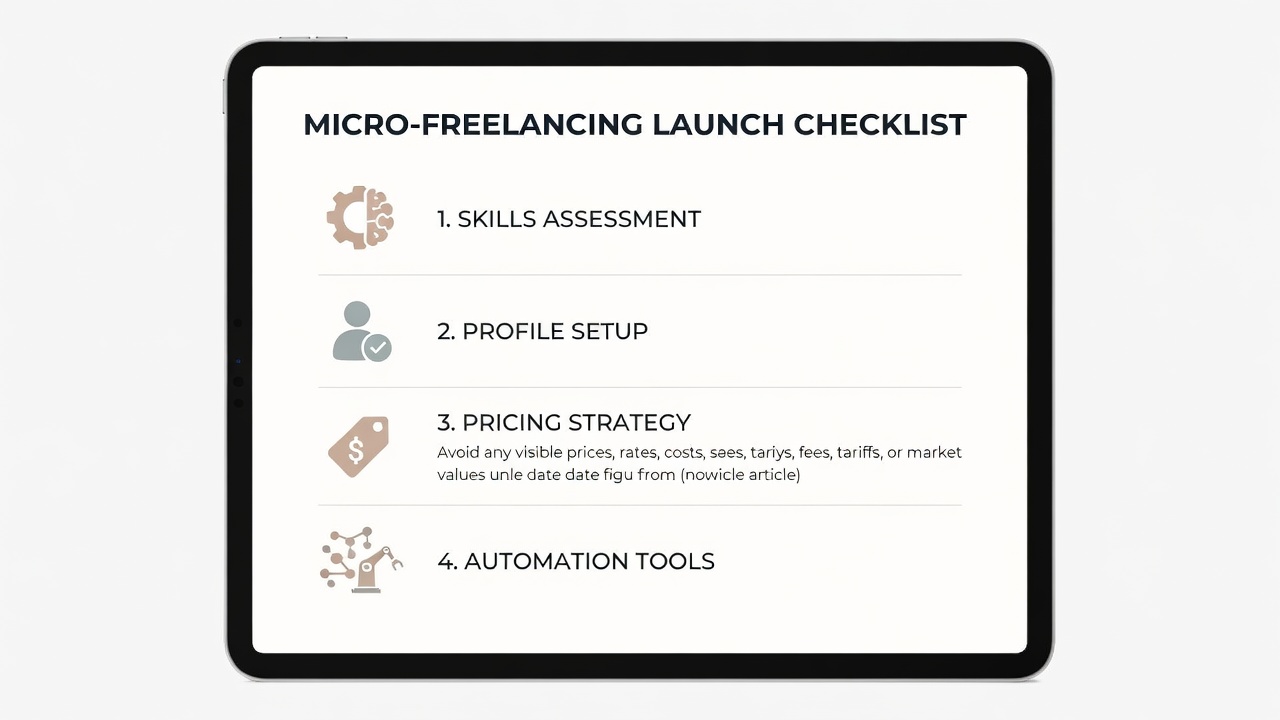
Step-by-Step Launch Checklist
- Research and select two to three micro-skills with proven platform demand by analyzing search volume and buyer activity.
- Register accounts on Fiverr and Upwork, then complete verification and profile optimization including photos and samples.
- Prepare three to five sample deliverables to demonstrate quality and style in your portfolio section.
- Define service packages with clear scopes, turnaround times, and revision policies tailored to beginner-friendly pricing.
- Share your gigs on professional networks to generate initial visibility and traffic.
- Monitor incoming orders, deliver promptly, and request reviews to build social proof rapidly.
- Adopt a basic time-tracking method to monitor hours spent and identify efficiency improvements.
Common Pitfalls to Avoid
New micro-freelancers frequently overlook profile maintenance, allowing descriptions to become outdated as skills evolve. Accepting every request without assessing fit can lead to mismatched expectations and negative feedback. Another common issue involves poor communication regarding scope changes, which erodes trust.
Establish boundaries early by declining projects outside your capacity and documenting all agreements. Consistent quality and proactive updates help maintain high ratings and encourage repeat business from satisfied clients.
FAQ: Payment Security and Client Acquisition
How secure are payments on micro-freelancing platforms?
Established platforms like Fiverr and Upwork employ escrow systems and verified processors that release funds only after task completion and client approval, protecting both freelancers and buyers.
What is the best way to acquire clients as a digital nomad?
Combine platform optimization with targeted outreach on networks such as LinkedIn. Delivering exceptional results on initial micro-tasks often leads to referrals and organic growth through positive reviews.
How can beginners protect against non-payment or disputes?
Stick to platform messaging systems for all communications and avoid external payment arrangements that bypass built-in protections.
Conclusion
Micro-freelancing provides a practical pathway for beginners to earn remotely in 2026 by starting with manageable tasks and scaling through experience. By focusing on in-demand skills, polished profiles, disciplined time management, and strategic tool use, individuals can create flexible income while avoiding common setbacks. Consistent effort and attention to client satisfaction turn small gigs into meaningful remote opportunities.


No comments yet. Be the first!