 Jobboy

Introduction: The AI-Powered Shift in Remote Work
The landscape of remote freelancing has evolved dramatically by 2026, with artificial intelligence emerging as a core driver of efficiency and scalability. Freelancers operating in the gig economy now leverage AI to handle repetitive tasks, generate high-quality content, and secure clients faster than ever before. This transformation aligns with broader trends in online work and side hustles, enabling digital nomads to expand operations without proportional increases in workload. Many professionals who once juggled multiple platforms manually now rely on intelligent systems that learn from past projects to suggest improvements and optimize schedules automatically.
According to recent analyses from authoritative sources, AI integration helps freelancers achieve measurable productivity gains. Whether managing side hustles or full-time remote careers, professionals are adopting these technologies to stay competitive in an increasingly crowded marketplace. The shift is particularly noticeable among those who balance full-time jobs with evening or weekend freelance projects, where time savings compound quickly into higher earnings potential and reduced burnout.
AI for Content Creation: Streamlining Writing and Design Workflows
Content creation remains a cornerstone for many freelancers, and AI tools have revolutionized this area. Platforms now assist with drafting articles, optimizing SEO, and even generating visual assets. Beginners can start by integrating tools that suggest outlines based on keywords like "online work" or "side hustle." From there, users refine tone, add personal insights, and ensure the final piece matches client brand guidelines.
Practical steps include selecting an AI writing assistant, inputting project briefs, and iteratively refining outputs. For design tasks, AI image generators produce custom graphics tailored to client needs. This reduces turnaround times significantly while maintaining quality. One common workflow involves feeding research notes into an AI summarizer first, then expanding sections with targeted prompts that incorporate specific examples from the freelancer's own experience.
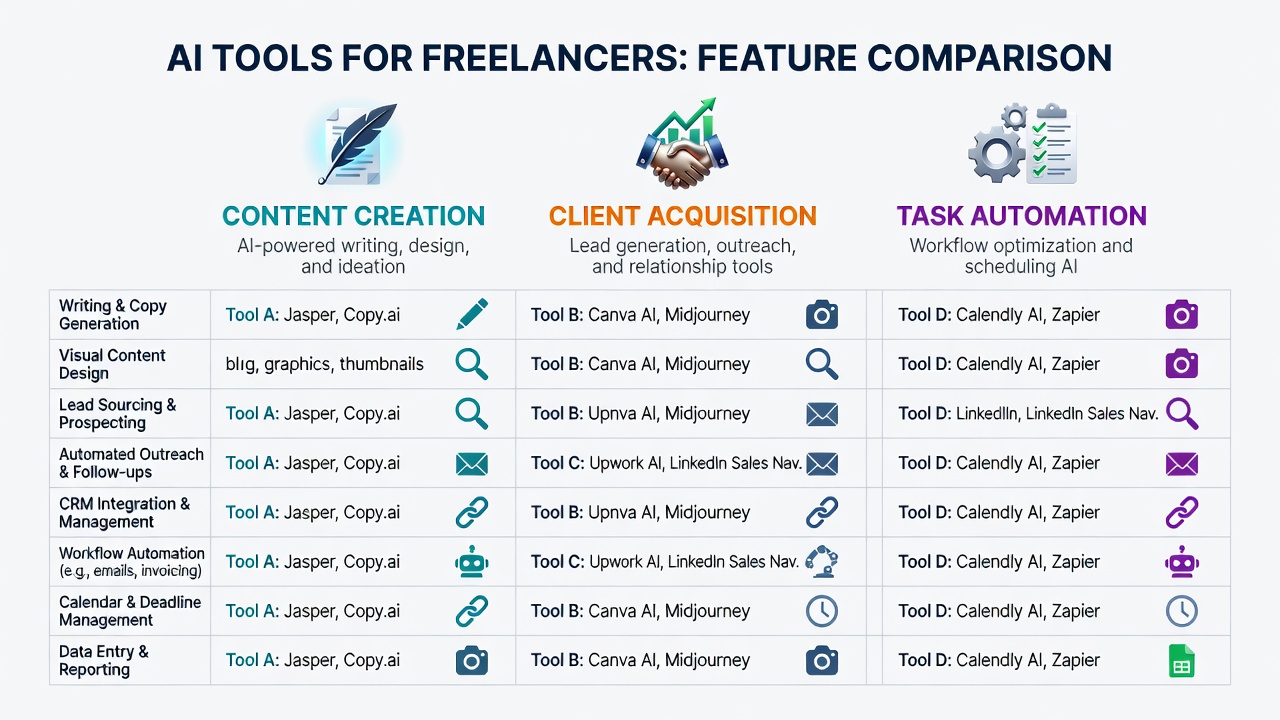
Comparison of Leading AI Content Platforms
When evaluating options, freelancers often compare features such as context retention, collaboration capabilities, and export flexibility. Tool A excels in long-form writing with strong contextual understanding, making it ideal for in-depth reports or blog series. Tool B focuses on rapid ideation and multi-language support for global clients, allowing seamless switching between English, Spanish, and Mandarin outputs. Tool C integrates seamlessly with design software for end-to-end content production, enabling writers to embed generated visuals directly into documents without leaving the platform.
Real-world case studies demonstrate freelancers doubling output within weeks of adoption. For instance, a content strategist based in Southeast Asia reported completing four client deliverables in the time previously required for two by combining outline generation with automated research summaries.
Client Acquisition and Lead Generation Through AI
Securing gigs is often the biggest hurdle for remote workers. AI-powered analytics now scan job boards, predict client needs, and personalize outreach. Digital nomads report scaling client bases by using AI to analyze market trends and automate proposal drafting. These systems can flag high-potential opportunities based on past win rates and suggest customized pricing tiers that align with current demand signals.
Actionable examples include setting up automated alerts for relevant opportunities and using sentiment analysis to refine pitches. This approach has proven effective for side hustle operators balancing multiple income streams. A graphic designer in Europe described how AI helped identify niche markets in sustainable branding, leading to three new retainers within a single quarter after implementing trend-forecasting features.
Bureau of Labor Statistics data highlights the growing freelance sector, underscoring the need for efficient acquisition methods that go beyond traditional networking.
Task Automation: Freeing Time for High-Value Activities
Automation via AI handles invoicing, scheduling, and research, allowing freelancers to focus on creative and strategic work. Integration begins with identifying repetitive processes and mapping them to suitable AI solutions. For example, calendar tools can now suggest optimal meeting times across time zones while automatically generating follow-up summaries that include action items extracted from conversation transcripts.
Many digital nomads combine these automations with project management dashboards that track deadlines and flag potential bottlenecks before they escalate. This layered approach creates a reliable safety net for those managing five or more concurrent clients across different continents.
Real Case Studies: Digital Nomads Scaling Operations
Consider the story of a copywriter who transitioned from local gigs to international clients by using AI to localize marketing copy for different cultural contexts. Within six months, her monthly project volume increased by 60 percent while her average revision rounds dropped noticeably. Another example involves a virtual assistant who automated email triage and research compilation, freeing up ten hours weekly for higher-paying strategy consultations.
These cases illustrate how targeted AI adoption creates compounding advantages. Freelancers who document their workflows and share lessons in online communities often accelerate their own learning curves through peer feedback.
Mistakes to Avoid When Implementing AI
- Over-relying on default settings without customizing prompts to match individual style and client preferences.
- Ignoring data privacy settings, which can expose sensitive client information during automated processing.
- Skipping regular reviews of AI-generated outputs, leading to occasional factual inaccuracies that damage professional reputation.
- Attempting to automate every task immediately instead of starting with one high-impact workflow and expanding gradually.
Ethical Considerations in AI Adoption
As AI becomes ubiquitous, freelancers must navigate issues like data privacy and algorithmic bias. Transparency with clients about AI use builds trust and often leads to stronger long-term partnerships. Resources from Federal Trade Commission provide guidance on responsible implementation, including best practices for disclosing automated assistance in deliverables.
Case studies of digital nomads show ethical AI use leading to sustainable growth and repeat business. Professionals who establish clear boundaries around data usage and regularly audit their tools for bias report fewer compliance issues and higher client satisfaction scores.
Future Predictions for 2026 and Beyond
Looking ahead, AI is expected to further personalize freelancing experiences, with predictive tools anticipating market shifts and recommending skill upgrades before demand spikes. Integration with emerging hardware such as portable translation devices may also open new service categories for language-specialized freelancers.
Common challenges like tool overload can be mitigated through phased rollouts and community forums where users compare notes on effective configurations. By maintaining a balanced approach that combines AI efficiency with human creativity, remote workers position themselves for continued success in the evolving gig economy.
FAQ: Common Implementation Challenges
How do beginners start with AI tools?
Begin with free trials of popular platforms and focus on one workflow at a time, such as content drafting. Set aside an initial two-week period to experiment daily before committing to paid subscriptions.
What about data security concerns?
Choose tools with strong encryption and review privacy policies regularly. Many platforms now offer enterprise-grade options that include audit logs and role-based access controls suitable for handling client data.
Will AI replace human freelancers?
No—AI augments capabilities, allowing professionals to handle more complex projects and deliver higher value. The human elements of strategy, empathy, and original insight remain irreplaceable in most client relationships.
Are there predictions for AI in side hustles?
By late 2026, integration is forecasted to become standard, boosting overall gig economy participation. Early adopters who refine their processes now will likely enjoy competitive advantages as more competitors enter the space.


No comments yet. Be the first!