 Jobboy

Introduction: Why Make the Switch in 2026?
The shift from traditional corporate employment to remote freelancing has accelerated, driven by demands for flexibility and economic resilience. In 2026, professionals are leveraging data-driven approaches to validate niches and build diversified income streams. This playbook provides a comprehensive roadmap covering skills evaluation, financial preparation, and practical execution steps for a sustainable career change.
Remote freelancing offers autonomy but requires careful planning to mitigate risks like income variability. Many corporate workers succeed by treating the transition as a strategic project rather than a leap of faith. Economic uncertainty in recent years has pushed more employees toward self-employment, where they can control their schedules and pursue multiple revenue sources simultaneously. Understanding the full scope of this move helps avoid common early setbacks and sets the foundation for long-term success.
Assessing Your Skills and Validating Niches with Data Analytics
Begin with an honest skills audit. List technical abilities, soft skills, and industry knowledge from your corporate experience. Break down past projects into transferable components such as project management, data analysis, stakeholder communication, and specialized software proficiency. Tools like LinkedIn analytics or freelance marketplace search data can reveal demand trends across regions and industries. Focus on high-value niches such as digital marketing, software development, or content strategy where corporate expertise translates directly into client value.
Validate demand by analyzing search volumes, job postings, and competitor activity on major platforms. Successful transitions often involve niches with steady client needs rather than saturated markets. Multilingual freelancers, for instance, can target global creator-economy clients needing localized content, translation services, or cross-cultural marketing campaigns. Use free public data sources to cross-reference trends and identify underserved sub-niches, then test small offerings to confirm interest before fully committing.
Building Financial Buffers Before the Leap
Establish a robust safety net to cover living expenses during the ramp-up phase. Aim for at least six months of reserves, accounting for taxes and irregular payments. This buffer reduces stress and allows focus on quality client work over quick gigs that may not align with your expertise. Review monthly expenses in detail, including housing, healthcare, and professional tools, then adjust lifestyle habits where possible while still employed.
Track expenses meticulously and explore side income while still employed. Diversification strategies, such as offering multiple service tiers or retainer packages, help stabilize earnings over time. Consider opening a dedicated business account early to separate personal and professional finances. This preparation phase often determines whether the transition feels empowering or overwhelming.
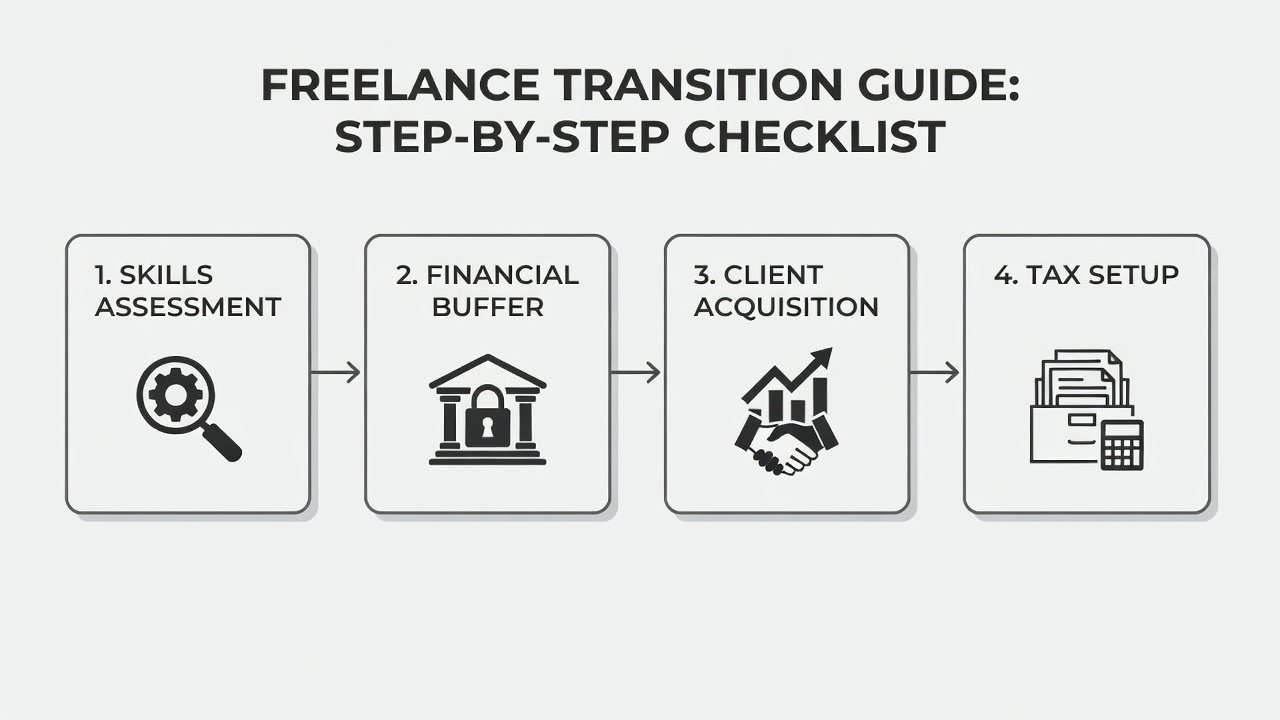
Step-by-Step Transition Checklist
- Conduct skills inventory and identify 2-3 target niches based on demand data.
- Build a professional portfolio showcasing corporate projects (anonymized if needed) with clear results and metrics.
- Set up essential tools: business bank account, invoicing software, time-tracking apps, and secure cloud storage.
- Secure initial clients through networks or platforms before resigning to create momentum.
- Establish legal and tax structures early, including business registration and insurance review.
- Create a 90-day post-transition plan with weekly milestones for client outreach and skill refinement.
Real-World Case Studies of Successful Transitions
Consider Sarah, a former marketing manager who transitioned in early 2026. She validated her niche using public market data, built a buffer over nine months, and landed her first three clients via referrals from former colleagues. Within 120 days, she achieved income parity with her corporate salary through diversified projects including strategy consulting and content creation for mid-sized brands. Her key success factor was consistent weekly outreach combined with a strong personal website showcasing case studies.
Another example is Alex, a bilingual project manager who leveraged creator-economy opportunities. By offering specialized consulting to international teams, he avoided common pitfalls like underpricing and scaled to multiple revenue streams including workshops and ongoing retainers. Alex credits early tax planning and boundary-setting for maintaining work-life balance across time zones. These stories illustrate that preparation and adaptability outperform rushed decisions.
Comparing Popular Freelance Platforms
Evaluate platforms based on fees, client quality, and niche fit. Upwork suits broad opportunities with built-in tools for proposals and payments, while specialized sites like Toptal focus on vetted experts with higher average project values. Fiverr works well for packaged services but may limit long-term client relationships. Research each for 2026 updates on payment protections and dispute resolution. Many freelancers start on one platform and gradually shift to direct client relationships to reduce fees and increase control.
Small Business Administration resources offer guidance on choosing structures that align with freelance operations. Additional insights on labor market trends can be found through government statistical portals that track self-employment growth.
Practical Tips for Client Acquisition
Start with warm networks from your corporate career. Attend virtual industry events and contribute value on professional forums without immediate selling. Cold outreach via personalized LinkedIn messages yields results when tailored to client pain points and includes specific examples of past wins. Consistent content marketing, such as case studies on your website or guest posts on industry blogs, attracts inbound leads over time. For multilingual freelancers, creating content in multiple languages expands reach into international creator-economy markets where demand for localized expertise is rising.
Tax Setup and Compliance Essentials
Register as a sole proprietor or LLC depending on risk tolerance and liability concerns. Track all income and expenses meticulously using dedicated software. Quarterly estimated payments prevent surprises at filing time. Common deductions include home office costs, software subscriptions, and professional development. Consult resources from official government sites for accurate filing procedures and stay updated on any 2026 regulatory changes affecting independent contractors.
IRS small business guidelines provide current forms and deadlines relevant to freelancers. Proper setup from day one avoids costly corrections later and supports clean financial records for loans or scaling.
Avoiding Common Pitfalls with Examples
One frequent mistake is underestimating taxes—set aside a consistent percentage of earnings immediately. Another is poor boundaries leading to burnout; multilingual freelancers often juggle time zones, so define availability clearly in client agreements. Creator-economy examples show that skipping contracts results in payment disputes—always use written agreements outlining scope, timelines, and revision policies. Additional pitfalls include neglecting personal branding and failing to diversify clients, which leaves income vulnerable to single-point failures.
FAQs on Timeline Expectations and First-90-Day Milestones
How long does the full transition typically take?
Most professionals require 3-9 months of preparation while employed, followed by 3-6 months to reach stable income. Individual timelines vary based on niche demand, existing networks, and marketing consistency.
What are key first-90-day milestones?
Days 1-30: Finalize portfolio, set up business tools, and secure first paid gig. Days 31-60: Establish daily routines, refine proposals, and hit 50% of target income. Days 61-90: Diversify clients, collect testimonials, and adjust service offerings based on feedback.
How should I handle health insurance during the switch?
Research marketplace options or professional association plans well before leaving corporate benefits. Factor these costs into your financial buffer calculations to maintain coverage without gaps.
Conclusion
The 2026 corporate-to-freelance transition rewards preparation and adaptability. By focusing on validated skills, financial resilience, and strategic client building, professionals can achieve sustainable remote careers with diversified income. Start small, iterate based on results, and maintain focus on long-term resilience while monitoring industry shifts that may open new opportunities.

No comments yet. Be the first!