 Jobboy

Introduction to Remote Freelancing in the Creator Economy
The creator economy continues to expand rapidly in 2026, offering remote freelancers abundant opportunities in content support roles and specialized services. As creators scale their brands across platforms, they increasingly rely on skilled freelancers for everything from video editing to audience growth strategies. This guide explores actionable paths to success, from niche identification to overcoming common hurdles like algorithm changes. Remote freelancers now form a critical backbone for creators who need consistent output without managing full-time staff, allowing both parties to operate flexibly from any location.
Identifying High-Demand Creator Niches
Success starts with targeting niches where demand outpaces supply. Popular areas include sustainable living, AI-assisted productivity, and personalized wellness. Research trending topics on major platforms and analyze engagement metrics to spot gaps. For instance, micro-niches like eco-friendly pet products or niche gaming communities often yield higher collaboration rates for freelancers. To identify opportunities, monitor search trends weekly, join creator forums, and test small pilot projects in emerging areas such as mental health for remote workers or vintage fashion restoration. This targeted approach helps freelancers position themselves as specialists rather than generalists, leading to higher retention from busy creators.
Building Audience Monetization Strategies
Freelancers can support creators by developing layered revenue models. These include subscription tiers, exclusive memberships, and affiliate programs. Help creators diversify beyond ad revenue by implementing email funnels and community-driven sales. Effective strategies emphasize consistent value delivery to convert followers into paying supporters. Break down monetization into phases: first audit existing audience data, then test low-barrier offers like digital downloads, and finally launch premium tiers. Practical examples show that creators who blend live sessions with evergreen content see steadier income growth over time.
Selecting Remote-Friendly Platforms
Choose platforms that facilitate seamless remote work. Leading options include Upwork for long-term contracts and specialized creator marketplaces for niche gigs. Focus on tools with strong project management features and global payment support to maintain steady workflows from anywhere. Compare options by evaluating user reviews, fee structures, and integration capabilities with common creator tools. Many freelancers also leverage direct outreach via social media to bypass platform fees while building personal networks. Always verify platform policies on international payments and dispute resolution before committing to projects.
Brand Collaboration Tactics
Navigating partnerships requires clear communication and alignment on deliverables. Freelancers should assist creators in crafting pitch templates, negotiating fair terms, and tracking performance metrics. Always reference official guidelines from the Federal Trade Commission to ensure compliant disclosures in sponsored content. Step-by-step tactics include creating media kits with audience demographics, setting clear KPIs for each collaboration, and following up with performance reports. Common mistakes to avoid are vague contracts and overlooking audience authenticity, which can damage long-term brand relationships.
Scaling Income with Digital Products
Digital products like templates, courses, and presets offer scalable revenue. Guide creators in product creation, from ideation to launch, using remote collaboration tools. This approach reduces reliance on live content and builds passive income streams over time. Start by identifying pain points in the creator's audience through surveys, then develop products that solve those issues directly. Successful freelancers often bundle multiple products or create membership portals that encourage recurring purchases. Track sales analytics to refine offerings and expand into complementary items such as workbooks or automation scripts.
Leveraging Emerging Tools for Content Production
Stay ahead with AI-driven editing software, automated scheduling apps, and analytics dashboards. These tools streamline production, allowing freelancers to handle larger client loads efficiently. Experiment with integrations that boost output quality without increasing hours worked. For example, combine script generation tools with video editors to accelerate turnaround times. Remote freelancers benefit from cloud-based storage solutions that enable real-time feedback loops with clients across time zones. Regularly update your toolkit by testing new releases and attending virtual creator workshops to maintain a competitive edge.
Practical Examples from Successful Remote Creators
Consider a freelance editor who built a six-figure business supporting wellness influencers through remote contracts by specializing in short-form video optimization. Another example involves a strategist who scaled a creator's newsletter into a membership community, generating consistent income via diversified tactics like exclusive Q&A sessions. A third case features a graphic designer who created reusable asset libraries for multiple gaming creators, allowing her to serve clients asynchronously. These cases highlight the value of specialization and adaptability in building sustainable remote careers.
Beginner Checklist for Aspiring Freelancers
- Define your core skills and target niches through self-assessment and market research.
- Set up professional profiles on 2-3 remote platforms with optimized portfolios.
- Create a portfolio showcasing relevant creator work samples and case studies.
- Research tax obligations via the IRS website and consult a professional if needed.
- Establish contracts and payment terms upfront to protect both parties.
- Test emerging tools with a trial project before offering them to clients.
- Network in creator communities to secure initial referrals and testimonials.
- Track time and deliverables with dedicated project management software.
- Build an emergency fund to handle income variability common in freelancing.
- Review and update your services quarterly based on client feedback and trends.
Comparisons of Revenue Streams
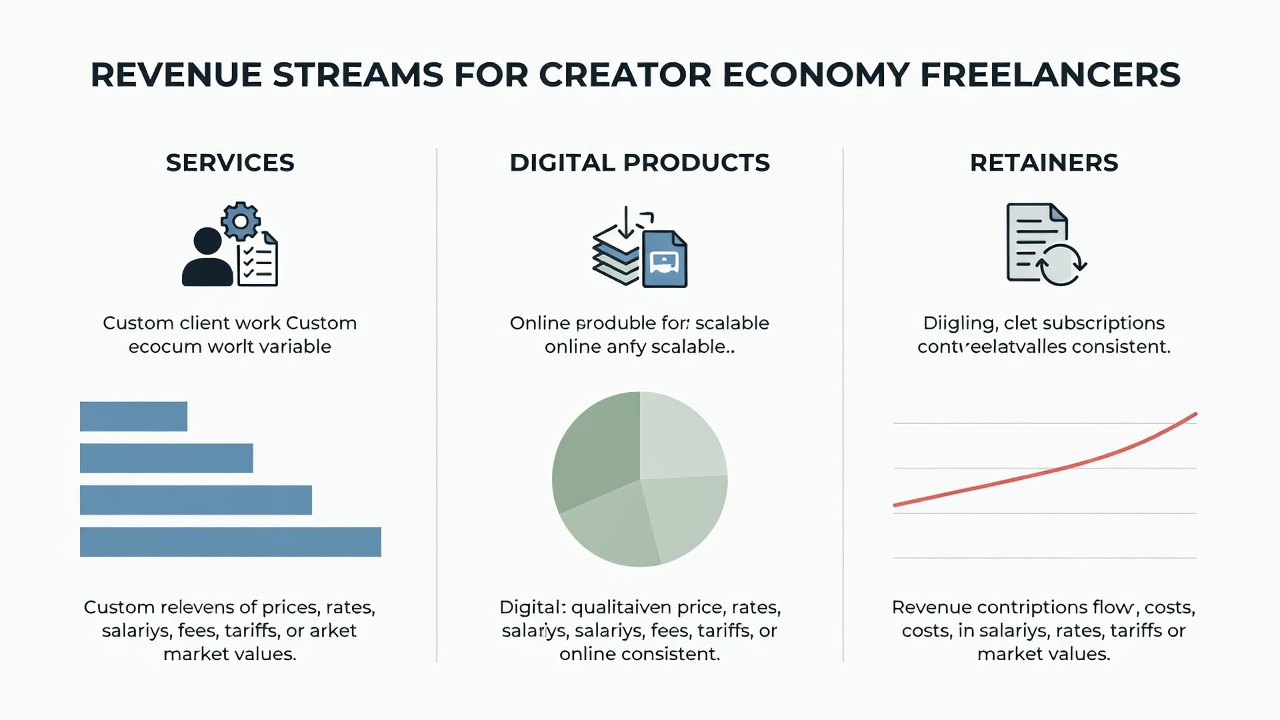
Direct services like editing provide immediate pay but limit scale. In contrast, digital products and retainers offer recurring income with higher long-term potential. Compare based on time investment: service work averages higher hourly returns initially, while products compound earnings passively. Hybrid models often deliver the best stability by combining one-off projects with ongoing retainers. Evaluate each stream by factors such as upfront effort, client acquisition cost, and renewal likelihood. Freelancers who diversify across streams report greater resilience during platform changes or economic shifts.
Addressing Challenges Like Algorithm Shifts and Income Stability
Platform changes can disrupt visibility overnight. Mitigate this by diversifying across channels and focusing on owned audiences like email lists. For income stability, maintain a mix of short-term gigs and retainer clients, and build an emergency fund to buffer fluctuations. Additional strategies include creating backup content calendars and monitoring industry reports from sources like the Small Business Administration. Address burnout by setting boundaries on client hours and automating repetitive tasks. Long-term success comes from viewing challenges as opportunities to refine processes and expand skill sets.
Conclusion
Remote freelancing in the creator economy rewards those who adapt quickly and deliver specialized value. By mastering niches, tools, and monetization, freelancers can build resilient careers. Start with the checklist above and iterate based on real-world results to achieve sustainable growth in this dynamic space.
FAQs
How do I handle contracts for creator work?
Use templates outlining scope, revisions, and payment schedules. Consult legal resources or the Small Business Administration for guidance on freelance agreements to avoid common pitfalls.
What are key tax considerations for remote freelancers?
Track all income and expenses meticulously. Quarterly estimates help avoid surprises, and dedicated software simplifies filing while ensuring compliance with evolving regulations.
Any tips for an effective work-from-home setup?
Prioritize ergonomic furniture, reliable high-speed internet, and dedicated workspace boundaries to maintain productivity and work-life balance over extended periods.
How can freelancers stay updated on algorithm changes?
Follow official platform blogs, join creator Discord communities, and experiment with small tests to observe impacts firsthand before major adjustments.


No comments yet. Be the first!