 Jobboy

Introduction: Thriving as a Remote Freelancer in the 2026 Creator Economy
The creator economy continues to offer significant opportunities for remote freelancers specializing in content creation and community management. Building resilience requires more than talent—it demands proactive financial buffers, diversified income, and smart tracking systems. This playbook delivers practical, evidence-based steps tailored for solo workers seeking stability amid evolving market conditions. Remote freelancers often face income volatility due to platform algorithm changes, client budget shifts, and broader economic pressures. By focusing on high-paying niches and implementing structured strategies, individuals can create sustainable careers that withstand uncertainty.
Building Strong Financial Buffers in High-Paying Niches
Remote freelancers in content creation and community management should prioritize emergency reserves equivalent to several months of essential expenses. Start by auditing current earnings and identifying gaps in high-value services such as branded content campaigns or membership community moderation. Allocate a fixed percentage of each project fee directly into a separate high-yield savings account to create automatic buffers without disrupting cash flow. Consider negotiating longer-term retainers with clients to smooth out monthly income. For example, a content creator might secure quarterly contracts with brands for video series while maintaining a community management role that provides predictable weekly deliverables. Review your buffer quarterly and adjust for lifestyle changes or new expenses. This foundation allows freelancers to take calculated risks, such as experimenting with new content formats or platforms, without immediate financial stress.
Diversification Tactics for Multiple Income Streams
Relying on a single client or platform creates vulnerability. Successful freelancers spread revenue across Patreon monetization, affiliate partnerships, and additional platform streams. On Patreon, creators offer exclusive tiers such as behind-the-scenes content or live Q&A sessions, generating recurring monthly support. Affiliate partnerships with established programs allow freelancers to earn commissions by recommending tools and services their audience already uses. Multiple platform income streams, including YouTube memberships, newsletter sponsorships, and freelance marketplaces, reduce dependence on any one source. Real-world examples include community managers who transitioned from single-client retainers to hybrid models combining Patreon subscriber revenue with affiliate links shared in Discord communities. These approaches create compounding effects where each stream reinforces the others. Another tactic involves creating digital products like templates or guides sold through personal websites, which can generate passive income once established.
Additional examples show freelancers using sponsored content deals on Instagram alongside community management contracts on platforms like Discord or Slack. Diversification also means geographic flexibility—many remote workers serve international clients to tap into different time zones and markets, further stabilizing cash flow during regional downturns.
Step-by-Step Guidance for Profit Tracking Dashboards
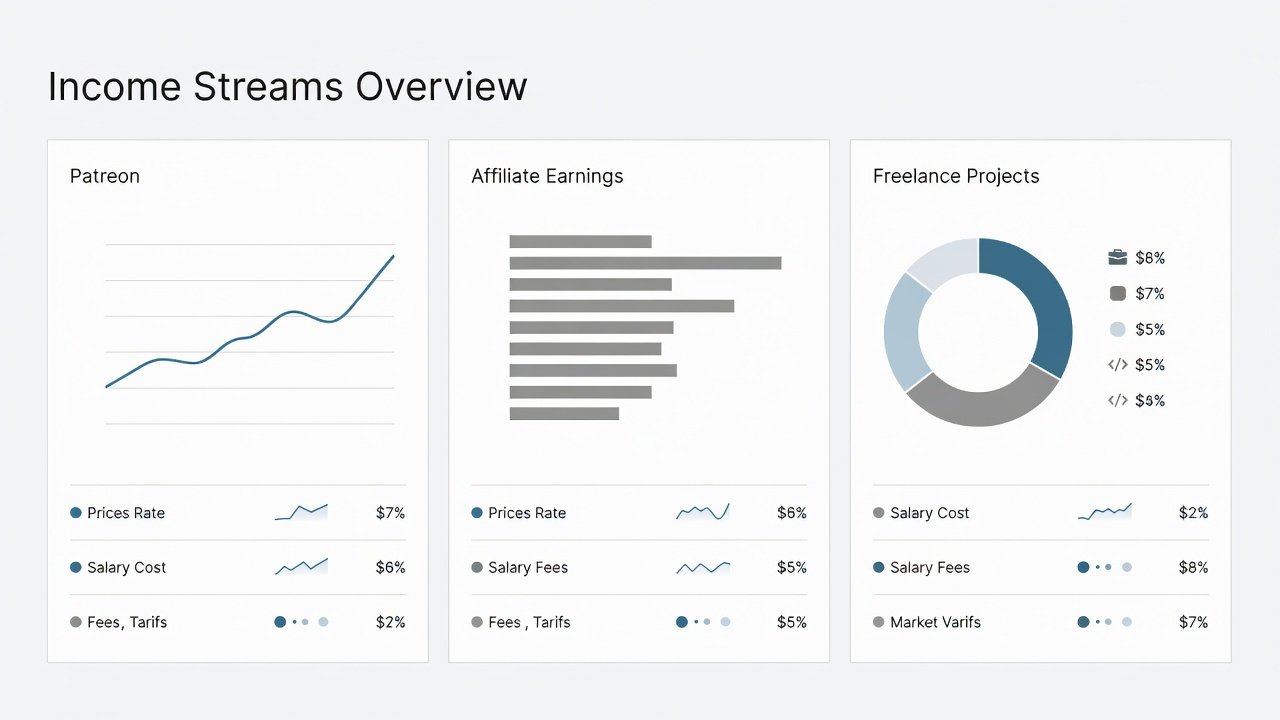
Effective income monitoring begins with selecting a centralized dashboard that aggregates data from bank accounts, payment processors, and platform analytics. Connect sources weekly to review net profit after fees and taxes. Categorize income by stream—content creation projects, community management retainers, and passive affiliates—to spot trends quickly. Set automated alerts for revenue dips below a defined threshold, prompting immediate diversification actions. Begin by exporting data from each platform into your chosen tool, then create custom views that highlight profit margins per client or service type. Monthly reviews should include comparisons against the same period in prior years to account for seasonal fluctuations common in the creator space.
Handling 2026 Economic Shifts
Economic changes in 2026 emphasize adaptability. Monitor inflation indicators and platform policy updates that affect creator payouts. Adjust pricing for services quarterly based on demand signals and maintain flexible contracts that allow scope adjustments. Freelancers who diversify early maintain stability when certain niches experience temporary slowdowns. Stay informed through industry reports from reputable sources and participate in professional networks where peers share insights on emerging trends. Building relationships with multiple payment processors can also protect against disruptions in any single service.
Case Studies of Successful Digital Nomads
One digital nomad specializing in community management built a six-stream portfolio including Patreon exclusives, affiliate marketing through a personal newsletter, and consulting gigs on two freelance platforms. After implementing a profit dashboard, she identified that affiliate revenue grew significantly year-over-year and reallocated time accordingly. Another content creator used multiple platform strategies to weather algorithm changes on a primary video site by shifting focus to written content and membership communities, preserving overall income levels. A third freelancer, focused on educational content, combined live webinars with evergreen online courses and brand partnerships to create a resilient model that performed well even during periods of reduced client spending. These cases illustrate the importance of regular review and willingness to pivot based on data.
Comparing Tools for Income Monitoring
Popular options include spreadsheet-based systems for full customization, dedicated apps like QuickBooks Self-Employed for automated categorization, and all-in-one platforms that integrate with Patreon and affiliate networks. Spreadsheet solutions offer zero ongoing cost but require manual updates. Automated tools reduce errors and save time, making them preferable for freelancers managing five or more income streams. Evaluate based on ease of integration with existing payment accounts and reporting depth. Consider factors such as mobile accessibility for digital nomads and the ability to forecast future earnings based on historical patterns.
Mistakes to Avoid When Building Resilience
Common pitfalls include over-relying on one platform without backups, neglecting tax withholdings from irregular income, and failing to track expenses separately from revenue. Another frequent error is underpricing services in an attempt to win clients quickly, which erodes long-term profitability. Freelancers should also avoid ignoring contract details around payment terms and intellectual property rights. Regular audits of all income sources help catch these issues early before they compound into larger problems.
FAQs on Avoiding Common Pitfalls
- How many income streams should I start with? Begin with three complementary streams to avoid overwhelm while still achieving meaningful diversification.
- What if a platform changes its monetization rules? Maintain active profiles on at least two backup platforms and review terms of service monthly.
- How do I handle inconsistent affiliate payouts? Track them separately in your dashboard and treat them as supplementary rather than primary revenue.
- Is Patreon suitable for community managers? Yes, many offer tiered access to private communities and resources that subscribers value highly. Learn more at Patreon.
- How should I handle self-employment taxes? Set aside a portion of earnings regularly and consult official guidance from IRS.gov for quarterly estimated payments.
- What diversification works best for beginners? Start by adding one affiliate program or membership tier to your existing freelance work before expanding further.
Conclusion
Remote freelancers who implement these resilience strategies—financial buffers, diversified monetization via Patreon and affiliates, robust dashboards, and proactive responses to economic shifts—position themselves for sustained success in the 2026 creator economy. Consistent application of these tactics transforms volatile freelance work into a stable, scalable career. By combining practical tracking with strategic diversification, solo remote workers can navigate uncertainty with confidence and build lasting professional stability.

No comments yet. Be the first!