 Jobboy

Introduction to 2026 Creator Economy Niches
The creator economy continues to evolve rapidly, offering remote freelancers unique opportunities to build sustainable income through niche newsletters. In 2026, low-competition areas are emerging where specialized knowledge commands dedicated audiences willing to pay for curated insights. This guide provides frameworks, tactics, and real-world examples to help freelancers launch and scale these ventures into reliable revenue streams that complement or replace traditional client work.
Freelancers often face income instability due to project-based gigs. Niche newsletters provide recurring revenue while allowing full creative control. By focusing on underserved topics, creators can achieve higher engagement and conversion rates compared to saturated markets like general productivity or finance advice.
Emerging 2026 Niches for Newsletter Success
Successful niches in the coming year focus on hyper-specific interests that blend professional expertise with personal passion. Examples include sustainable urban farming techniques for remote professionals, AI ethics in creative industries, personalized longevity protocols for freelancers, micro-mobility solutions in emerging markets, and ethical supply chain management for small e-commerce operators. These areas attract engaged readers because they address timely pain points without saturation from mainstream creators.
Additional promising niches encompass climate adaptation strategies for digital nomads, neurodiversity-friendly productivity systems, and decentralized finance tools tailored to independent contractors. Freelaners should prioritize niches intersecting their existing skills with growing trends like remote work adaptation and technology integration. Research shows that audiences in these segments demonstrate higher retention rates compared to broad topics, often leading to organic word-of-mouth growth.
Niche Selection Framework
Choosing the right niche requires a structured approach. Start by auditing your expertise and interests through a simple matrix: rate topics on passion level, market demand signals from search trends, and competition density. Next, validate potential by analyzing engagement on platforms like LinkedIn and Reddit for related discussions. Finally, test for monetization viability by reviewing similar paid content offerings.
- Map personal skills to audience problems through brainstorming sessions
- Use free keyword tools to gauge search volume and intent
- Assess competitor newsletters for gaps in coverage and unique angles
- Project long-term relevance based on industry reports and emerging technologies
- Conduct small-scale surveys in target communities to confirm willingness to pay
This framework helps avoid common pitfalls like choosing overly broad topics that fail to build loyalty.
Audience Building via Social and SEO Tactics
Growing subscribers demands consistent cross-channel efforts. On social platforms, share teaser content and engage in targeted communities to drive initial sign-ups. SEO tactics involve optimizing newsletter landing pages with long-tail keywords and creating supporting blog posts that link back to your signup form.
Repurpose core ideas across formats to maximize reach while maintaining authenticity. Consistent value delivery builds trust essential for conversions. For instance, posting weekly threads on X about niche trends can funnel followers to your newsletter opt-in page. Combining this with guest posts on established blogs amplifies visibility. Track referral sources to refine tactics over time.
Step-by-Step Launch Timelines
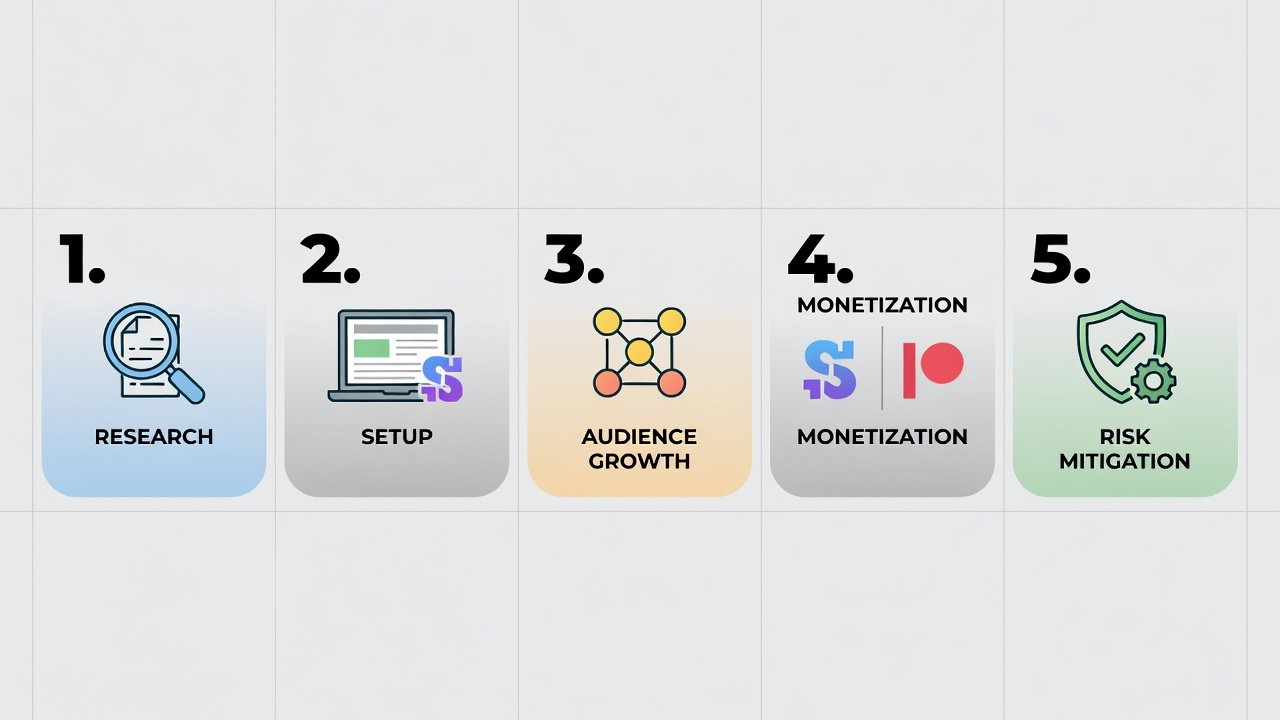
A typical launch spans 8-12 weeks. Weeks 1-2 focus on niche validation and content planning, including competitor analysis and outlining 10 initial issues. Weeks 3-5 involve setting up the platform, designing templates, and creating a content backlog. Weeks 6-8 emphasize pre-launch audience teasing through social posts and email outreach to warm contacts. Post-launch, dedicate time to iteration based on early feedback, such as adjusting send frequency or content depth.
Practical milestones include securing the first 100 subscribers before introducing paid tiers and testing two different subject line styles in the initial month.
Monetization Paths Including Substack and Patreon
Primary revenue comes from subscriptions, with platforms like Substack offering seamless paid tiers and Patreon enabling tiered community perks. Diversify further through sponsorships, digital products, and affiliate partnerships once audience size supports them. Many freelancers start with free tiers to build momentum before introducing paid options. Additional paths include offering exclusive webinars or consulting upsells to paid subscribers.
Pricing Benchmarks and Real Freelancer Case Studies
Income diversification varies by niche and execution. One freelancer in the AI ethics space reported transitioning from sporadic gigs to steady newsletter revenue within six months by layering subscription income with occasional brand deals. Another focusing on longevity protocols scaled to full-time income by combining subscriptions with consulting upsells and a small digital product line. A third case involved a micro-mobility specialist who grew to 2,500 subscribers in nine months, using the newsletter as a lead generator for freelance writing contracts. These examples highlight the importance of starting small and reinvesting earnings into growth tools and advertising tests.
Platform Risk Mitigation Strategies
Over-reliance on any single platform poses challenges. Mitigate risks by owning your email list through dedicated tools and maintaining presence on multiple channels. Regularly export subscriber data and experiment with owned websites as primary hubs. Consider backup distribution via RSS feeds or direct email services to protect against algorithm changes or policy shifts.
Content Repurposing Strategies
Maximize efficiency by transforming newsletter issues into social threads, podcast episodes, or short videos. This approach extends reach without proportional time increases while reinforcing expertise across formats. For example, a single deep-dive issue on AI ethics can become five LinkedIn posts, one YouTube short, and a downloadable checklist for paid members.
Common Mistakes to Avoid
Many new creators overlook audience research, leading to low open rates. Others neglect consistent scheduling or fail to diversify beyond one platform. Avoid underpricing subscriptions or ignoring legal compliance from the start, which can create issues during scaling.
Platform Comparisons
Substack excels in discoverability and ease of paid subscriptions, while Patreon offers stronger community features for highly engaged niches. Compare based on your audience size and desired interaction level before committing.
FAQ on Tools, Legal Setup, and Scaling
What tools are essential for newsletter management?
Core tools include email platforms with analytics, content calendars, and basic design software for visual consistency. Additional recommendations cover SEO plugins and social scheduling apps to streamline workflows.
How should freelancers handle legal setup?
Register as a sole proprietor initially, consult local regulations for business structures, and ensure compliance with data privacy laws for subscriber information. Resources like official IRS guidelines provide starting points for U.S.-based creators.
How do you scale from side hustle to full-time?
Track key metrics like subscriber growth and revenue per user. Set milestones such as consistent monthly earnings before transitioning, while gradually reducing client work. Many creators reach this point after 12-18 months of steady effort.
Which tools help with content repurposing?
Popular options include repurposing software that converts text into multiple formats, helping maintain output without burnout.
Conclusion
Niche newsletters represent a powerful path for freelancers seeking independence in the 2026 creator economy. By applying structured selection, diligent audience building, and diversified monetization, remote workers can create resilient income streams. Begin with validation today to capture emerging opportunities and build a sustainable business.

No comments yet. Be the first!