 Jobboy

Track Job Apps: 2026 Organizer Blueprint
Job hunting in 2026 can feel overwhelming when you are submitting dozens of applications across multiple platforms. A structured approach turns chaos into clarity. This beginner's guide empowers overwhelmed job seekers to create a custom application tracker that supports systematic searches, reduces stress, and improves outcomes through better organization and data insights.
Why Tracking Applications Matters for Success
Organized tracking helps you stay on top of deadlines, analyze rejections for patterns, and prepare effectively for interviews. Without a system, it is easy to lose track of where you applied, miss follow-up opportunities, or repeat the same mistakes. Benefits include timely follow-ups that keep your candidacy fresh in recruiters' minds, rejection analysis that reveals weaknesses in your resume or targeting strategy, and interview prep that draws from detailed notes on each role. These practices lead to higher success rates by transforming scattered efforts into data-driven progress, resulting in more interviews and offers over time. Many job seekers report feeling less anxious once they have visibility into their pipeline.
Systematic organization also supports work-life balance during intense search periods. Instead of mentally juggling details, you can review your tracker in focused sessions and then step away confidently. This method aligns perfectly with search intents around job applications organization and finding a job systematically.
Comparing Tools: Google Sheets Versus Dedicated Apps
Google Sheets offers free, highly customizable tracking with easy collaboration and no learning curve for basic users. You can add formulas, conditional formatting, and share access with mentors. Dedicated apps like Jobscan provide automation, resume scanning integration, and direct connections to job boards, but they often come with subscription costs and less flexibility for unique workflows. Other popular options include Trello for visual kanban-style boards and Notion for all-in-one databases that combine tracking with note-taking.
Consider your technical comfort level and specific needs. Beginners often start with Sheets for full control before migrating to an app. For deeper customization and zero cost barriers, Sheets remains the top recommendation in 2026. Explore official resources from Google to maximize spreadsheet features. Job market data from the Bureau of Labor Statistics shows that organized candidates tend to land roles faster in competitive fields.
Step-by-Step Tracker Setup with Essential Columns
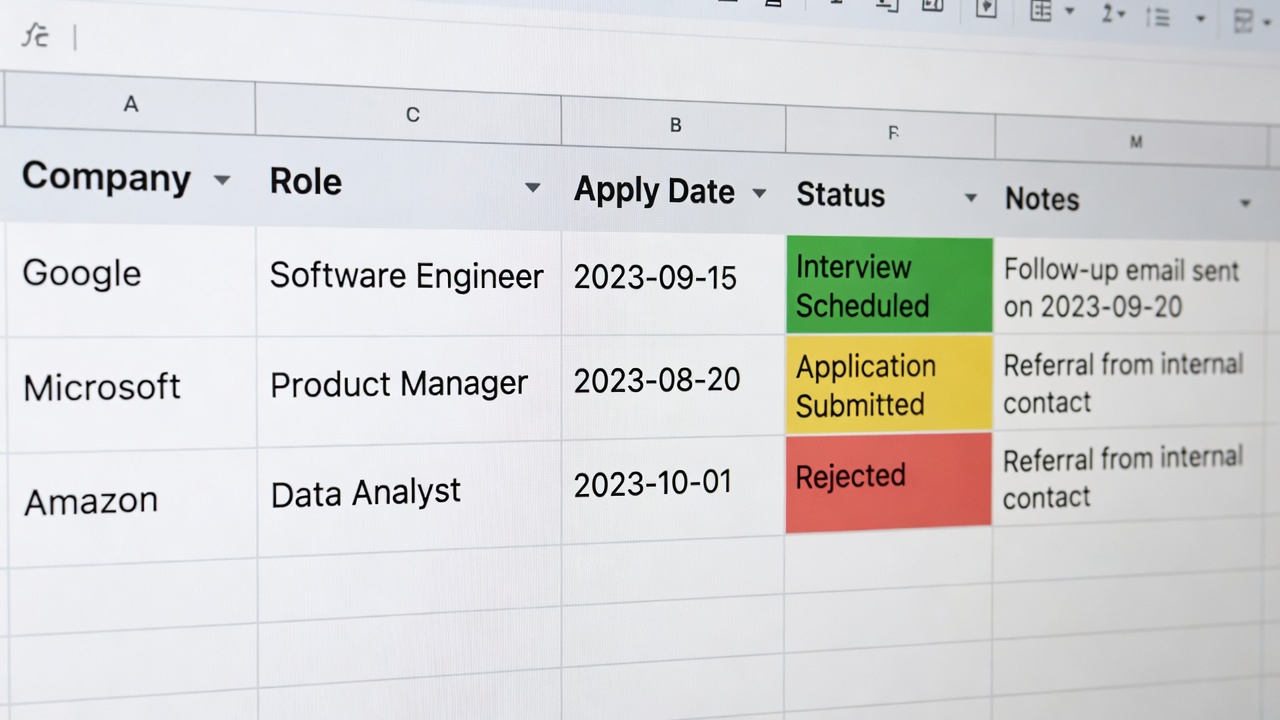
Begin by opening a new Google Sheet and naming it clearly, such as "2026 Job Search Tracker." Create these essential columns: Company Name, Job Role, Application Date, Job Source, Status, Follow-Up Date, Salary Range, Location Type, Key Requirements, Interview Notes, and Personal Reflection. Use data validation to create dropdown menus for Status options including Applied, Screening, Interview Scheduled, Offer Received, Rejected, and Withdrawn.
Next, add conditional formatting rules so that each status displays in a unique color. For example, green for offers and red for rejections. Include a separate tab for weekly summaries where you calculate totals using simple formulas like =COUNTA for application volume and =AVERAGE for response times. Test the sheet by entering three sample entries before going live with real applications.
Populate rows consistently every time you submit an application. Set a reminder to review the entire sheet at the end of each week. This setup ensures nothing falls through the cracks during a high-volume search.
Real-Life Examples from Successful Job Searches
One marketing professional logged 62 applications over three months using a detailed tracker. By reviewing notes on interview feedback, they identified that emphasizing specific campaign results boosted their callback rate from 12 percent to 35 percent. Another candidate in software engineering used source tracking to discover that referrals from alumni networks yielded far better results than general postings, leading to two offers within six weeks.
A recent graduate applied the same method across 40 roles and noticed patterns in rejection reasons related to missing certifications. After adding targeted skills development tracked in their notes column, their success rate improved dramatically. These examples illustrate how real data from your own tracker can guide pivots and refine your approach far better than generic advice.
Advanced Analytics Tips to Drive Better Outcomes
Once your tracker has 20 or more entries, leverage built-in tools for insights. Create pivot tables to break down applications by industry, response rates per source, or average days to interview. Use formulas such as =COUNTIF to measure success percentages and =TODAY to flag overdue follow-ups automatically.
Export monthly reports to a separate document for trend analysis. Track metrics like applications per week, interview conversion rate, and offer rate. Over time, these analytics help you allocate effort more efficiently, such as focusing on high-yield sources identified in your data. Many users integrate their sheet with free automation tools for weekly email summaries of key statistics.
Maintaining Your Tracker and Avoiding Common Mistakes
Update entries immediately after any interaction, whether an email response or phone call. Schedule a 15-minute weekly review to clean data, archive old entries, and adjust priorities. Avoid the common mistake of overcomplicating columns early on; start minimal and expand as needed. Another frequent error is neglecting the notes field, which becomes invaluable for interview preparation and post-rejection learning.
Do not let the tracker become another source of stress. Treat it as a supportive tool rather than a daily obligation. Consistent but sustainable use yields the best long-term results.
Automating Reminders and Frequently Asked Questions
Connect your sheet to calendar apps or use built-in notification features to automate follow-up reminders. Many users set conditional alerts for statuses that require action within seven days. Downloadable templates are widely available through productivity communities to accelerate setup.
Frequently Asked Questions
- How often should I update my tracker? Daily or same-day updates keep information accurate and actionable for follow-ups.
- Can I track remote-only roles effectively? Yes, add a dedicated Location Type column and filter views accordingly.
- What if I receive multiple offers simultaneously? Use status filters and notes columns to compare details like compensation and start dates side by side.
- Is it worth tracking applications I am unsure about? Yes, partial data still reveals useful patterns about your overall search strategy.
- How do I handle confidential applications? Use generic company descriptors or a private sheet version until you are ready to share.
Start building your custom tracker today. With consistent use, your job search transforms from chaotic to data-driven, delivering clearer wins and reduced stress throughout the process. For additional career resources, consult authoritative sites like CareerOneStop.


No comments yet. Be the first!