 Jobboy

Introduction
Behavioral interviews continue to be a cornerstone of modern hiring processes in 2026. Employers use these interviews to evaluate how candidates have handled real-world situations in the past, providing insight into future performance. This comprehensive guide walks beginners through every stage of preparation, from understanding the format to executing polished responses under pressure. Whether you are a recent graduate or a seasoned professional changing careers, mastering behavioral interviews can significantly improve your chances of landing the role you want.
Understanding Behavioral Interviews
Behavioral interviews differ from traditional question-and-answer sessions because they focus on specific past experiences rather than hypothetical scenarios. Recruiters believe that past behavior is the strongest predictor of future results. Questions typically begin with phrases such as “Tell me about a time when…” or “Describe a situation where…”. In 2026, these interviews often incorporate topics like remote collaboration, ethical decision-making, and the use of emerging technologies. Understanding this foundation helps candidates prepare targeted stories instead of generic answers.
The STAR Method Explained
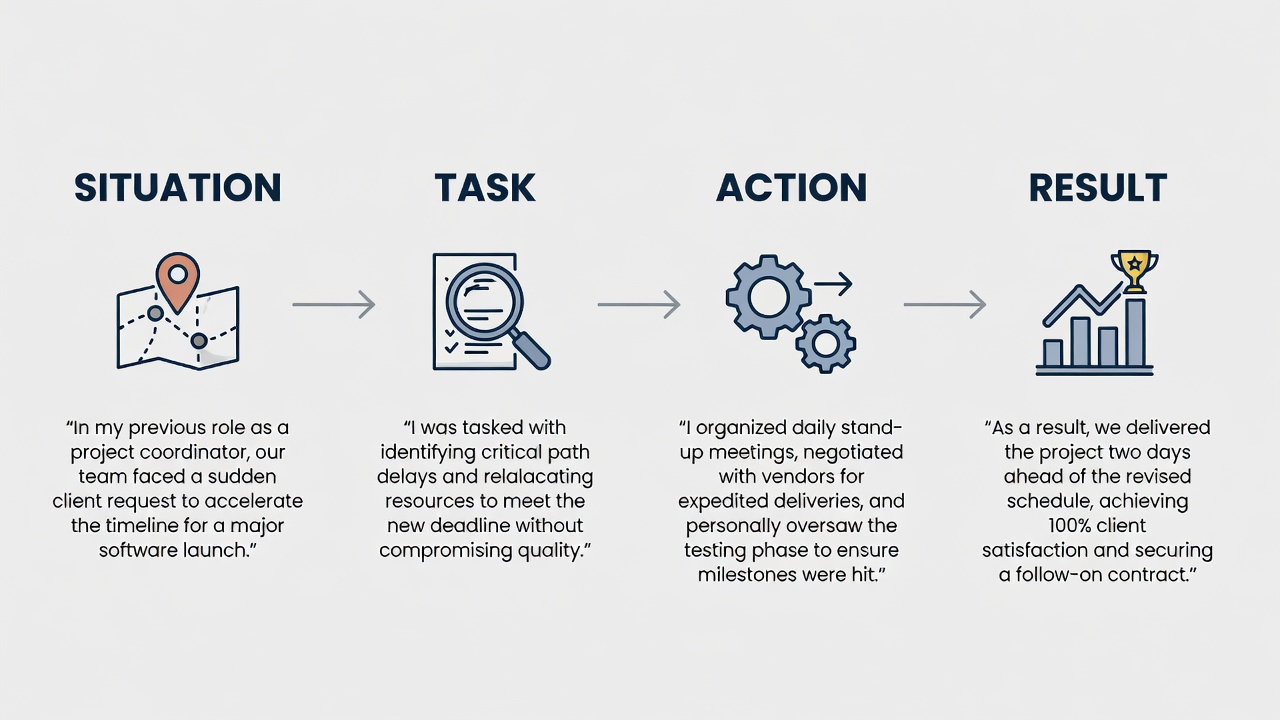
The STAR method provides a reliable framework for structuring responses. It stands for Situation, Task, Action, and Result. Begin by briefly describing the Situation, including relevant context such as team size or project scope. Next, outline the Task or your specific responsibility. Then detail the concrete Actions you took, emphasizing your individual contributions. Finally, share the Result, using metrics whenever possible to demonstrate impact. For example, one candidate described leading a cross-functional project that faced supply-chain delays: the situation involved a four-person team and a two-week deadline; the task was to maintain client satisfaction; actions included daily stand-ups and vendor negotiations; and the result was on-time delivery plus a 12 percent cost reduction. Another example involves conflict resolution where active listening and mediation led to improved team productivity measured at 20 percent higher output over three months.
Preparing Your STAR Stories in Advance
Successful candidates prepare five to seven versatile STAR stories drawn from different areas of their experience, including leadership, teamwork, problem-solving, and adaptability. Review your resume and identify key achievements. For each story, write the four components on separate index cards and practice delivering them in under two minutes. This preparation allows you to adapt stories quickly to various questions without sounding rehearsed.
Common 2026 Behavioral Question Patterns
Expect questions that reflect current workplace priorities. Examples include: “Tell me about a time you used artificial intelligence tools to improve a process,” “Describe a situation where you managed a remote team across multiple time zones,” “Share an example of handling feedback that challenged your original approach,” “Discuss a project where you had to balance speed with quality,” “Explain how you contributed to a diverse and inclusive team environment,” “Recall a moment when you had to learn a new skill rapidly,” “Describe navigating a disagreement with a stakeholder,” and “Tell me about a time you exceeded expectations under limited resources.” Prepare one primary story and one backup for each theme.
Researching Company Values for Tailored Responses
Aligning your answers with company culture increases perceived fit. Start by examining the organization’s official website and recent news releases. Explore employee testimonials on LinkedIn and review core values listed in career pages. If sustainability ranks high, prepare an example demonstrating resource conservation. If innovation is emphasized, highlight creative solutions you implemented. This research transforms generic responses into compelling narratives that resonate with interviewers.
Practicing with Mock Scenarios
Effective practice involves more than reading answers aloud. Record yourself answering ten questions using your phone or computer. Review recordings for filler words, pacing, and clarity. Schedule mock interviews with mentors or peers through platforms such as Indeed. Create a rotating question bank and time your responses. After each session, note three specific improvements and revisit those areas the following day.
Handling Virtual Interview Formats
Virtual behavioral interviews require additional technical and environmental preparation. Test your internet connection, camera, and microphone at least thirty minutes before the scheduled time. Choose a quiet, well-lit space with a neutral background. Position the camera at eye level to maintain natural eye contact. Keep a glass of water nearby and have your prepared stories visible on a second screen or printed notes, but avoid reading verbatim. If screen sharing is required, practice navigating files smoothly. These steps reduce technical anxiety and allow full focus on delivering strong answers.
Building Confidence Through Daily Drills
Confidence grows through consistent, low-stakes repetition. Dedicate fifteen minutes each morning to reviewing one STAR story while standing in a power pose. Practice breathing exercises before each drill to manage physiological responses to stress. Join online forums or local meetups for additional mock sessions. Maintain a simple journal logging daily wins and areas for refinement. Over two to three weeks, these drills compound into noticeable improvements in delivery and composure.
Common Mistakes to Avoid
Many candidates undermine strong experiences by providing vague answers, focusing too much on team efforts without highlighting personal contributions, or neglecting to quantify results. Another frequent error is failing to adapt prepared stories to the specific question asked. Always listen carefully and adjust your narrative accordingly. Avoid speaking negatively about former employers or colleagues, as this raises red flags about professionalism.
Behavioral Interview Checklist
- Review the job description and extract key competencies
- Prepare five to seven detailed STAR stories
- Research company mission, values, and recent initiatives
- Test all technology and environment for virtual interviews
- Prepare three insightful questions for the interviewer
- Plan a professional follow-up email template
- Review recent industry trends relevant to the role
- Practice aloud at least three times per story
Strong vs. Weak Answers Comparison
| Scenario | Weak Answer | Strong Answer |
|---|---|---|
| Team conflict | “We disagreed but eventually finished the project.” | “Situation: Two teammates held opposing views on project scope during a critical client deliverable. Task: As project lead, I needed to align the team quickly. Action: I scheduled a structured discussion, used active listening, and proposed a data-driven compromise. Result: The team delivered two days early, improving client satisfaction scores by 18 percent.” |
FAQ
How do I handle interview anxiety?
Practice deep breathing techniques and visualization exercises daily. Reframe nervous energy as excitement and arrive early to acclimate to the environment. Remember that interviewers expect some nervousness and focus more on content and authenticity.
What is proper follow-up etiquette?
Send a personalized thank-you email within twenty-four hours. Reference one specific discussion point from the interview and reiterate your enthusiasm for the role. Keep the message concise and professional.
Should I use the same story for multiple questions?
While one strong story can be adapted, prepare variety to avoid repetition. Interviewers notice when candidates recycle the same example too frequently.
How long should each answer take?
Aim for one and a half to two minutes per response. This length provides sufficient detail without losing the interviewer’s attention.
Conclusion
Thorough preparation using the STAR method, targeted company research, and consistent daily practice equips you to excel in behavioral interviews throughout 2026. Implement the checklists, avoid common pitfalls, and refine your stories regularly. With deliberate effort, you will approach every interview with clarity and confidence.


No comments yet. Be the first!