 Jobboy

Introduction: Why Slack Outreach Matters for Job Seekers in 2026
In today's competitive job market, traditional applications often get lost in the shuffle. Savvy candidates are turning to Slack communities to build genuine connections that lead to referrals and interviews. This approach leverages the platform's real-time, conversational nature to stand out from generic LinkedIn messages or cold emails. As remote work and digital networking continue to dominate, Slack has become a go-to space for professionals sharing insights, job leads, and industry trends in real time.
Slack has evolved beyond team chat into vibrant hubs for industries like tech, marketing, and design. By focusing on value-first interactions, job seekers can position themselves as helpful contributors rather than opportunists. This method not only increases visibility but also fosters relationships that can accelerate career moves far beyond what automated applications achieve.
Why Slack Stands Out in 2026 Job Search Strategies
The job landscape in 2026 emphasizes authenticity and community involvement. With hiring managers overwhelmed by thousands of resumes, personal referrals through trusted networks carry significant weight. Slack communities allow for nuanced conversations that demonstrate your expertise directly. Unlike static job boards, these channels enable immediate feedback and iterative relationship building.
Industry reports highlight that referred candidates have higher success rates. Engaging in Slack taps into this by creating organic pathways to opportunities that are rarely posted publicly.
Identifying Active Industry-Specific Slack Channels
Start by researching communities tied to your field. Use directories like Slack's own workspace listings or community hub sites. Look for channels with daily activity, engaged moderators, and recent job-related discussions. Popular examples include tech-focused groups such as those for developers or product managers, as well as specialized ones in fintech, health tech, or creative fields.
Verify activity by observing message volume over the past week. Avoid ghost towns with sporadic posts. Cross-reference with industry events or mentions on other platforms to find emerging channels. Tools like community search engines or recommendations from colleagues can uncover hidden gems. Focus on groups with 500+ members and consistent moderation to ensure productive environments.
Joining Strategically and Building Credibility
Once you identify targets, join with a complete profile that highlights your expertise without screaming "job seeker." Use a professional photo, detailed bio, and links to your portfolio or LinkedIn. Introduce yourself in intro threads by sharing useful insights or resources relevant to the community, such as a recent article or tool tip.
Contribute consistently for at least a week before outreach. This builds social proof and makes your later messages more welcome. Participate in discussions by answering questions or offering constructive feedback. Over time, members will recognize your name, making cold approaches feel like natural extensions of existing interactions.
Value-First Conversation Scripts and Examples
The key is leading with help, not asks. A strong opener might reference a recent channel discussion: "I saw your post about scaling SaaS products—here's a quick framework that worked for my last project that could apply here." Follow this by sharing a specific, non-salesy resource like a template or case study summary.
Another variation for deeper engagement: "Your comment on AI tools in marketing resonated with me. I've been experimenting with similar setups and found this free resource that might help refine your approach—happy to discuss if interested."
Always personalize based on the recipient's recent activity. Avoid generic templates. After initial value exchange, gently pivot if the conversation flows naturally toward career topics. 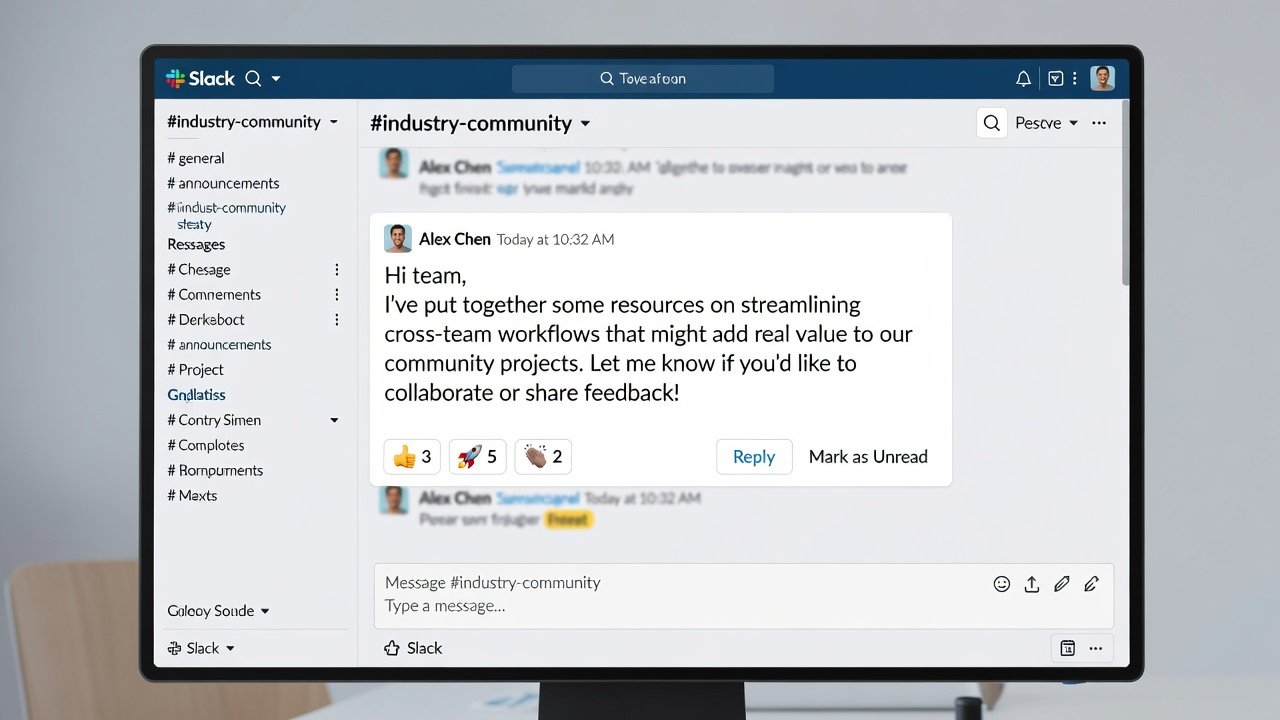
Timing best practices include posting during peak hours (typically 9-11 AM or 2-4 PM in the community's primary timezone) and following up after 3-5 days if no reply. Track patterns to identify when your target audience is most responsive.
Tracking Metrics for Reply Rates and Conversions
Monitor key indicators like response rate (aim for 20-30% initially), conversation-to-referral ratio, and interview conversions. Use a simple spreadsheet to log outreach volume, timing, message type, and outcomes. Segment data by channel and script variation to identify what resonates best. Adjust based on data—refine messaging if replies drop below 15% or if conversations stall early.
Additional metrics include engagement depth (number of follow-up messages) and time from first contact to referral. Review weekly to scale successful tactics while pausing ineffective ones. This data-driven approach ensures efficient use of your networking time.
Comparing Slack Tactics with Forums and X
Slack excels for real-time, niche conversations with higher response quality than public forums like Reddit, where threads can get buried under volume. Forums offer broader visibility but lower personalization. Compared to X (formerly Twitter), Slack provides more targeted audiences and less noise, though X allows for wider thought leadership through threads and hashtags. Choose Slack when seeking warm referrals in specific industries, forums for in-depth written advice, and X for rapid trend monitoring.
For more on professional networking platforms, check Slack, LinkedIn, and Bureau of Labor Statistics for labor market insights.
Real-World Examples of Job Offers Secured
One software engineer joined a product management Slack community, shared a detailed case study on user onboarding, and received a referral leading to an interview within two weeks at a Series B startup. A content marketer in a growth hacking group offered detailed feedback on a member's campaign strategy and landed a role at an e-commerce company after three value-driven exchanges over a month.
Another example involves a data analyst who contributed regularly to an analytics-focused channel, eventually connecting with a hiring manager seeking similar skills. This led to an internal referral and offer. These stories illustrate how consistent value creation compounds into tangible results without aggressive pitching.
Common Mistakes to Avoid in Slack Outreach
Many job seekers fail by jumping straight into requests without context or by spamming multiple channels simultaneously. Another pitfall is neglecting profile optimization, which undermines credibility. Always research the community rules and respect them—some prohibit direct job solicitations. Overly salesy language or ignoring ongoing conversations can also damage your reputation quickly.
Short FAQ on Scaling Outreach Safely
- How many messages per day? Limit to 5-10 personalized outreaches to maintain quality and avoid burnout or flags.
- What if I get ignored? Analyze patterns, tweak your value proposition, and diversify channels without spamming.
- Is it safe? Stick to public channels, never share sensitive personal data early, and report any suspicious activity.
- How to scale across multiple communities? Prioritize 3-5 high-activity groups and maintain a content calendar for contributions.
- Can this work for non-tech roles? Yes, many industries have dedicated Slack spaces in creative, finance, and healthcare sectors.
Conclusion
Slack outreach in 2026 rewards patience, authenticity, and strategic tracking. By mastering identification, value delivery, timing, and metrics analysis, you can transform casual chats into meaningful career opportunities that stand out in a crowded market.

No comments yet. Be the first!