 Jobboy

Introduction to 2026 Creator Economy Opportunities for Freelancers
The creator economy continues evolving rapidly in 2026, offering remote freelancers fresh avenues to build sustainable income beyond traditional client work. Many freelancers are shifting focus toward recurring revenue models that leverage their expertise in high-demand areas. Niches centered on productivity tools and wellness routines stand out because they directly address audience pain points such as maintaining focus in distributed teams, combating isolation during travel, and creating balanced daily structures without traditional office support. This comprehensive guide explores how freelancers can leverage low-competition keywords to select viable niches, set up Patreon tiers effectively, create exclusive content that drives engagement, and cross-promote within digital nomad communities for maximum reach.
Remote freelancers often juggle multiple income streams, and combining Patreon with newsletters provides recurring revenue while fostering loyal audiences. By focusing on specific pain points identified through keyword research and community feedback, creators can differentiate themselves in crowded markets and build communities that support long-term growth. Understanding these dynamics helps freelancers move from sporadic client gigs to predictable monthly earnings.
Identifying High-Potential Niches Using Low-Competition Keywords
Successful niche selection starts with thorough audience research and keyword analysis. Target areas like productivity tools for remote workers and wellness routines tailored to freelancers facing isolation or irregular schedules. Use keyword tools to find terms with decent search volume but lower competition, such as "remote freelancer productivity hacks 2026," "digital nomad wellness routines," or "freelance workflow optimization templates." These phrases often reveal underserved segments where audiences actively seek solutions but face limited high-quality resources.
These niches thrive because they address real challenges: maintaining focus during flexible hours, sustaining mental health without office structures, and integrating wellness into unpredictable travel schedules. Freelancers in these spaces report stronger engagement when content solves immediate problems rather than offering generic advice. For instance, a productivity niche might explore integrations between popular apps like Notion and time-tracking software, while a wellness niche could cover adapting yoga or mindfulness practices for co-working spaces or small apartments. Expanding research to include forums and social listening tools uncovers additional sub-niches such as burnout prevention for solo operators or tech stack recommendations for location-independent professionals.
Step-by-Step Patreon Tier Setup for Sustainable Income
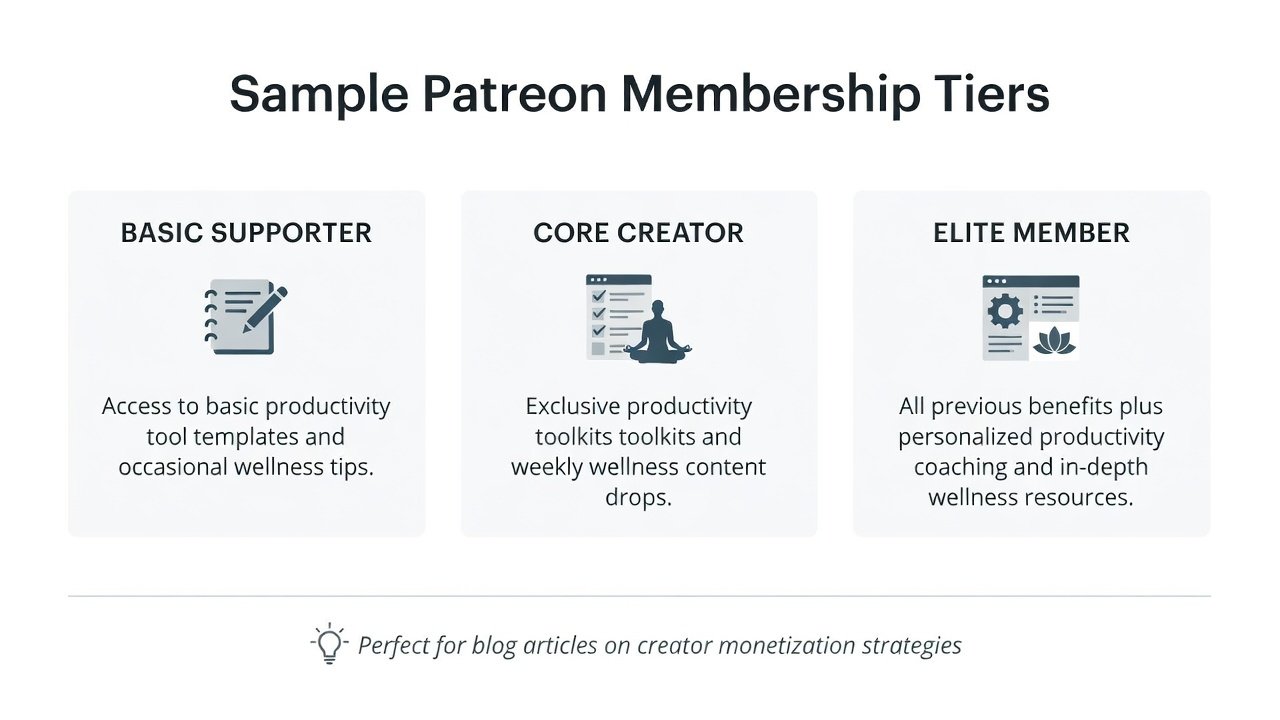
Begin by creating a Patreon account and defining your brand around your chosen niche with a clear value proposition statement. Set up tiers that offer escalating value: basic access for newsletters and monthly updates, mid-level for exclusive templates or guides, and premium for live Q&A sessions, personalized advice, or early access to new resources. Each tier should clearly communicate benefits to reduce hesitation during signup.
Ensure tiers emphasize exclusivity to encourage upgrades. For example, early access to productivity tool reviews, downloadable wellness challenge prompts, or private community Discord invites can drive subscriptions. Test pricing through audience surveys and A/B experiments on landing pages to optimize conversion rates. Include welcome messages and onboarding sequences that immediately deliver value to new patrons, helping reduce early churn. Track tier performance monthly and adjust offerings based on feedback and engagement metrics.
Exclusive Content Ideas for Newsletters and Patreon
Develop content that builds directly on audience pain points to maximize retention. For productivity niches, share customizable Notion templates, weekly workflow audits, case studies of successful remote setups, or tool comparison breakdowns. Wellness-focused creators can offer guided meditation scripts, routine trackers designed for nomadic lifestyles, nutrition tips for frequent travelers, or stress-management techniques specific to deadline pressure.
Combine these with newsletters for broader reach, teasing Patreon exclusives to convert readers. Consistent posting schedules help maintain momentum without overwhelming creators. Additional ideas include behind-the-scenes process videos, member-only podcasts, collaborative challenges, and quarterly resource roundups. Rotate content formats to keep engagement high and appeal to different learning styles within your audience.
Cross-Promotion Strategies with Digital Nomad Communities
Engage digital nomad forums, Facebook groups, and platforms like Reddit to share value-first content that establishes authority. Collaborate with complementary creators for shoutouts, joint challenges, or bundle offers that funnel audiences to your Patreon. Host virtual meetups or contribute guest posts on nomad blogs to expand visibility and build trust.
Track referral sources using UTM parameters to refine efforts over time. Participate actively in discussions rather than purely promotional posts to foster organic growth. Consider partnerships with established digital nomad resources such as Patreon itself for creator spotlights or related community hubs to amplify reach without additional ad spend.
Real Freelancer Case Studies and Revenue Growth Examples
One remote productivity coach grew her Patreon from zero to a sustainable base within twelve months by focusing on detailed tool tutorials, community challenges, and tiered access to custom templates. She started with basic newsletter integration and gradually added live sessions, resulting in steady month-over-month growth through word-of-mouth in nomad groups. Another wellness freelancer integrated newsletter exclusives with Patreon-only guided sessions, seeing consistent subscriber growth through targeted community posts and collaborations. A third example involves a freelance workflow specialist who combined niche keyword targeting with cross-promotions, achieving diversified income while maintaining a manageable content calendar. These stories highlight the power of authentic niche alignment, consistent value delivery, and iterative improvements based on patron feedback.
Patreon vs Substack: Key Comparisons for Freelancers
Patreon excels at tiered memberships with multimedia perks, community features, and flexible reward structures that reward long-term supporters. Substack shines for newsletter-centric models with built-in discovery tools and simpler publishing workflows. Many freelancers use both platforms strategically: Substack for lead generation and audience building, then directing engaged readers to Patreon for deeper monetization and exclusive experiences.
Evaluate based on your content style—multimedia and interactive elements favor Patreon, while written deep dives and email-focused delivery suit Substack. Hybrid approaches often yield the best results for remote creators seeking multiple touchpoints. Consider platform fees, audience ownership, and ease of scaling when deciding primary focus areas.
Common Pitfalls and How to Avoid Them
Overcommitting to content volume leads to burnout and inconsistent delivery. Start small with a sustainable cadence and scale gradually. Ignoring audience feedback on pricing, topics, or format can stall growth and increase churn. Regularly review analytics, conduct polls, and solicit direct input to pivot as needed. Another frequent issue is neglecting promotion outside the platform, which limits discovery. Dedicate time each week to community engagement and collaborations. Finally, failing to diversify content risks audience fatigue, so rotate formats and themes thoughtfully.
FAQs on Pricing, Retention, and Scaling Without Burnout
- How should I price Patreon tiers? Research similar creators in your niche and start with accessible entry points that deliver clear value, then adjust based on engagement data and patron surveys.
- What drives subscriber retention? Deliver consistent, high-value exclusives on schedule, foster community interaction through comments or polls, and periodically refresh offerings to match evolving audience needs.
- How do I scale without burnout? Batch content creation in advance, outsource routine tasks where feasible, set clear boundaries on response times, and incorporate regular breaks into your workflow planning.
- Should I start with Patreon or build a newsletter first? Many creators begin with a free newsletter to grow an audience, then introduce Patreon for monetized exclusives once engagement reaches a critical threshold.
- What metrics matter most for long-term success? Focus on patron retention rates, average revenue per user, engagement levels on exclusive posts, and referral traffic from community promotions.
By implementing these strategies with patience and ongoing refinement, remote freelancers can build resilient income streams in the 2026 creator economy while maintaining personal well-being and professional sustainability.

No comments yet. Be the first!