 Jobboy

Introduction to Skills Assessments in 2026
Job seekers in 2026 encounter a wide array of skills assessments during the hiring process. These evaluations go far beyond basic interviews and allow employers to measure technical expertise, cognitive abilities, and practical job performance in simulated environments. With remote work and global talent pools expanding, companies rely on standardized tests to filter candidates efficiently. This comprehensive guide delivers in-depth preparation strategies, including detailed plans, real examples, and industry adaptations, so you can approach assessments with confidence and increase your chances of landing the role.
Identifying Common Assessment Types
Skills assessments typically fall into several categories. Coding challenges require solving algorithmic problems under time constraints, often on platforms that auto-grade submissions. Aptitude tests focus on verbal reasoning, numerical analysis, and abstract thinking to predict job performance. Role-specific simulations place you in realistic scenarios, such as troubleshooting a network issue for IT positions or handling a client complaint for customer service roles. Additional types include personality inventories that evaluate cultural fit and situational judgment tests that assess decision-making. Reviewing the job posting and company career page helps predict which formats will appear. For instance, software engineering roles frequently combine coding with system design, while marketing positions emphasize creative simulations and data interpretation exercises.
Step-by-Step Preparation Plans
Effective preparation begins four to six weeks before the scheduled assessment. Week one involves diagnostic testing to identify weak areas followed by foundational review of core concepts. Weeks two and three shift to targeted practice with increasing difficulty, incorporating timed sessions that mirror real conditions. Week four emphasizes full-length mock exams and review of mistakes. Daily routines should include 90 minutes of focused study broken into skill blocks, plus 30 minutes of reflection. Maintain a digital journal documenting progress, recurring errors, and adjusted strategies. Incorporate variety by alternating between solo practice and group study sessions where feasible. Track metrics such as accuracy rates and completion times to quantify improvement.
Time Management Techniques
Strong time management separates successful candidates from those who run out of time. Begin each section by scanning all questions and allocating minutes proportionally to point values or difficulty. Use the two-minute rule for initial passes on aptitude items before returning to harder problems. The Pomodoro technique of 25 minutes of intense focus followed by five-minute breaks sustains concentration during multi-hour tests. Practice under exam-like constraints using countdown timers and eliminate distractions by working in a quiet space. For coding assessments, allocate the first 10 minutes to planning your approach rather than immediate coding. Candidates who rehearse these habits report finishing with buffer time for review, reducing careless mistakes.
Common Pitfalls to Avoid
Many applicants stumble by misreading instructions or skipping the review phase. Over-reliance on memorization fails when questions vary slightly from practice materials. Neglecting soft skills during simulations, such as clear verbal explanations of your reasoning, can lower scores even if the technical answer is correct. Another frequent issue is poor pacing that leads to unanswered questions at the end. To avoid these, always read prompts twice, verbalize your thought process in simulations, and reserve the final five minutes for proofreading. Reviewing official guidelines from sources like the U.S. Department of Labor can provide additional context on fair assessment practices.
Real-World Examples from Successful Candidates
A recent computer science graduate prepared for a senior developer role by completing 150 coding problems across multiple platforms while maintaining a detailed error log. This methodical approach led to passing a three-hour technical assessment and securing an offer. In the healthcare sector, a nurse practitioner candidate practiced ethical decision simulations daily for three weeks, recording video responses to self-evaluate communication clarity. She received top marks on the simulation portion and attributed success to consistent feedback loops. A financial analyst applicant combined quantitative drills with industry case studies, ultimately outperforming peers by demonstrating both speed and accuracy during the live assessment.
Free vs Paid Prep Tools Comparison
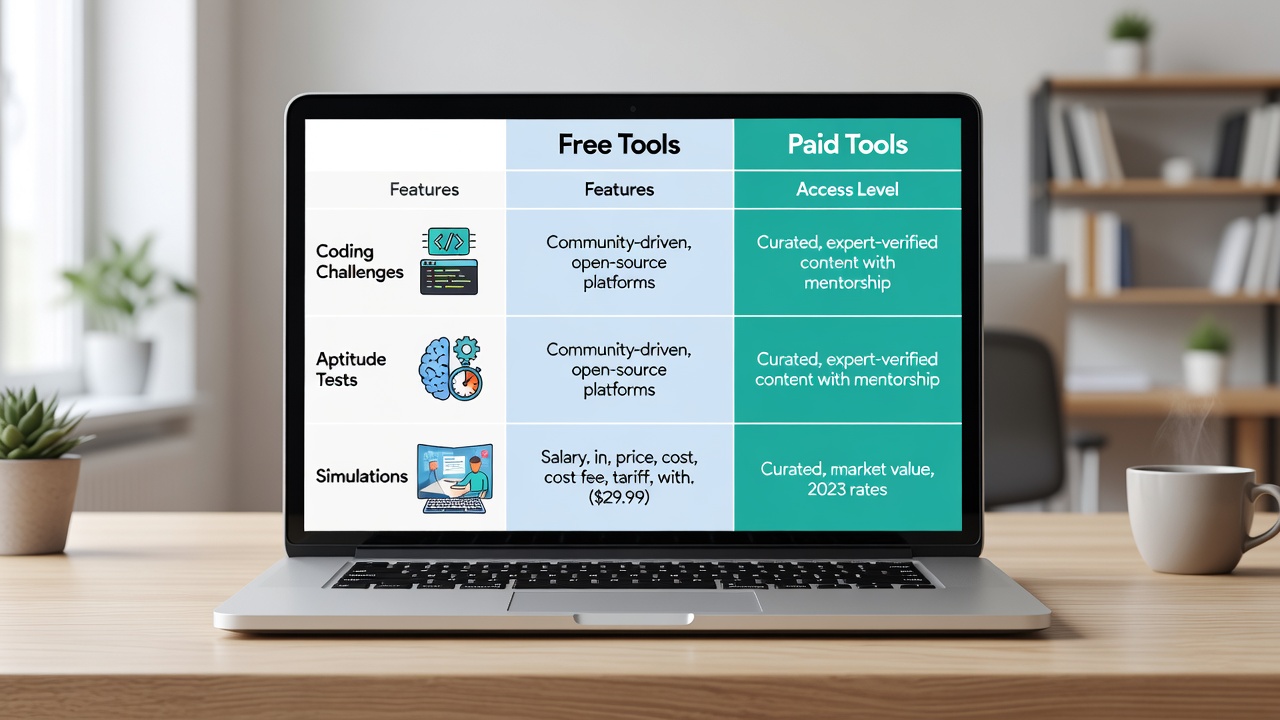
| Tool Type | Free Options | Paid Options | Best For |
|---|---|---|---|
| Coding Practice | HackerRank community challenges, free tiers on Codewars | LeetCode Premium subscription, Interview Cake structured courses | Technical and engineering roles |
| Aptitude Tests | Practice Aptitude Tests limited sets, government sample questions | JobTestPrep comprehensive packages, Mensa practice workbooks | Analytical and administrative positions |
| Simulations | Public case studies on company career pages | AssessFirst scenario libraries, specialized industry simulators | Customer-facing and operational roles |
| Personality & SJTs | Basic online quizzes from university career centers | Full psychometric platforms with detailed reports | Leadership and team-oriented positions |
Industry-Specific Advice
Technology roles demand mastery of data structures, algorithms, and clean code practices; supplement practice with documentation from Mozilla Developer Network for web-related topics. Healthcare assessments often incorporate regulatory compliance scenarios—review current guidelines from recognized authorities to prepare ethical responses. Finance candidates benefit from repeated quantitative reasoning drills and familiarity with regulatory frameworks. Marketing and sales positions reward creative problem-solving within brand guidelines; rehearse elevator pitches and campaign simulations. Manufacturing and logistics roles may include spatial reasoning and safety protocol tests. Adapting your preparation to these nuances demonstrates genuine interest and improves performance across sectors. Cross-reference labor market data from the U.S. Bureau of Labor Statistics to understand which skills are most valued in your target field.
Reducing Anxiety and Understanding Retake Policies
Test anxiety can be managed through progressive muscle relaxation, breathing exercises, and visualization of successful outcomes. Schedule practice sessions at the same time of day as the actual assessment to build familiarity. Most organizations permit retakes after a cooling-off period ranging from 30 to 90 days; always confirm exact policies with the recruiter before the first attempt. Building a support network of peers or mentors provides accountability and emotional encouragement throughout the process.
FAQ
- How do I handle test anxiety? Incorporate daily mindfulness, simulate full test conditions weekly, and maintain consistent sleep and nutrition leading up to the assessment.
- Can I retake assessments? Policies differ by employer; many allow one retake after 30–90 days if you do not pass initially.
- What resources are most effective? A balanced combination of free practice platforms and targeted paid programs offers the broadest coverage and detailed feedback.
- How long should I prepare? Four to six weeks of structured daily practice yields the best results for most candidates.
- Are assessments the same across industries? Core formats overlap but content is highly tailored; always research the specific role requirements.
Conclusion
Mastering skills assessments in 2026 requires deliberate practice, strategic time management, and industry-aware preparation. By following the step-by-step plans, avoiding common pitfalls, and leveraging both free and paid resources, job seekers can transform these evaluations into opportunities to showcase their strengths. Begin your preparation early, track your progress rigorously, and apply the techniques outlined here to stand out in a competitive job market. Consistent effort today leads to stronger performance and greater career success tomorrow.


No comments yet. Be the first!