 Jobboy

Introduction: Navigating Job Searches Safely in 2026
Job hunting has always carried risks, but in 2026 the landscape includes sophisticated digital threats that target applicants through fake listings and deceptive applications. Scammers exploit popular platforms to steal personal data, money, or identities. This guide provides practical steps to spot fraudulent opportunities, compare legitimate and suspicious postings, and apply confidently using verified methods. Understanding these risks starts with awareness of common formats. Whether you are a recent graduate or experienced professional, knowing red flags helps avoid costly mistakes that could derail your career progress for months.
The rise of remote work has expanded opportunities but also created new avenues for fraud. Applicants must now scrutinize every communication more carefully than ever before. By the end of this article you will have actionable checklists and resources to protect yourself throughout the entire job search process.
Common Scam Formats in Job Listings and Applications
Scammers use several recurring patterns that have evolved with technology. One frequent type involves unsolicited emails or messages offering high-paying remote roles that require upfront payments for training or equipment. Another involves fake company websites that mirror legitimate employers to harvest resumes containing sensitive information such as Social Security numbers or banking details. Phishing disguised as application portals is also prevalent. Applicants are directed to sites that install malware or request bank details for supposed direct deposits. Some scams pose as recruiters on professional networks, requesting video interviews that lead to identity theft through recorded sessions or follow-up forms. Additional formats include fake government or nonprofit postings that promise quick placement in exchange for personal data, and multi-level marketing schemes disguised as entry-level positions with unrealistic commission structures.
Key Red Flags to Watch For
Recognizing warning signs early prevents most encounters with fraud. Common red flags include unrealistic pay offers that exceed market rates without experience requirements, pressure for immediate responses or decisions within hours, requests for personal financial information before any interview, poorly written job descriptions with spelling errors or generic language, and offers that bypass standard application processes on company career pages. Additional indicators involve recruiters who contact you through personal email accounts rather than official domains, positions that require you to purchase software or tools before starting, and companies that cannot provide verifiable physical addresses or phone numbers. Job seekers should also be wary of postings that emphasize secrecy or discourage sharing details with others.
- Unrealistic pay offers that exceed market rates without experience requirements
- Pressure for immediate responses or decisions within hours
- Requests for personal financial information before any interview
- Poorly written job descriptions with spelling errors or generic language
- Offers that bypass standard application processes on company career pages
- Use of free email services instead of corporate domains
- Demands to move communication off the original platform quickly
Recognizing these signs early prevents most encounters with fraud and saves valuable time.
Real-World Examples of Recent Scams
In early 2026, reports highlighted fake postings for remote customer service roles that asked applicants to purchase software licenses. Victims lost hundreds of dollars before realizing the companies did not exist. Another case involved cloned LinkedIn profiles promising executive positions that required wire transfers for background checks. A third example featured fake healthcare support positions that directed applicants to bogus portals collecting tax information under the guise of payroll setup. These examples underscore the need for verification at every stage of the application process.
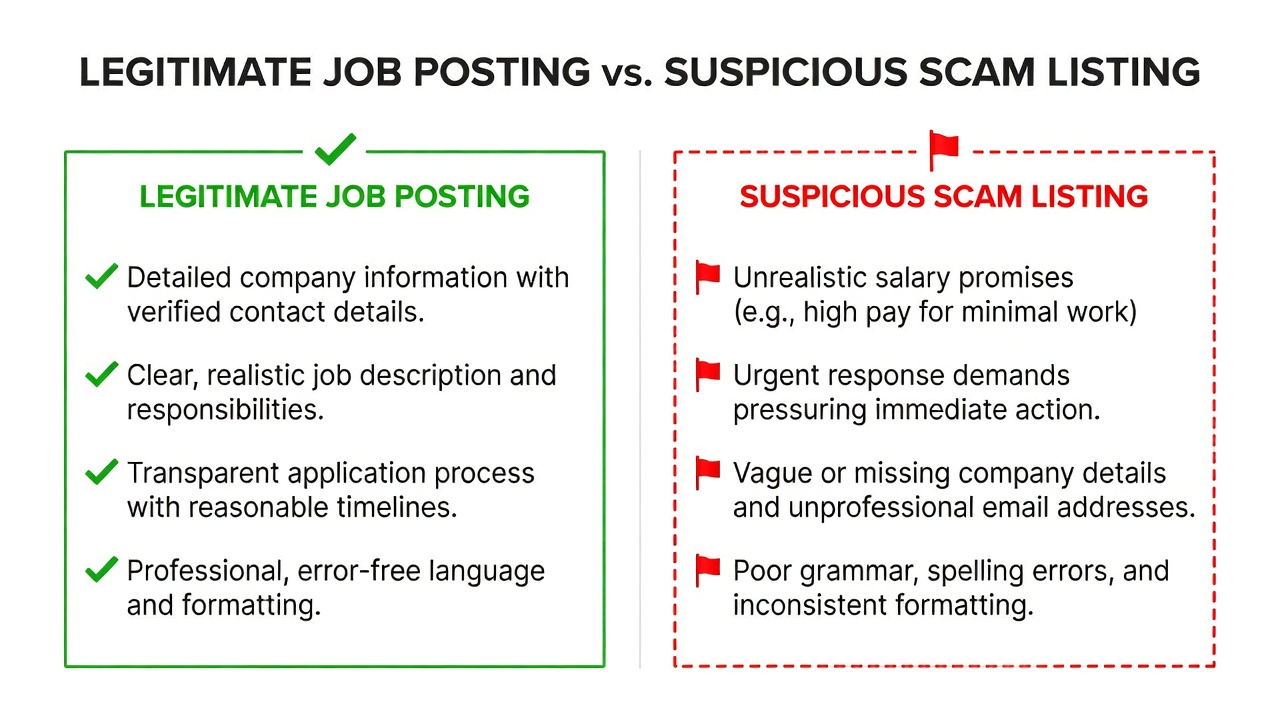
Legitimate Postings Versus Suspicious Ones: A Comparison
Legitimate listings appear on official company websites or trusted aggregators with consistent branding and contact details. They include clear responsibilities, qualifications, and application instructions that align with the employer’s career page. Suspicious postings often lack verifiable company information, use free email domains for communication, and avoid direct phone numbers. They frequently emphasize quick starts and minimal requirements while avoiding detailed descriptions of daily responsibilities. Comparing side-by-side examples reveals that real employers invest time in professional copy while scammers rely on urgency and vague promises.
Verification Steps for Employers and Platforms
- Cross-check the company name and address using official business registries.
- Visit the employer’s official website directly rather than clicking links in messages.
- Search the job title on established job boards to confirm it matches real openings.
- Contact the company through publicly listed channels to validate the recruiter.
- Use two-factor authentication on all job-related accounts.
- Review recent employee testimonials on independent sites for consistency.
- Confirm the job posting appears on the company’s verified social media channels.
Following these steps adds layers of protection and reduces exposure to fraudulent schemes significantly.
Tools and Resources for Safe Job Hunting
Several authoritative resources help job seekers stay informed. The Federal Trade Commission maintains updated guides on employment scams and how to report them. Another valuable source is USA.gov which offers practical advice on recognizing and avoiding online fraud. Browser extensions that flag suspicious domains and password managers that detect phishing sites provide additional layers of daily protection during active searches.
Practical Checklists and Tools for Safe Job Hunting
Create a personal checklist before applying: confirm the posting source, review the company’s recent news, and prepare questions about the role’s legitimacy. Tools such as browser extensions that flag suspicious domains and official government resources provide additional support. Expert tips include never sending money or sensitive documents until an in-person or verified video interview occurs. Always report suspicious listings to the platform and relevant authorities to help protect others. Maintain a separate email address dedicated to job applications to limit exposure if one account is compromised.
What to Do If You Encounter a Scam
If you suspect a scam, stop all communication immediately and document every interaction including screenshots and email headers. Report the incident to the platform where the listing appeared and file a complaint with consumer protection agencies. Monitor your credit reports and financial accounts for unusual activity in the following weeks. Changing passwords and enabling additional security features on all professional accounts is recommended as a precautionary measure.
Frequently Asked Questions
How can I tell if a recruiter is legitimate?
Legitimate recruiters work through established agencies or company HR departments and never request payment from candidates at any stage of the process.
What should I do if I already shared information with a suspected scammer?
Monitor your accounts immediately, contact your bank if financial details were shared, and file reports with consumer protection agencies for further guidance and support.
Are certain industries more targeted?
Remote and entry-level positions in tech support, customer service, and administrative roles see higher scam volumes due to high applicant interest and ease of remote execution.
Can I recover money lost to a job scam?
Recovery depends on how quickly you act and the payment method used. Contact your bank or credit card company right away and work with law enforcement for the best possible outcome.
Conclusion: Applying with Confidence
By recognizing common scams, heeding red flags, and following verification processes, job seekers can navigate 2026 opportunities safely. Stay vigilant, use official channels, and leverage checklists to protect your personal information throughout the search. With these strategies you can focus on genuine opportunities that advance your career without unnecessary risks.


No comments yet. Be the first!