 Jobboy

Introduction to Asynchronous Interviews in 2026
As the job market evolves, asynchronous interviews have become a staple for companies streamlining their hiring processes. Job seekers must adapt quickly to these one-way video or text-based formats on platforms like HireVue or custom applicant portals. This guide provides actionable 2026-specific advice to help you excel when you apply for jobs. With hiring practices shifting toward efficiency and global reach, understanding these formats can significantly boost your chances in a competitive landscape. Many organizations now prioritize async interviews to evaluate candidates without the constraints of live scheduling, allowing for broader talent pools across time zones.
What Are Asynchronous Interviews?
Unlike live interviews, asynchronous formats allow candidates to record responses at their convenience within a set deadline. They often include pre-recorded questions or written prompts, making them ideal for global recruitment. In 2026, these interviews help employers screen more applicants efficiently amid high volumes in competitive job search markets. Text-based versions may involve timed written answers, while video options capture your verbal delivery and body language. Platforms vary, but the core goal remains consistent: assessing skills, experience, and cultural fit through structured, repeatable questions.
Why Asynchronous Interviews Matter for Job Seekers
With remote work persisting, many organizations use async methods to reduce scheduling conflicts. They offer flexibility but require strong self-presentation skills. Research from the U.S. Department of Labor highlights how technology shapes hiring trends, emphasizing preparation for digital formats. In 2026, this approach helps companies manage high application volumes while giving candidates time to craft thoughtful responses. However, it also means standing out requires polished delivery without real-time feedback. Job seekers who master these formats often gain an edge, especially in roles involving remote collaboration where self-motivation is key.
Step-by-Step Preparation Techniques
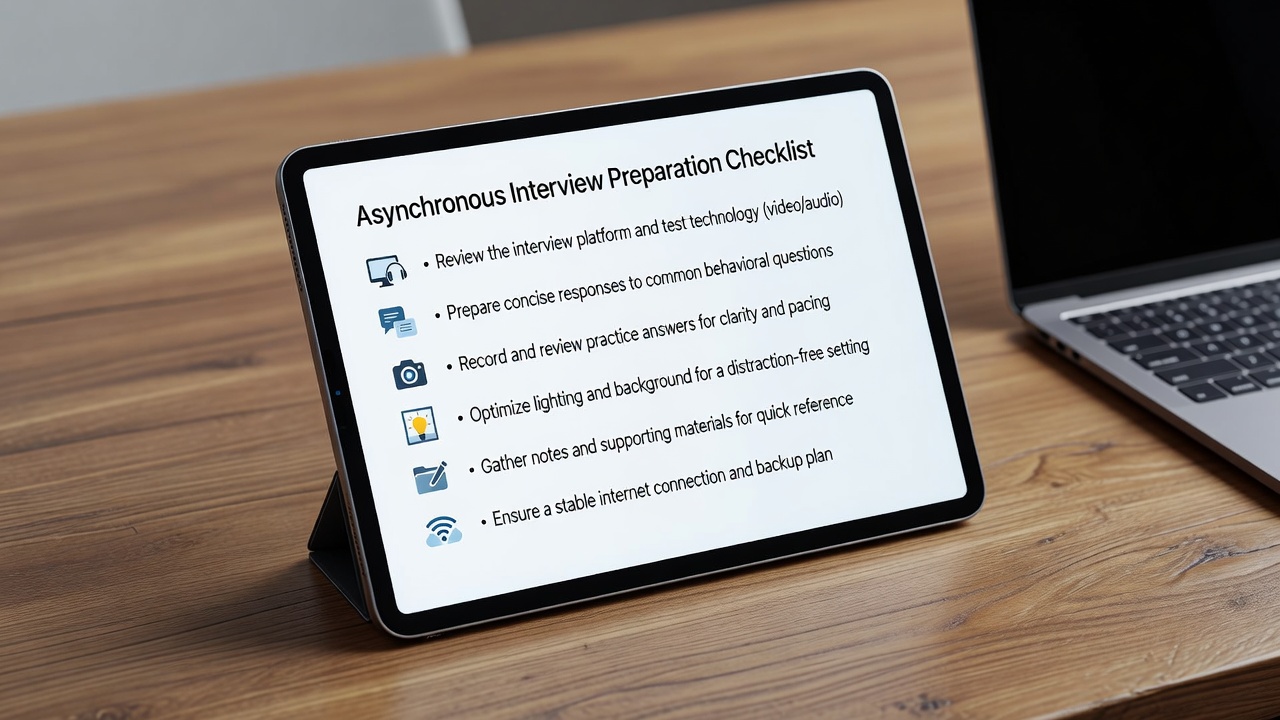
Start by researching the company and role thoroughly. Review the job description for key skills and prepare examples using the STAR method. Practice answering common questions aloud, focusing on the STAR method (Situation, Task, Action, Result). Test your tech setup days in advance and review any platform guidelines. Create a quiet, professional background and ensure stable internet. Next, outline potential questions based on the role, such as behavioral queries about teamwork or problem-solving. Rehearse in front of a mirror or record practice sessions to refine your delivery. Gather any necessary documents or references in advance, and set reminders for submission deadlines to avoid last-minute rushes.
Advanced Preparation for 2026 Platforms
Many platforms now incorporate AI analysis for tone and keywords, so incorporate relevant industry terms naturally. Join online forums or webinars on modern hiring to stay updated. Simulate the full experience by timing your responses to match typical limits of two to three minutes per answer.
Recording Best Practices
Choose natural lighting and dress professionally from head to toe. Speak clearly at a moderate pace, maintain eye contact with the camera, and keep responses concise yet detailed. Record in a distraction-free environment and review your submissions before finalizing. Use a high-quality microphone if possible, and position the camera at eye level for a natural appearance. Avoid reading from notes directly; instead, use subtle cue cards. For text-based interviews, proofread carefully and structure answers with bullet points where allowed. Test audio levels multiple times and consider a backup device in case of technical issues.
Common Pitfalls with Real-World Examples
Many candidates fail by rushing answers or ignoring technical glitches. For instance, one applicant lost a role after poor audio quality masked strong qualifications. Another overlooked time limits, cutting off mid-response. A third candidate used overly casual language, failing to convey professionalism. Always do a full test recording and seek feedback from peers. Additional pitfalls include poor eye contact with the camera, which can appear disengaged, or failing to align answers with company values. In one case, a software engineer neglected to mention specific tools relevant to the role, leading to rejection despite technical expertise. Learning from these examples helps you avoid similar mistakes during your own job search.
Comparisons to Traditional Interviews
Traditional interviews allow real-time interaction but demand immediate scheduling. Async versions provide time for thoughtful answers yet lack personal rapport. Both require preparation, but async demands extra emphasis on clarity and technical reliability. Live formats offer opportunities for follow-up questions, while async ones rely on your initial responses. According to insights from the Bureau of Labor Statistics, hybrid hiring models in 2026 blend both approaches, making versatility essential. Candidates who prepare for async often find live interviews easier afterward due to the practice in self-presentation.
Practical Checklists for Success
- Research company values and recent news thoroughly
- Prepare 3-5 example stories aligned with job requirements using STAR
- Test recording equipment and software at least 48 hours in advance
- Review platform instructions thoroughly and note any time limits
- Follow up within 48 hours via email with personalized references
- Ensure a professional background and attire for video submissions
- Practice responses multiple times and seek external feedback
- Backup recordings in case of platform errors
Real-World Success Stories
A marketing professional secured a remote role by rehearsing responses multiple times and incorporating industry keywords. Another candidate used async flexibility to apply for jobs across time zones, landing interviews with three firms in one week. A third success story involves a project manager who prepared detailed STAR examples and received positive feedback on clarity, leading to an offer within two weeks. These individuals emphasized consistent practice and attention to technical details, turning potential challenges into advantages during their job search journeys.
FAQ Section
How do I troubleshoot tech issues?
Restart your device, check internet speed, and use the platform's support resources. Contact recruiters promptly if problems persist, and have a secondary device ready as backup.
What follow-up strategies work best?
Send a polite thank-you email reiterating interest and key strengths. Reference specific responses from your recording to stand out and demonstrate enthusiasm.
How long should my responses be?
Aim for one to three minutes per video answer, focusing on substance over length. For text, keep responses under 300 words while covering all aspects of the question.
Can I redo my submission if unhappy?
Most platforms allow limited retakes, but check guidelines first. Prioritize quality over perfection to avoid unnecessary delays.
What if the platform uses AI scoring?
Focus on clear speech, relevant keywords, and positive tone. Practice with similar tools if available to familiarize yourself with potential analysis.
Conclusion
Mastering asynchronous interviews positions you ahead in the 2026 job search. Apply these techniques consistently to boost confidence and results when you apply for jobs. Stay adaptable and refine your approach with each opportunity for long-term career success.


No comments yet. Be the first!