 Jobboy

Why Thank You Notes Remain Essential in 2026
In today's fast-paced hiring landscape, sending a thank you note after an interview can significantly differentiate you from other candidates. Recruiters and hiring managers often review dozens of applications weekly, making personalized follow-ups a powerful way to reinforce your interest and qualifications. Research from career platforms consistently shows that candidates who send thoughtful notes are remembered more favorably during final decision stages. In a market where AI tools screen resumes and virtual interviews are standard, these notes humanize your application and demonstrate professionalism that algorithms cannot replicate.
Thank you notes serve multiple purposes: they express genuine gratitude, reiterate your enthusiasm for the role, and provide an opportunity to address any points discussed during the conversation. In 2026, with increased competition due to remote work trends and AI-assisted screening, this step has become even more critical for job seekers aiming to boost their post-interview chances. They also allow you to clarify any misunderstandings or add information you forgot to mention during the discussion, turning a standard interaction into a memorable one.
Optimal Timing for Sending Your Notes
Timing plays a crucial role in maximizing impact. The ideal window is within 24 hours of your interview, ideally the same day if possible. This demonstrates promptness and keeps your conversation fresh in the interviewer's mind. Delaying beyond 48 hours risks appearing less enthusiastic or organized. For time-sensitive roles, same-day emails can create positive momentum, especially if the hiring team is moving quickly through finalists.
For multi-round interviews, send a note after each stage, tailoring content to the specific discussion. If the process involves a panel, address individual notes to each participant when feasible. Always confirm the preferred contact method during the interview itself to ensure delivery. Consider time zones if interviewing with international teams to avoid sending notes at odd hours.
Email Versus Handwritten Notes: Choosing the Right Format
Both formats have merits depending on the company culture. Email remains the most practical and professional choice for most 2026 interviews, especially in tech, corporate, and fast-paced industries. It allows quick delivery and easy inclusion of links or attachments if relevant. Many professionals check email multiple times daily, increasing the likelihood your message is seen promptly.
Handwritten notes can stand out in traditional fields like law, academia, or creative agencies, conveying thoughtfulness and personal touch. Use quality stationery and mail them promptly so they arrive within three to five business days. Hybrid approaches, such as an immediate email followed by a handwritten card for key decision-makers, work well in competitive scenarios. Always match the format to the interview setting—virtual interviews lean toward email while in-person meetings may benefit from a handwritten option.
Ideal Structure for a Compelling Thank You Note
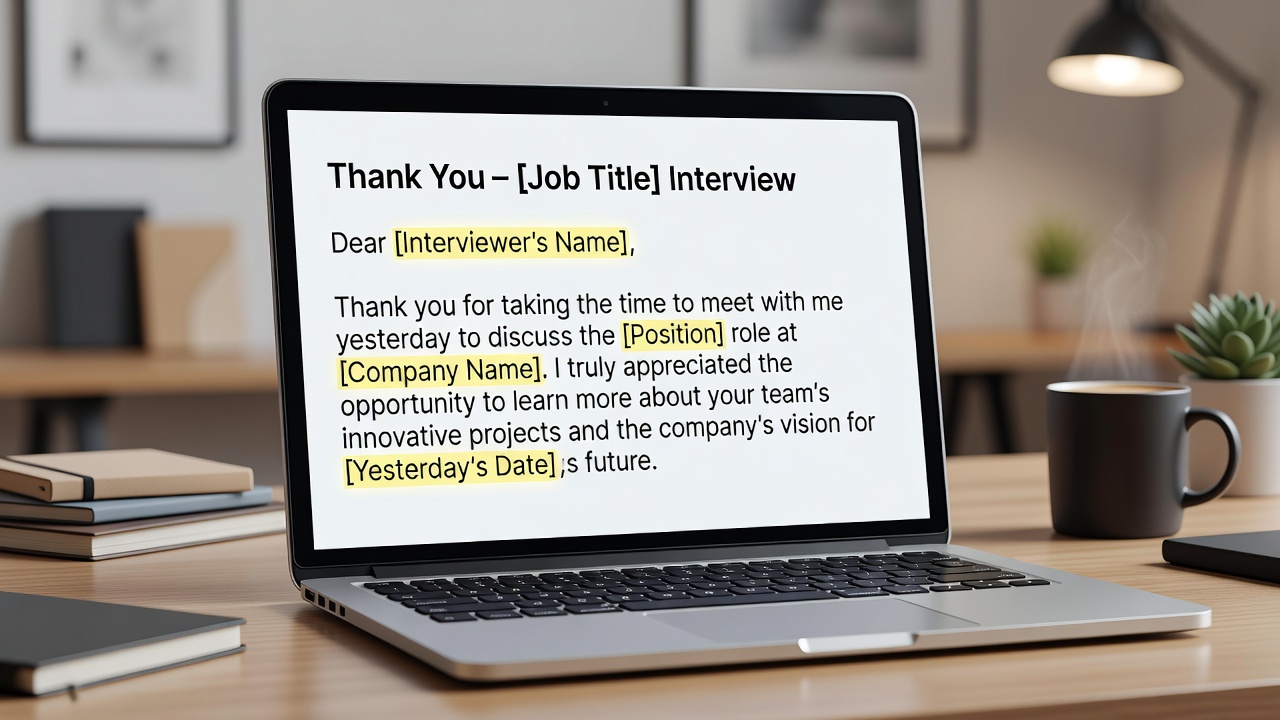
A strong thank you note follows a clear, concise structure: subject line, greeting, expression of gratitude, personalized details, value reinforcement, call to action, and professional closing. Keep the body between 150-250 words to respect the recipient's time. The subject line should be clear and specific to stand out in a crowded inbox.
Start with a specific subject line like "Thank You – [Your Name] Interview for [Position] on [Date]." Personalize the greeting with the interviewer's name. In the opening paragraph, thank them for their time and mention the role. The middle section should reference one or two specific discussion points to show active listening. Close by reiterating your fit for the position and expressing eagerness for next steps. This structure ensures your note is both professional and memorable.
Real-World Examples: Strong Versus Weak Notes
Weak example: "Dear Hiring Manager, Thanks for the interview. I enjoyed it. Best, John." This lacks personalization and fails to reinforce qualifications, making it easy to overlook. It provides no new information and could apply to any interview.
Strong example: "Dear Ms. Patel, Thank you for taking the time to discuss the Marketing Manager role yesterday. I particularly appreciated learning about your upcoming campaign expansion and how my experience leading cross-channel strategies at Acme Corp could contribute to those goals. I'm excited about the possibility of joining your team and would welcome the chance to discuss further. Sincerely, John Rivera." This version shows research, connects skills to company needs, and leaves the door open for follow-up.
Tailoring Notes to Different Interview Formats
Virtual interviews require the same professionalism but may include references to the video platform or specific online discussions, such as challenges with screen sharing that you handled gracefully. For in-person meetings, mention any tour of the office or team interactions to show engagement. Phone interviews benefit from notes that recap verbal exchanges clearly, perhaps highlighting key questions asked over the call. Group or panel formats call for individualized notes highlighting unique contributions from each interviewer, ensuring no one feels overlooked.
Common Mistakes to Avoid
- Generic templates without personalization that fail to reference the actual conversation
- Typos or grammatical errors that undermine your attention to detail
- Repeating your resume verbatim instead of adding new insights or connections
- Sending to the wrong email address due to rushed typing
- Following up too aggressively with multiple messages in quick succession
- Ignoring cultural nuances in international interviews, such as formality levels
- Forgetting to proofread for tone, which can come across as overly casual or salesy
Integrating Modern Tools Like AI for Drafting
AI writing assistants can help generate initial drafts based on your interview notes, ensuring polished language and structure. However, always review and infuse personal details to maintain authenticity—hiring managers can detect overly generic AI output. Tools integrated with platforms like LinkedIn allow seamless customization while preserving your unique voice. Combine AI suggestions with your own recollections for the best results, and consider running drafts through grammar checkers for extra polish.
Actionable Templates for Quick Customization
Basic template: Subject: Thank You for [Role] Interview. Greeting. Gratitude paragraph. Specific reference to discussion. Closing with enthusiasm and signature. This provides a reliable starting point for any interview type.
Advanced template for follow-up: Include a relevant article link or brief idea sparked by the conversation to demonstrate ongoing engagement and proactive thinking. Customize further by adding one question you wish you had asked during the interview.
Following Up After Sending the Note
After sending your thank you note, monitor your inbox and be prepared for responses. If you do not hear back within the expected timeline, a single polite follow-up email after one week can reaffirm interest without seeming pushy. Track all notes sent in a simple spreadsheet to manage multiple applications effectively.
Frequently Asked Questions
How often should I send thank you notes?
Send one after every interview round and to each key participant when possible to maximize visibility across the hiring team.
What if I interviewed with multiple people?
Send individual notes to each, varying the content slightly based on their questions or comments to show you paid attention to everyone.
Is it okay to send a note if I think the interview went poorly?
Yes—professionalism can sometimes turn situations around or open doors for future opportunities, even if this role does not work out.
Conclusion
Mastering thank you notes is a high-impact, low-effort strategy that enhances your candidacy in the 2026 job market. By focusing on timing, personalization, and authenticity, you position yourself as a thoughtful professional ready to contribute. Implement these practices consistently to maximize your post-interview success and build lasting professional relationships.


No comments yet. Be the first!