 Jobboy

Introduction to ESG Governance in Interviews
Corporate governance has become a cornerstone of ESG discussions in 2026 interviews. Recruiters increasingly probe candidates on frameworks that ensure accountability, transparency, and ethical oversight. This article draws from real sustainability reports to equip you with practical frameworks, weak versus strong sample answers, and regulatory context like the Corporate Sustainability Reporting Directive (CSRD). Understanding governance helps quantify impacts on risk management and stakeholder trust. Candidates who reference specific metrics and recent disclosures stand out because they demonstrate both strategic thinking and operational awareness. In competitive interviews, depth matters more than buzzwords, so grounding answers in measurable outcomes from actual company reports gives you a clear edge.
Key Regulatory Updates: CSRD and Beyond
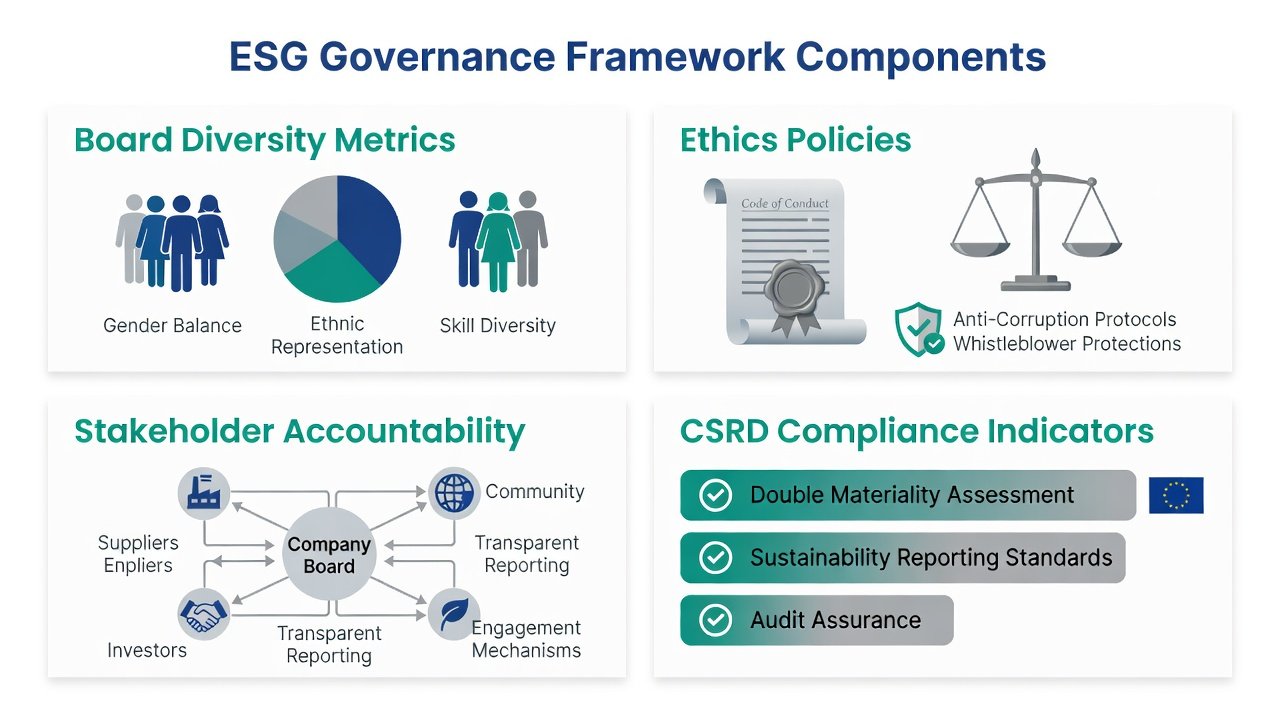
The CSRD, enforced across the EU, mandates detailed governance disclosures starting in 2025 reporting cycles. Companies must report on board oversight of sustainability matters and due diligence processes. European Commission resources provide official guidance on compliance expectations. Beyond CSRD, updates from the OECD emphasize due diligence in supply chains and board-level accountability for environmental and social risks. Interviewers may ask how you would prepare a company for double materiality assessments required under CSRD, which combine financial and impact perspectives. A strong response references the directive's emphasis on integrating governance into annual reporting cycles and using standardized templates for consistency across sectors. Candidates should also note how non-EU companies with significant EU operations must comply, creating global ripple effects. Practical preparation includes reviewing sample CSRD-aligned reports from peer companies to identify common governance disclosures such as board committee charters and risk escalation procedures.
Board Diversity Metrics and Their Interview Relevance
Interviewers often ask about measurable diversity targets. Leading firms now track gender balance, ethnic representation, and skills matrices on boards. For example, reports from major multinationals show targets of at least 40% female directors and annual skills assessments that include ESG expertise. Discuss how diversity correlates with better risk oversight, citing studies that link varied board composition to improved long-term decision making. Expand your answer by explaining implementation steps: conducting annual board evaluations, setting time-bound targets, and publishing progress in sustainability reports. Weak answers simply state diversity is important, while strong answers quantify progress and link it to business outcomes like reduced regulatory fines or enhanced innovation. Prepare examples showing how a skills matrix identifies gaps in climate expertise or human rights knowledge. This level of detail shows you understand governance as a dynamic system rather than a static policy.
Ethics Policies and Anti-Corruption Frameworks
Ethics codes form the backbone of governance. Effective policies include whistleblower protections, annual training, and third-party audits. Compare weak and strong responses below. Weak answer: "We have an ethics policy that everyone follows." Strong answer: "Our ethics framework includes mandatory annual training for all employees, a third-party hotline reporting 98% resolution rate within 30 days, and board-level review of violations, as detailed in our latest sustainability disclosure. We also conduct biennial third-party audits aligned with OECD guidelines." Expand further by describing how policies address emerging risks such as AI ethics and data misuse. Interviewers may present scenarios involving conflicts of interest; prepare to walk through escalation protocols step by step. Another strong example involves integrating ethics metrics into performance reviews, creating accountability at every level. Reference OECD anti-corruption principles to add credibility when discussing international operations. Multiple case examples help demonstrate versatility across industries.
Stakeholder Accountability Mechanisms
Modern governance emphasizes engagement with investors, employees, and communities. Frameworks often use materiality assessments and regular reporting cycles. Detail how companies map stakeholders by influence and impact, then schedule structured dialogues such as quarterly investor calls focused on ESG or annual employee surveys feeding into board reports. Actionable steps include defining clear feedback loops where stakeholder input directly influences policy updates. For instance, a consumer goods company revised its packaging standards after community consultations revealed concerns about plastic waste. In interviews, explain how you would measure accountability through KPIs like response times to stakeholder queries or percentage of recommendations adopted. Tie these mechanisms back to CSRD requirements for transparent due diligence reporting. This demonstrates you can operationalize governance beyond high-level statements.
Sector-Specific Comparisons
- Financial services: Heavy focus on risk oversight committees and climate stress testing, with boards reviewing portfolio alignment to net-zero pathways quarterly.
- Manufacturing: Emphasis on supply chain due diligence and worker safety boards, including third-party audits of Tier 1 and Tier 2 suppliers.
- Technology: Data privacy governance and AI ethics committees that report directly to the board on algorithmic bias and cybersecurity incidents.
- Energy: Dedicated transition committees overseeing decarbonization roadmaps and community impact assessments for new projects.
Use these distinctions to tailor answers to the industry of the hiring company. For example, a banking role might require discussing how governance frameworks integrate climate risk into credit decisions, while a tech interview could focus on data ethics oversight structures.
Case Studies from Recent Sustainability Disclosures
A global retailer updated its governance charter in 2025 to include a dedicated sustainability committee. This led to a 25% improvement in supplier compliance scores within one year by implementing real-time tracking dashboards reviewed monthly by the board. Another energy firm linked executive compensation to ESG targets, resulting in measurable reductions in emissions intensity across operations. A European bank enhanced its stakeholder accountability by publishing detailed minutes from ESG-focused board meetings, increasing investor confidence scores in annual surveys. These cases illustrate how governance changes translate into quantifiable benefits. When preparing, analyze at least two recent reports from your target sector and extract specific governance improvements mentioned. This preparation allows you to reference real-world transformations during interviews, moving beyond theory to demonstrated results. Further examples include a pharmaceutical company establishing an independent ethics board to oversee clinical trial transparency, which reduced reputational incidents by 40% over two years.
Actionable Steps to Strengthen Your Responses
- Review the latest reports from target companies via their investor pages and note exact governance metrics disclosed.
- Quantify governance impacts with metrics such as board meeting frequency, policy violation rates, or diversity percentages from the most recent filings.
- Practice linking frameworks to CSRD and similar regulations using specific article references where possible.
- Prepare questions about the company's current governance challenges to show proactive thinking.
- Rehearse scenario-based answers that incorporate ethics escalation procedures and stakeholder feedback integration.
- Build a personal library of three to five case studies across sectors for flexible referencing.
Short FAQ Section
How should I discuss board oversight in interviews?
Focus on specific committees, meeting cadence, decision escalation processes, and links to sustainability outcomes backed by examples from disclosures. Mention how boards receive regular ESG dashboards and use them for strategic pivots.
What metrics matter most for 2026?
Board diversity percentages, ethics training completion rates, stakeholder engagement scores, and due diligence audit frequencies are highly valued. Always connect these metrics to business performance indicators.
Are sector differences important?
Yes. Tailor examples to financial, manufacturing, tech, or energy governance nuances as shown above. This customization shows research and relevance to the role.
How do I handle questions on emerging risks like AI governance?
Reference board-level AI ethics committees, bias testing protocols, and integration into existing risk frameworks while citing regulatory trends.
Conclusion
Mastering ESG governance questions requires blending regulatory knowledge with real-world metrics and structured answers. By studying frameworks from actual reports, expanding on sector variations, and practicing the strong sample responses provided, candidates can demonstrate both depth and practical insight for 2026 roles. Consistent preparation using these expanded sections will help you deliver comprehensive, data-backed answers that resonate with interviewers focused on governance excellence.

No comments yet. Be the first!