 Jobboy

Introduction to ESG Compliance in 2026 Job Interviews
Preparing for ESG compliance roles in 2026 demands a sophisticated grasp of shifting global regulations, standardized reporting requirements, and nuanced sector challenges. Professionals targeting positions in sustainability, finance, and operations must showcase not only theoretical knowledge but also the ability to apply frameworks in real-world scenarios. This comprehensive guide delves into critical topics including regulatory evolution, corporate disclosure standards, supply chain complexities, carbon measurement techniques, and stakeholder strategies. It provides actionable response frameworks, side-by-side answer comparisons, authentic examples from leading company reports, and targeted preparation tactics such as AI-assisted practice and STAR methodology applications. By mastering these elements, candidates can deliver data-backed responses that demonstrate measurable impact and forward-thinking expertise.
Key Regulatory Updates Shaping 2026 ESG Interviews
Interviewers frequently test candidates on the latest mandates driving corporate accountability. The EU Corporate Sustainability Reporting Directive continues to expand scope requirements for large entities, mandating detailed double materiality assessments that evaluate both financial and impact perspectives. In parallel, evolving SEC climate disclosure expectations emphasize Scope 3 emissions and transition planning. Candidates should articulate how these rules influence operational decisions, such as implementing enhanced supplier due diligence protocols. Real-world application appears in recent reports where firms adjusted their risk assessments to align with 2026 timelines, resulting in improved transparency scores. Strong answers connect these updates directly to business resilience, citing specific compliance steps like integrating regulatory tracking software and conducting gap analyses against new thresholds.
Corporate Reporting Standards Explained
Proficiency in major frameworks remains essential. The International Sustainability Standards Board under the IFRS Foundation sets baseline requirements for climate and sustainability disclosures, while GRI Standards offer comprehensive impact reporting and TCFD recommendations guide climate risk integration. Effective responses explain alignment processes, such as mapping existing data systems to ISSB metrics for consistency across financial and non-financial reports. For instance, companies referencing the IFRS Foundation standards have streamlined their 2025 disclosures to meet emerging 2026 expectations. Weak answers merely list acronyms; robust ones detail implementation challenges, such as data verification hurdles, and solutions like third-party assurance partnerships that enhance credibility.
Sector-Specific Challenges and Detailed Examples
Different industries encounter unique ESG hurdles. In manufacturing, supply chain traceability demands dominate due to raw material sourcing risks. Finance sectors grapple with portfolio alignment to net-zero pathways and stress testing for physical climate risks. Energy companies focus on methane leak detection and renewable transition metrics. Drawing from recent corporate sustainability publications, a consumer goods leader demonstrated progress by achieving 40% renewable sourcing targets through supplier collaboration. Candidates should prepare sector-tailored narratives, referencing how regulatory pressures like the CSRD affect their field and outlining mitigation tactics such as scenario modeling for 2030 climate pathways.
Supply Chain Ethics Deep Dive
Ethical sourcing and human rights due diligence form core interview themes. Under emerging legislation, organizations must map tier-2 and tier-3 suppliers, conduct risk assessments, and establish remediation mechanisms. Practical steps include deploying blockchain-enabled traceability platforms and annual third-party audits. Examples from 2025 reports illustrate apparel firms resolving forced labor indicators through corrective action plans that improved audit pass rates by 30%. Interview responses benefit from discussing key performance indicators like supplier compliance percentages and remediation timelines, showing how proactive engagement reduces reputational and legal exposure.
Carbon Accounting Metrics and Methodologies
Accurate greenhouse gas accounting underpins credible ESG strategies. The GHG Protocol provides the foundational methodology for categorizing emissions into Scopes 1, 2, and 3, with emphasis on boundary setting, activity data collection, and emission factor application. Advanced topics include location-based versus market-based Scope 2 calculations and science-based target validation. 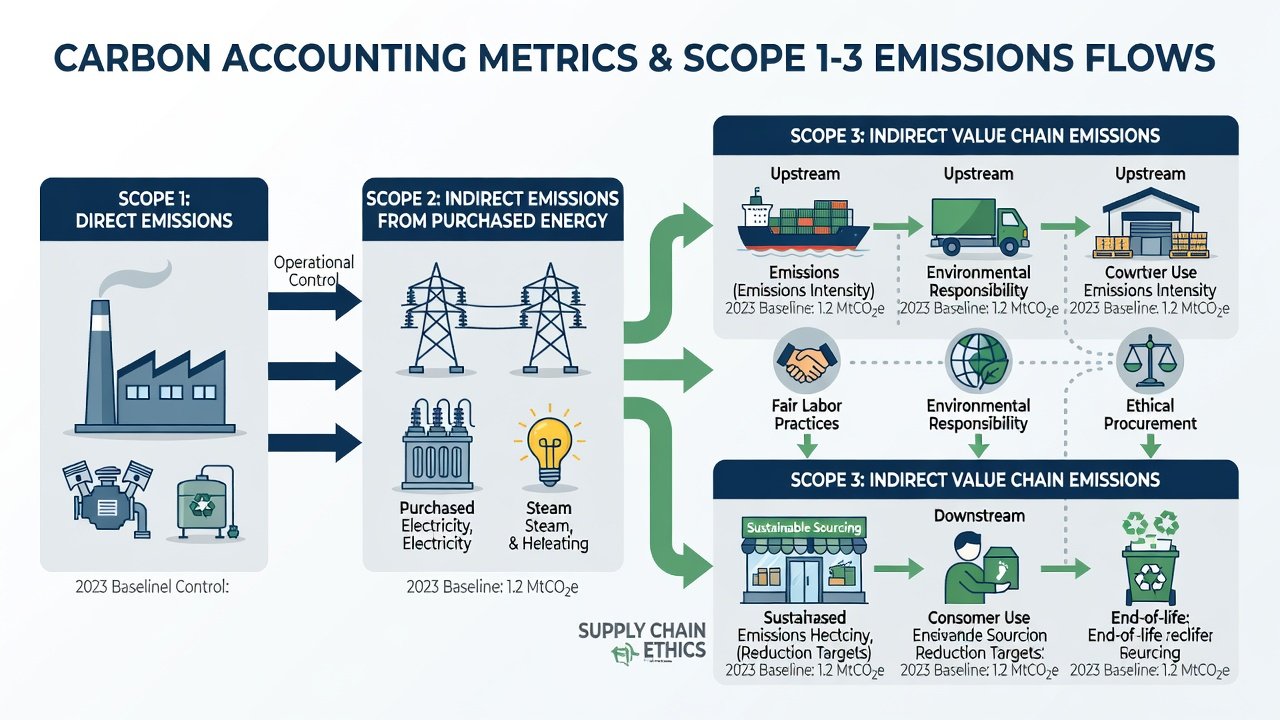
Stakeholder Engagement Strategies
Effective engagement requires structured approaches tailored to diverse groups. Investors seek forward-looking climate scenario analyses, while communities prioritize local impact mitigation. Develop engagement matrices that prioritize issues by materiality, schedule regular dialogues, and track outcomes via satisfaction surveys. Leading firms publish stakeholder feedback summaries in their reports, demonstrating how input shaped policy updates. Strong interview answers include quantifiable results, such as increased investor confidence scores following enhanced disclosure quality.
Step-by-Step Response Frameworks
Utilize the STAR method adapted for ESG contexts. Begin with Situation: describe the regulatory or operational context. Define Task: specify the compliance or reporting objective. Detail Action: outline specific tools, analyses, or collaborations employed. Conclude with Result: quantify improvements like emission reductions or audit enhancements. This structured delivery ensures responses remain concise yet comprehensive, allowing candidates to showcase analytical rigor and outcome orientation.
Weak Versus Strong Answer Comparisons
- Weak: "Carbon accounting involves measuring emissions."
- Strong: "Applying the GHG Protocol, I established Scope 3 boundaries for our supply chain, incorporated supplier-specific emission factors, and verified results through external assurance, cutting reporting discrepancies by 22% as documented in our 2025 CDP response."
- Weak: "Supply chain ethics is important."
- Strong: "I led a due diligence overhaul that identified high-risk suppliers via geographic heat mapping, implemented corrective training programs, and achieved 92% compliance within nine months, directly addressing new CSRD requirements."
Sample STAR Responses for Common Questions
Question: Describe how you would advance stakeholder engagement. Situation: Low investor satisfaction with climate disclosures. Task: Enhance transparency on transition plans. Action: Introduced quarterly webinars and integrated TCFD-aligned scenario data. Result: Investor engagement scores rose 35% per internal surveys. Another example covers regulatory adaptation: Situation involved aligning with updated SEC expectations; Task required data system upgrades; Action encompassed cross-functional workshops; Result yielded fully compliant filings ahead of deadlines.
AI Tools for Interview Preparation
Modern candidates leverage AI platforms to rehearse complex ESG scenarios, receive feedback on answer depth, and simulate regulatory quiz formats. Tools can analyze responses for keyword coverage of 2026 frameworks, suggest improvements for specificity, and generate sector-specific case studies. Regular practice sessions build confidence in articulating metrics and frameworks fluidly during live interviews.
FAQ: Common Pitfalls to Avoid
- How do I stay current with 2026 regulatory changes? Subscribe to updates from authoritative bodies including the SEC and monitor consultation documents.
- What data sources strengthen answers? Reference verified corporate reports and standards from the GHG Protocol site.
- How to handle limited personal experience? Emphasize transferable skills and reference cross-sector learnings from the United Nations sustainability resources.
- Should responses include numbers? Yes, but always tie figures to recent, verifiable contexts without speculation.
- Common mistake in carbon questions? Overlooking Scope 3 boundaries; always clarify inclusion criteria.
Conclusion
Excelling in 2026 ESG compliance interviews requires blending regulatory fluency with practical application and clear communication. By expanding knowledge across reporting standards, sector risks, ethical supply chains, carbon methodologies, and engagement tactics, candidates position themselves as valuable assets. Consistent use of frameworks like STAR, combined with AI-supported rehearsal and review of authentic reports, transforms preparation into confident, impactful delivery. This depth of readiness not only addresses interviewer expectations but also signals readiness to drive meaningful sustainability outcomes in future roles.
Explore more strategies in our job search tips.
Learn additional skills through career development resources.

No comments yet. Be the first!