 Jobboy

Introduction
The question 'Where do you see yourself in 5 years?' remains one of the most common and revealing in job interviews. In 2026, with rapid advancements in AI, hybrid work models, and evolving industry demands, interviewers use this prompt to assess long-term alignment, adaptability, and value contribution. Answering effectively requires balancing personal ambition with organizational objectives while showing realistic planning. Candidates who prepare thoughtful responses stand out because they demonstrate not only ambition but also an understanding of how their career path can support the company's strategic direction amid technological disruption.
This comprehensive guide outlines seven proven ways to craft strong responses. Each method includes step-by-step frameworks, strong versus weak examples, and tips tailored to 2026 trends like AI integration and flexible work arrangements. By the end of this article, you will have actionable tools to handle this question confidently across various industries and role levels.
Why This Question Matters in 2026
Employers seek candidates who demonstrate foresight amid technological shifts. According to career resources from LinkedIn, responses that tie personal growth to company success increase hire rates significantly. Research the organization's 2026 objectives, such as AI adoption or sustainability initiatives, before your interview. The question also reveals cultural fit, work ethic, and whether you view the role as a stepping stone or a long-term commitment. In an era of rapid change, hiring managers want to know you can evolve with the business rather than become obsolete.
Furthermore, economic uncertainty and the rise of remote collaboration tools mean that forward-looking answers help differentiate you from applicants who give generic replies. Taking time to prepare shows professionalism and respect for the interview process.
Way 1: Align Personal Goals with Company Objectives
Start by researching the company's mission and recent initiatives. Frame your answer around how your development supports their trajectory. This approach shows you have done your homework and are not simply reciting a scripted personal wish list.
Step-by-step framework: 1. Review company website, annual reports, and recent news for 2026 priorities. 2. Identify 2-3 overlapping areas between your skills and their goals. 3. Express genuine enthusiasm for contributing in those areas while mentioning specific tools or trends you plan to master. 4. End with a question about how the team measures success in those areas to keep the conversation flowing.
Strong example: "In five years, I see myself leading AI-driven projects that enhance our team's efficiency, much like your recent initiatives in machine learning. I plan to deepen my expertise in predictive analytics to help scale operations while supporting the hybrid team structure you have implemented."
Weak example: "I want to be a manager somewhere and maybe get a promotion."
Way 2: Incorporate 2026 Trends Like AI and Hybrid Work
Reference emerging trends to show forward-thinking. Discuss upskilling in AI tools or thriving in hybrid environments. Employers appreciate candidates who acknowledge that the workplace is changing and who are ready to adapt rather than resist new technologies.
Emphasize continuous learning, such as mastering new collaboration platforms or ethical AI usage. Mention how you would apply these trends to improve team productivity or innovation without overpromising unrealistic outcomes.
Strong example: "I aim to become a hybrid work strategist, leveraging AI for remote team optimization, aligning with industry shifts toward flexible models. I am currently exploring tools that streamline asynchronous communication to maintain high performance across distributed teams."
Way 3: Demonstrate Realistic Career Progression
Outline achievable milestones rather than vague promotions. Break down short-term skills building toward long-term roles. This method reassures interviewers that you have a practical plan and understand the time and effort required to advance.
- Year 1-2: Master core tools, complete AI certification courses, and contribute to cross-functional projects.
- Year 3-4: Lead small initiatives, mentor junior colleagues, and refine hybrid collaboration techniques.
- Year 5: Manage teams or innovate processes that directly impact company objectives such as efficiency or customer experience.
Provide context around potential obstacles, such as economic shifts, and how you would adjust your path while remaining committed to growth.
Way 4: Tailor Responses by Industry or Role Level
For tech roles, focus on innovation and emerging technologies; for management, emphasize leadership development and team scaling. Entry-level candidates should highlight learning paths and foundational skill acquisition, while senior applicants discuss strategic impact and organizational influence. Customizing your answer prevents it from sounding like a one-size-fits-all template.
Way 5: Use the STAR Method for Structured Answers
Apply Situation, Task, Action, Result to illustrate past alignment with future goals. This storytelling technique keeps your response organized and memorable while providing concrete evidence of your capabilities.
Walk through a past project where you aligned individual objectives with team outcomes, then connect it to your five-year vision. This method works especially well when combined with trend references.
Way 6: Show Value Addition Through Research Tips
Prepare by analyzing job descriptions and competitor landscapes. Use resources like Indeed Career Advice for mock interviews and sample answers. Read recent industry reports to understand how AI is reshaping your field and prepare two to three specific ways you could contribute to those changes.
Conduct informational interviews with current employees when possible and review the company's social media activity for insights into their 2026 priorities. This level of preparation allows you to reference real initiatives rather than generic statements.
Way 7: Practice Concise Delivery with Follow-Ups
Keep answers to 1-2 minutes. Prepare for probes on challenges or adjustments by having backup scenarios ready, such as how you would pivot if a project is delayed or if new technologies emerge. Rehearse with a friend or record yourself to refine tone and pacing.
Common Mistakes to Avoid
Many candidates fail by being too vague, overly ambitious without a plan, or completely self-focused without mentioning the employer. Avoid saying you want the interviewer's job or that you plan to start your own company in five years unless it clearly benefits the current organization. Another frequent error is ignoring 2026 workplace realities such as AI ethics or hybrid team dynamics.
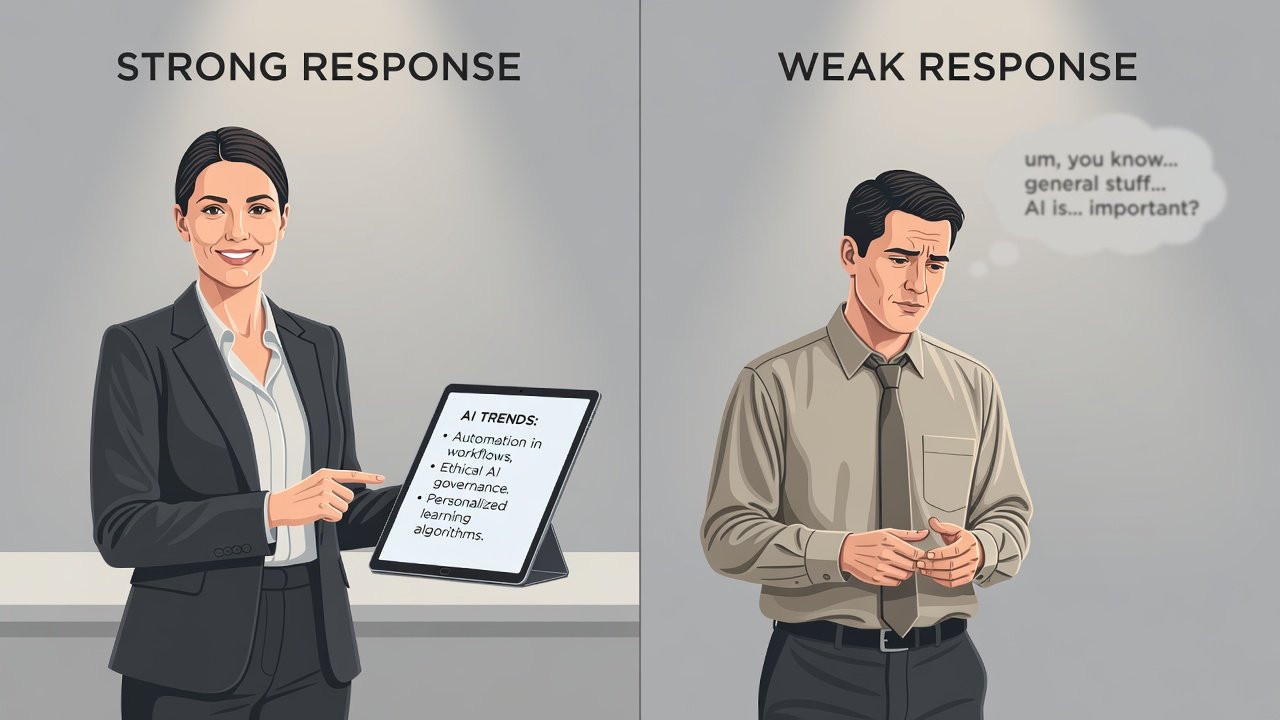
Strong vs. Weak Example Comparisons
Compare full responses across scenarios to refine your delivery. A strong answer in marketing might reference data-driven personalization using AI, while a weak one simply states a desire for a bigger title. Review multiple examples and adapt them to your specific situation.
Actionable Research Tips
Conduct informational interviews and track industry reports for up-to-date insights. Visit authoritative sites such as Glassdoor to understand company culture and growth trajectories. Create a one-page document summarizing the organization's recent achievements and your proposed contributions before each interview.
FAQ
What if my goals don't perfectly match the company? Pivot to shared values and growth opportunities while remaining honest about your aspirations. Highlight transferable skills that benefit both parties.
How to handle follow-up questions? Stay flexible and reference specific company projects. Prepare three variations of your answer depending on the interviewer's focus area.
Common pitfalls to avoid? Vagueness, self-centered answers, or ignoring trends. Always tie your response back to the role and organization.
Should I mention salary or title expectations? Focus on skills and impact rather than compensation or specific titles unless asked directly.
Conclusion
Mastering this question positions you as a thoughtful candidate ready for 2026 challenges. Practice these methods to deliver confident, aligned responses that resonate with hiring managers and increase your chances of long-term career success.


Comments (1)