 Jobboy

Introduction
Job seekers entering 2026 encounter a dynamic and highly competitive employment market where generic preparation strategies frequently prove inadequate. Tailoring an interview prep plan to your specific target roles, experience level, and personal background can dramatically improve outcomes by fostering authentic responses and demonstrating deep alignment with employer needs. This comprehensive guide details five actionable steps to construct such a plan, emphasizing integration of keyword research from job descriptions, strategic salary research timelines, and proactive avoidance of pitfalls such as over-preparation that leads to stiff or unnatural delivery.
Throughout this article, you will find practical examples tailored to entry-level candidates, mid-career professionals, and senior executives. By following these steps, you can create a roadmap that not only builds skills but also tracks measurable progress, ultimately increasing your chances of securing offers in your desired field.
Step 1: Assess Your Strengths and Gaps
The foundation of any effective custom plan begins with honest self-evaluation. Start by collecting five to ten recent job descriptions for your target positions and highlighting recurring skills, tools, and qualifications. Create a simple spreadsheet with columns for required competencies, your current proficiency level, and supporting evidence from past roles. This process reveals both strengths to emphasize and gaps requiring focused development.
For an entry-level marketing associate, assessment might highlight strong social media experience from internships but flag limited exposure to SEO analytics tools. A mid-career software developer could identify expertise in agile methodologies while noting a need to refresh knowledge of emerging cloud platforms. Senior leaders often discover that while strategic vision is a strength, they must better articulate quantifiable team performance metrics. Dedicate at least three to five hours to this phase, revisiting your resume and LinkedIn profile to ensure consistency. Incorporate feedback from former colleagues or mentors to validate your self-view and uncover blind spots.
Step 2: Select Relevant Practice Questions
Once gaps are mapped, curate a focused bank of 25 to 40 practice questions that directly address both technical requirements and behavioral competencies. Prioritize questions pulled from actual postings and supplement with industry-standard queries. Structure responses using the STAR method for behavioral items and prepare concise technical explanations or code walkthroughs where applicable. Weave in keywords naturally during rehearsal to optimize for applicant tracking systems and interviewer expectations.
Consider varied career stages: entry-level applicants benefit from questions about teamwork and adaptability drawn from academic or volunteer experiences, while executives should prepare detailed stories about organizational change management and P&L responsibility. Review questions weekly, rotating in new ones as you master older material. This targeted selection prevents wasted effort on irrelevant topics and builds confidence through relevance.
Step 3: Schedule Mock Sessions
Mock interviews transform preparation from theoretical to practical. Plan four to eight sessions spaced across your timeline, beginning with low-stakes practice among trusted peers and progressing to more formal simulations with industry professionals. Record every session and review footage for body language, pacing, and clarity. Seek specific feedback on strengths and areas for refinement rather than general impressions.
Timing matters—schedule the first mock two weeks before your earliest application deadline and the final one within 48 hours of a real interview. Different career stages require different formats: entry-level candidates might benefit from campus career center sessions, while executives often engage executive coaches for nuanced leadership scenario practice.
Step 4: Integrate Salary Research Timelines
Compensation discussions form a critical component of interview success, yet many candidates delay research until offers arrive. Build dedicated research blocks into your plan during week three, using authoritative sources to understand current market ranges for your role, location, and experience level. This timing allows you to focus earlier weeks on core skills while ensuring negotiation readiness later. Visit Bureau of Labor Statistics for official occupational data and cross-reference with CareerOneStop resources for localized insights. Document three key data points per target role and prepare thoughtful questions about total compensation packages including benefits and growth opportunities.
Step 5: Track Progress with Tools
Effective tracking turns preparation into a measurable process. Leverage free or low-cost digital tools such as Notion templates, Google Sheets, or dedicated interview apps to log completed sessions, rate response quality on a 1-10 scale, and note recurring feedback themes. Set weekly milestones like mastering five new questions or achieving a consistent eight-plus rating on mock deliveries. Review progress every Sunday evening and adjust the following week’s focus accordingly. This data-driven approach highlights improvements and prevents stagnation.
Sample Weekly Schedule
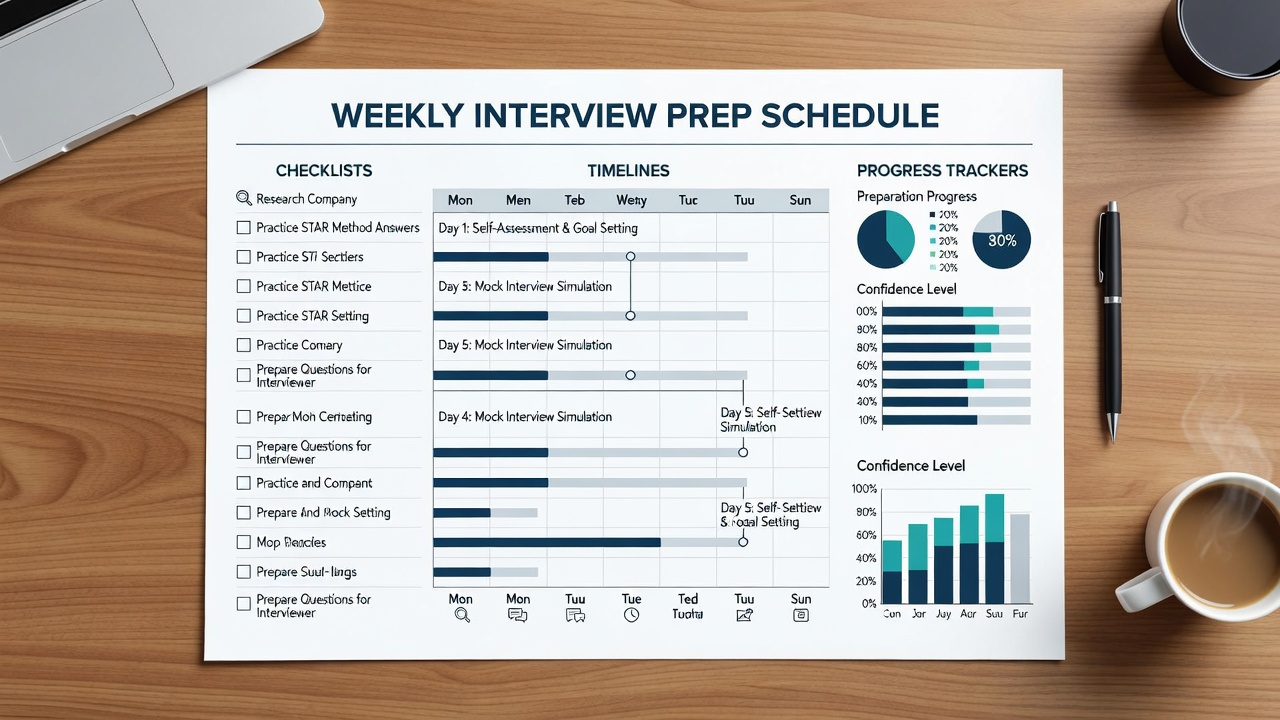
A realistic four-week timeline might look like this for a mid-career professional targeting a product management role:
- Week 1: Conduct full strengths assessment and keyword mapping (6 hours total)
- Week 2: Build question bank and complete two solo practice rounds (7 hours total)
- Week 3: Perform salary research, first peer mock interview, and refine stories (5 hours total)
- Week 4: Conduct two additional mocks with feedback review and final polish (6 hours total)
Adjust hours based on your availability and role complexity while maintaining consistent daily micro-sessions of 30-45 minutes.
Generic vs. Personalized Plans: A Comparison
Generic plans provide broad templates that anyone can follow but often result in surface-level answers that fail to differentiate candidates. Personalized plans integrate your unique career narrative, target company values, and specific skill gaps, producing responses that feel genuine and memorable. For example, a generic plan might suggest practicing “Tell me about yourself,” while a custom version refines that answer to highlight a recent pivot from finance to tech with concrete project examples. The result is higher interviewer engagement and stronger perceived fit.
Avoiding Common Pitfalls
One frequent mistake is over-preparation, which can manifest as memorized scripts that sound robotic during live conversations. Counter this by focusing on core stories and flexible talking points rather than verbatim recitations. Another pitfall involves ignoring company-specific research, leading to generic questions at the end of interviews. Finally, neglecting rest in the final 24 hours before an interview can impair recall and energy. Build buffer days into your schedule to maintain balance.
FAQ: Adjusting for Last-Minute Interviews
How should I compress the plan for a same-week interview? Focus exclusively on the top ten most relevant questions, one 45-minute mock session, and a rapid review of the company website and recent news. Dedicate two intense days rather than spreading efforts thin.
What if unexpected technical gaps surface? Immediately add targeted micro-learning resources such as short tutorials or practice problems, then incorporate one additional mock to test the new material under pressure.
Can I reuse the same plan for multiple roles? Yes, but update the keyword mapping and question bank for each new application to maintain personalization and relevance.
Conclusion
Implementing these five steps equips you with a robust, individualized interview preparation strategy designed for the realities of 2026 hiring. By investing time in assessment, targeted practice, strategic research, and consistent tracking, you position yourself to deliver compelling performances that resonate with hiring managers. Begin building your plan today to turn preparation into a competitive advantage throughout your job search journey.


No comments yet. Be the first!