 Jobboy

Introduction
In 2026, recruiters face increasing pressure to make faster, smarter hiring decisions that deliver long-term value. Predictive analytics offers a powerful way to move beyond basic metrics like time-to-hire and cost-per-hire by forecasting candidate success and identifying turnover risks before offers are extended. This data-driven approach helps mid-sized firms compete with larger organizations that already leverage advanced tools. HR leaders who adopt predictive analytics report stronger retention rates and more aligned team dynamics. This article examines data sources, ATS integration, ethical considerations, implementation steps, tool comparisons, and case studies to guide professionals seeking practical results. By understanding how algorithms analyze patterns from past hires, recruiters can prioritize applicants likely to thrive, ultimately reducing costly mis-hires that plague many organizations.
Understanding Predictive Analytics in Recruitment
Predictive analytics applies machine learning algorithms to historical and real-time data to identify patterns that predict future outcomes. In hiring, this means analyzing variables such as skills assessments, work history, interview responses, and even cultural fit indicators to estimate a candidate’s likelihood of succeeding in a role and staying with the organization. Unlike reactive hiring methods, predictive models allow recruiters to prioritize candidates who match proven success profiles. This reduces bias when used responsibly and improves overall workforce quality. The technology draws from statistical modeling and artificial intelligence to process large datasets that humans cannot evaluate manually. For example, an algorithm might discover that candidates with specific combinations of project management certifications and prior industry experience stay 40 percent longer on average. Mid-sized companies benefit particularly because they often lack the brand recognition of Fortune 500 firms yet still need top talent to scale operations effectively.
Identifying Relevant Data Sources
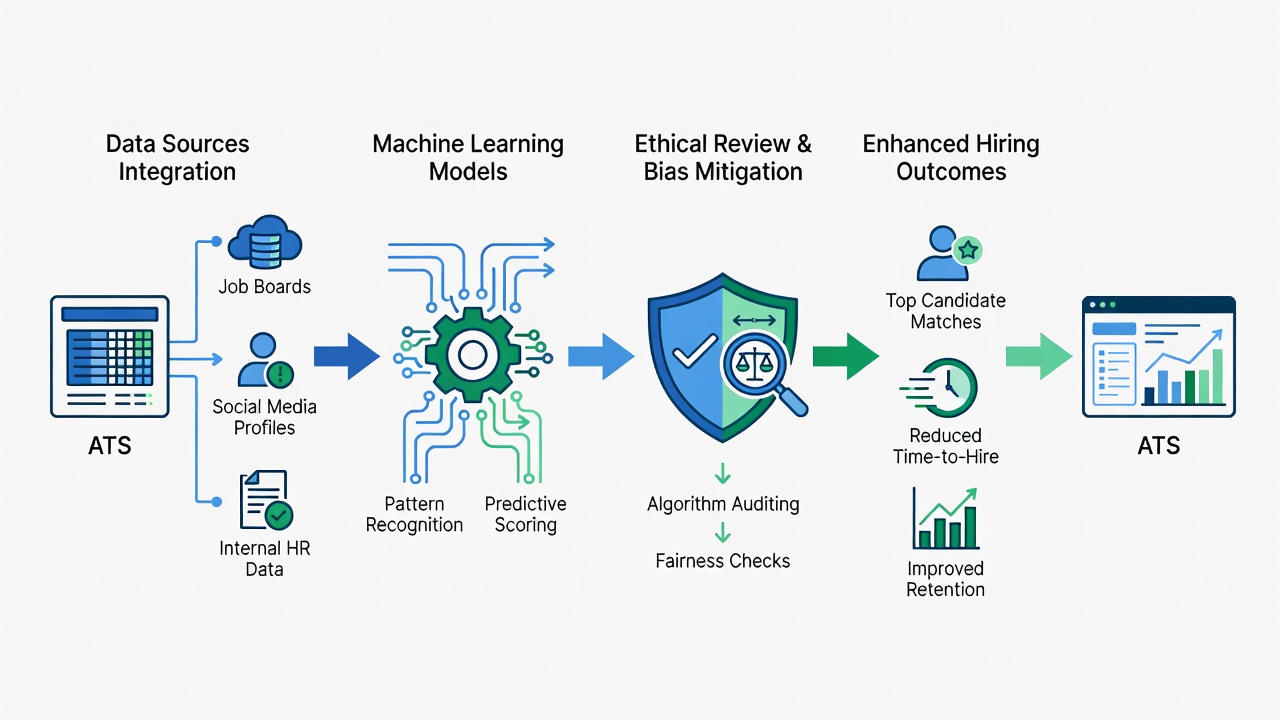
Effective predictive models require high-quality, diverse data inputs. Common sources include applicant tracking system records, performance reviews, employee engagement surveys, skills testing platforms, and external labor market data. Organizations should also consider structured data from resumes and unstructured data from interview notes or video assessments. Combining internal performance metrics with publicly available industry benchmarks creates more robust predictions. Additional valuable sources encompass exit interview transcripts, promotion histories, and even anonymized data from professional networking platforms. HR teams must clean and validate data regularly to avoid the “garbage in, garbage out” problem that undermines model accuracy. When sourcing external data, firms often reference government labor statistics to contextualize local talent pools and salary trends within their sector.
Integrating Analytics into ATS Platforms
Most mid-sized companies already use applicant tracking systems. The next step is layering predictive capabilities through native integrations or third-party plugins. This allows real-time scoring of applicants as they enter the pipeline. Successful integrations map existing ATS fields to predictive models and enable dashboards that flag high-potential candidates. IT and HR teams should collaborate on data pipelines to ensure seamless flow without disrupting current workflows. Implementation typically begins with API connections that pull candidate information into the analytics engine. Once configured, the system generates risk scores for turnover, cultural fit, and performance potential. Regular system audits help maintain data integrity and prevent drift in model predictions over time. Many platforms also offer mobile-friendly interfaces so recruiters can review scores during interviews or on-site visits.
Ethical Data Usage Guidelines
Using personal data for predictions demands strict adherence to privacy regulations. Recruiters must obtain informed consent, anonymize sensitive attributes where possible, and regularly audit algorithms for unintended bias. Transparency with candidates about how their data is used builds trust. Organizations should also establish review boards to oversee model fairness and document all decision logic for compliance purposes. Authoritative guidance is available from the U.S. Equal Employment Opportunity Commission and the U.S. Department of Labor. Additional best practices include limiting data retention periods and providing candidates with opt-out options. Firms that neglect ethics risk legal challenges and damage to employer brand reputation. Regular third-party audits of algorithms can identify hidden biases related to gender, ethnicity, or age that might otherwise go unnoticed.
Step-by-Step Implementation Examples
- Define success metrics such as 12-month retention and performance ratings with input from hiring managers and department heads.
- Audit current data for completeness and accuracy, removing duplicate entries and filling gaps in historical records.
- Select or build a predictive model using historical employee data, starting with a small pilot dataset of 200-300 past hires.
- Integrate the model with your ATS and test on a pilot requisition, comparing algorithmic recommendations against traditional screening methods.
- Train recruiters on interpreting scores and combining them with human judgment through workshops and hands-on simulations.
- Measure outcomes quarterly and refine the model based on results, incorporating feedback loops from new-hire performance reviews.
Each phase should include stakeholder buy-in meetings to address concerns about job displacement or over-reliance on technology. Documenting every decision creates an audit trail that supports continuous improvement.
Tool Comparisons
Several platforms specialize in predictive hiring. Leading options include Phenom, Eightfold AI, and HireVue. Each offers varying strengths in skills inference, bias mitigation features, and ease of ATS integration. Mid-sized firms often prefer tools with transparent pricing models and strong customer support for initial setup. Phenom excels at candidate experience personalization while Eightfold AI provides robust talent intelligence across multiple roles. HireVue focuses heavily on video interview analysis and structured assessment scoring. Compare features such as real-time candidate scoring, customizable success factors, and reporting dashboards before selecting a vendor. Pilot testing with one open role helps validate fit without committing large budgets upfront. Many vendors also provide implementation consultants who assist with data mapping and change management.
Case Studies from Mid-Sized Firms
A 450-employee software company reduced voluntary turnover by 22 percent after implementing predictive models that flagged cultural misalignment risks during screening. The firm combined internal performance data with assessment scores to refine its ideal candidate profile, resulting in hires who demonstrated higher collaboration scores within their first six months. Another example comes from a regional healthcare provider with 800 staff. By integrating predictive analytics into its ATS, the organization improved new-hire performance scores by 18 percent within the first year while shortening its average time-to-fill by three weeks. A third case involved a manufacturing company with 600 employees that used predictive models to forecast safety compliance risks, leading to a 15 percent drop in workplace incidents among new hires selected through the system.
Measuring ROI and Overcoming Common Challenges
Return on investment appears through reduced turnover costs, faster productivity ramp-up, and improved manager satisfaction with new team members. Challenges often include resistance from recruiters accustomed to intuition-based decisions and difficulties obtaining clean historical data. Overcoming these requires executive sponsorship, phased rollouts, and ongoing education programs. Regular calibration sessions between data scientists and HR practitioners help maintain model relevance as job requirements evolve.
Conclusion
Predictive analytics transforms hiring from a reactive process into a strategic advantage. When implemented thoughtfully with attention to data quality and ethics, it delivers measurable improvements in candidate success and retention. HR professionals who invest in these capabilities position their organizations for sustained competitive strength in 2026 and beyond.
FAQ
What are common pitfalls when adopting predictive analytics?
Many organizations overlook data hygiene or fail to combine algorithmic scores with recruiter intuition, leading to suboptimal results and frustrated hiring teams.
How can ROI be measured?
Track metrics such as new-hire retention rates, performance scores, and time-to-productivity before and after implementation. Compare these against baseline figures collected prior to rollout.
Does predictive analytics replace human recruiters?
No. The technology augments human judgment by surfacing data-driven insights while final decisions remain with experienced professionals who understand nuanced team dynamics.
What data privacy laws should companies consider?
Key regulations include GDPR in Europe and various state-level privacy laws in the United States. Compliance teams should review requirements specific to the locations where candidates reside.


No comments yet. Be the first!