 Jobboy

Introduction to Internal Talent Marketplaces in 2026
Internal talent marketplaces have become essential tools for organizations seeking to improve employee retention and internal mobility. In 2026, mid-sized businesses face unique challenges in talent management as competition for skilled workers intensifies. These platforms enable employees to discover and apply for roles, projects, or development opportunities within the company, reducing reliance on external hiring. For SMBs, scaling such marketplaces involves building upon existing HR technology rather than investing in entirely new systems. This approach minimizes disruption while maximizing the value of current investments in applicant tracking systems and HR information platforms.
The benefits extend beyond retention. Companies that implement effective internal marketplaces often see improved engagement, better skill utilization, and faster adaptation to business needs. By prioritizing employee visibility and intelligent matching, SMBs can create pathways for career growth that rival those offered by larger enterprises. This guide provides in-depth coverage of setup processes, technology comparisons, practical examples, measurement frameworks, and strategies for overcoming typical obstacles such as limited budgets and organizational resistance.
Key Steps for Setting Up an Internal Talent Marketplace
Assess Your Current HR Tech Stack
Start with a thorough evaluation of tools already deployed across the organization. Map out data flows between the applicant tracking system, performance management software, learning management system, and any skill inventory databases. Identify where employee profiles lack completeness or where job postings remain isolated from internal audiences. Document integration points and potential data gaps early to prevent downstream issues. Involve IT and HR stakeholders in this audit to ensure alignment on technical requirements and user needs. This foundational step often reveals quick wins, such as enabling profile sharing features that require minimal configuration.
Implement ATS Integrations
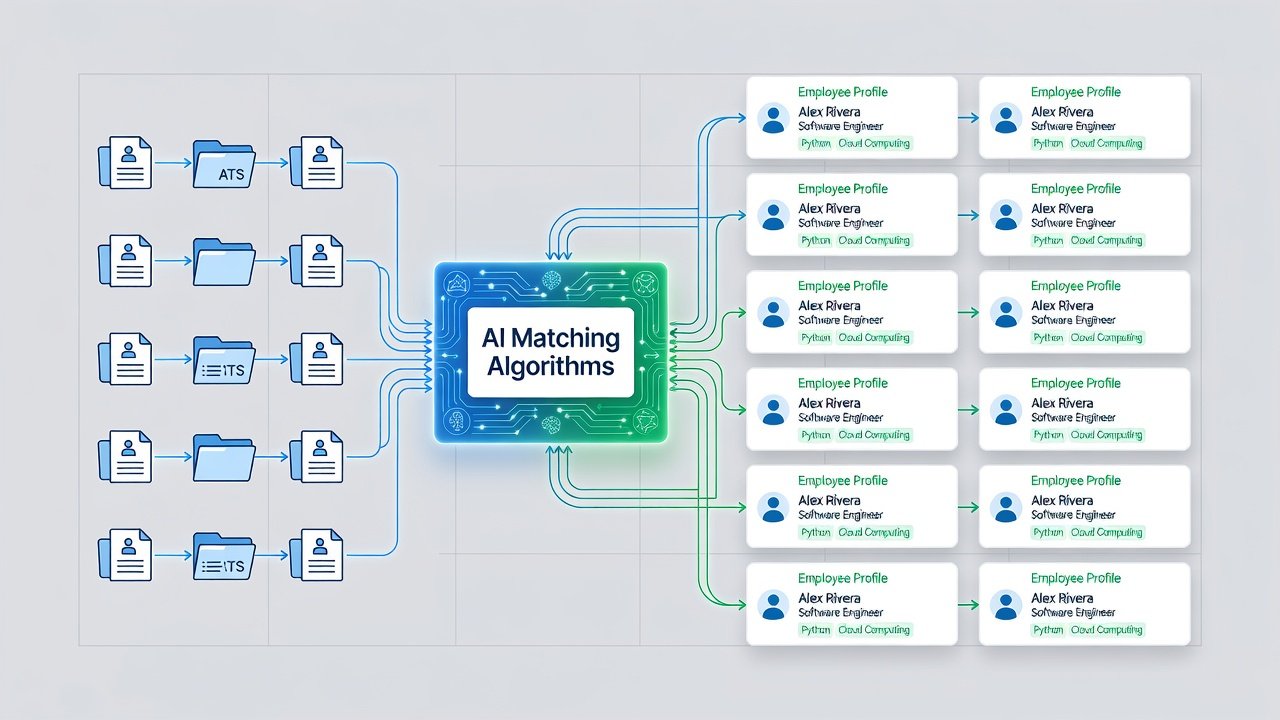
Seamless connectivity between the applicant tracking system and the marketplace platform forms the backbone of successful implementations. Focus on bidirectional data synchronization so that internal job openings automatically appear to eligible employees while applications update the central ATS in real time. Prioritize APIs that support secure authentication and handle high volumes of profile updates. Test integrations in a staging environment using anonymized employee data to verify accuracy. Common pitfalls include mismatched field mappings and overlooked permissions that restrict visibility. Document all integration workflows and establish monitoring protocols to catch sync failures promptly.
Configure AI-Powered Matching Rules
Effective matching relies on well-designed algorithms that balance skills, experience levels, location preferences, and career aspirations. Begin by defining core criteria such as required competencies, tenure thresholds, and performance ratings. Layer in customizable weights so managers can emphasize certain factors for specific roles. Incorporate bias-mitigation checks to promote equitable opportunities across demographics. Run pilot matching exercises with historical data to refine accuracy before launch. Regular audits of match outcomes help maintain trust and relevance as workforce dynamics evolve throughout 2026.
Enhance Employee Visibility Features
Robust visibility tools empower employees to take ownership of their career paths. Implement searchable profiles that highlight verified skills, completed projects, and endorsements from colleagues. Add notification systems that alert users to relevant openings or mentorship opportunities based on their stated interests. Include features like one-click expressions of interest and transparent status tracking for applications. These elements increase participation rates and reduce the perception that opportunities are only available through informal networks.
Comparing Low-Cost Tools Versus Enterprise Options
Budget-conscious SMBs often evaluate lightweight solutions that integrate directly with popular ATS platforms such as Greenhouse or Lever. These options typically provide core matching and visibility functions at lower upfront costs while allowing gradual feature expansion. In contrast, enterprise-grade platforms deliver sophisticated analytics, advanced AI customization, and dedicated support but demand more extensive configuration and change management resources. A practical comparison involves assessing total cost of ownership over three years, including training time and potential productivity gains from higher internal mobility. Many growing firms find that starting with modular low-cost tools and migrating select features to more robust systems yields the best return. Authoritative guidance from SHRM emphasizes phased adoption to align technology with organizational maturity.
Real-World Examples from Growing Firms
Consider a 450-employee software company that integrated its existing ATS with a marketplace module. Within nine months, internal mobility increased by 28 percent, and external hiring costs declined noticeably. The firm attributed success to clear matching rules and manager training on supporting internal transfers. Another example comes from a regional healthcare provider with 800 staff members. By layering AI visibility features onto their HRIS, they facilitated cross-departmental project assignments that improved retention among clinical roles. A third case involves a manufacturing SMB that used the platform to surface upskilling opportunities, resulting in 15 percent more employees pursuing internal certifications. These examples illustrate how tailored implementations deliver measurable outcomes without requiring enterprise-scale investments.
Metrics to Track Mobility Success and Retention Impact
Quantifying results requires selecting the right key performance indicators and establishing consistent tracking processes. Core metrics include internal application volume, percentage of roles filled internally, average time to fill internal positions, and post-move retention rates at six and twelve months. Additional indicators encompass skill utilization improvements measured through performance reviews and employee sentiment scores regarding career development opportunities. Use dashboards that pull data automatically from the ATS and HRIS to enable monthly reviews. Compare these figures against industry benchmarks available from resources such as U.S. Department of Labor and Bureau of Labor Statistics. Regular analysis allows teams to adjust matching algorithms and communication strategies for continuous improvement.
Addressing Common SMB Hurdles with Actionable Checklists
Change Management Checklist
- Launch a communication campaign that explains benefits for both employees and managers
- Conduct hands-on workshops demonstrating how to navigate the marketplace
- Identify and empower internal champions within each department
- Establish feedback mechanisms including quarterly pulse surveys
- Celebrate early success stories publicly to build momentum
Budget Constraints Checklist
- Map all potential costs including integration setup, training, and ongoing maintenance
- Explore vendor partnerships that offer usage-based pricing models
- Leverage existing vendor relationships to negotiate bundled features
- Calculate projected savings from reduced external recruiting to justify spend
- Phase feature releases based on adoption data rather than upfront scope
Additional Best Practices and Compliance Considerations
Successful scaling also requires attention to data privacy and equal opportunity compliance. Ensure all matching algorithms undergo periodic review for unintended bias, aligning with guidelines from U.S. Equal Employment Opportunity Commission. Provide clear opt-in options for employees regarding profile visibility. Train administrators on handling sensitive information appropriately. Incorporate accessibility standards so the platform serves users with varying needs. These practices protect the organization while fostering an inclusive environment that encourages broad participation.
Conclusion
Scaling internal talent marketplaces equips SMBs with powerful mechanisms for retention and growth in 2026. By methodically assessing current technology, executing targeted integrations, refining AI rules, and tracking meaningful metrics, companies can realize substantial mobility gains. Thoughtful attention to change management and compliance further strengthens outcomes. Organizations that invest effort in these areas position themselves to retain top talent and respond agilely to evolving business demands.

No comments yet. Be the first!