 Jobboy
Introduction to Internal Talent Marketplaces and ROI Measurement
Internal talent marketplaces have emerged as a strategic tool for organizations seeking to optimize workforce agility in 2026. These platforms enable employees to explore internal opportunities, projects, and skill development paths while helping HR leaders match talent to business needs without relying solely on external recruitment. Measuring return on investment (ROI) is essential to justify ongoing investment and demonstrate value to leadership. In today’s competitive landscape, companies that effectively leverage these marketplaces can reduce dependency on costly external hiring while fostering greater employee loyalty and skill development. This guide provides frameworks, data tracking methods, and practical examples tailored for mid-sized companies looking to build a compelling business case.
Effective ROI analysis focuses on quantifiable outcomes such as increased internal mobility rates, improved retention, and faster skill gap closure. Beyond these core areas, organizations benefit from examining secondary impacts like enhanced collaboration across departments and reduced time spent on repetitive recruitment tasks. By adopting a structured approach to measurement, HR teams can move from anecdotal success stories to data-backed narratives that resonate with executives.
Key Metrics for Evaluating Internal Talent Marketplace Success
To measure impact accurately, HR teams should track a core set of metrics. Internal mobility rate tracks the percentage of roles filled by existing employees and serves as a primary indicator of platform effectiveness. Retention lift measures reductions in voluntary turnover among marketplace participants, often revealing how access to new opportunities influences long-term commitment. Skill gap closure rate evaluates how quickly critical competencies are addressed through internal moves, providing insight into organizational readiness for future challenges.
Additional indicators include time-to-productivity for internal transfers, which highlights efficiency gains, and employee engagement scores post-participation that reflect satisfaction improvements. Mid-sized firms may also monitor project completion rates for gig-style internal assignments and diversity metrics in mobility outcomes to ensure equitable access. These metrics provide a balanced view of both efficiency gains and employee experience improvements when tracked consistently over multiple quarters.
Data Tracking Methods Using ATS and HRIS Integrations
Robust data collection relies on seamless integration between applicant tracking systems (ATS), human resource information systems (HRIS), and the talent marketplace platform. Automated workflows can pull mobility data, performance records, and learning completion metrics in real time, minimizing manual entry errors. Establishing data governance protocols early helps maintain consistency across sources and supports compliance efforts.
Best practices include establishing unique identifiers for each employee and opportunity, then building custom dashboards that aggregate data across systems. Regular audits ensure data accuracy and compliance with privacy regulations. Companies often start with pilot integrations focused on high-priority departments before scaling to the full organization, allowing teams to refine data mapping processes based on initial feedback.
Frameworks for Calculating Cost Savings vs. Traditional External Hiring
A proven framework compares the fully loaded cost of external hires against internal mobility outcomes. This includes recruitment advertising, agency fees, onboarding time, and lost productivity during ramp-up periods. Internal moves typically reduce these expenses significantly while accelerating value delivery through familiar organizational knowledge. Organizations can apply a simple ROI formula: (Total Benefits – Total Costs) / Total Costs × 100. Benefits encompass avoided external hiring expenses plus gains from faster productivity and higher retention.
Expanding the framework to include opportunity cost analysis helps capture the value of roles left unfilled externally. Teams should also factor in qualitative benefits such as knowledge retention and cultural continuity when presenting to leadership, though quantitative data remains the foundation of credible reporting.
Practical Examples of Dashboards and Reporting Tools
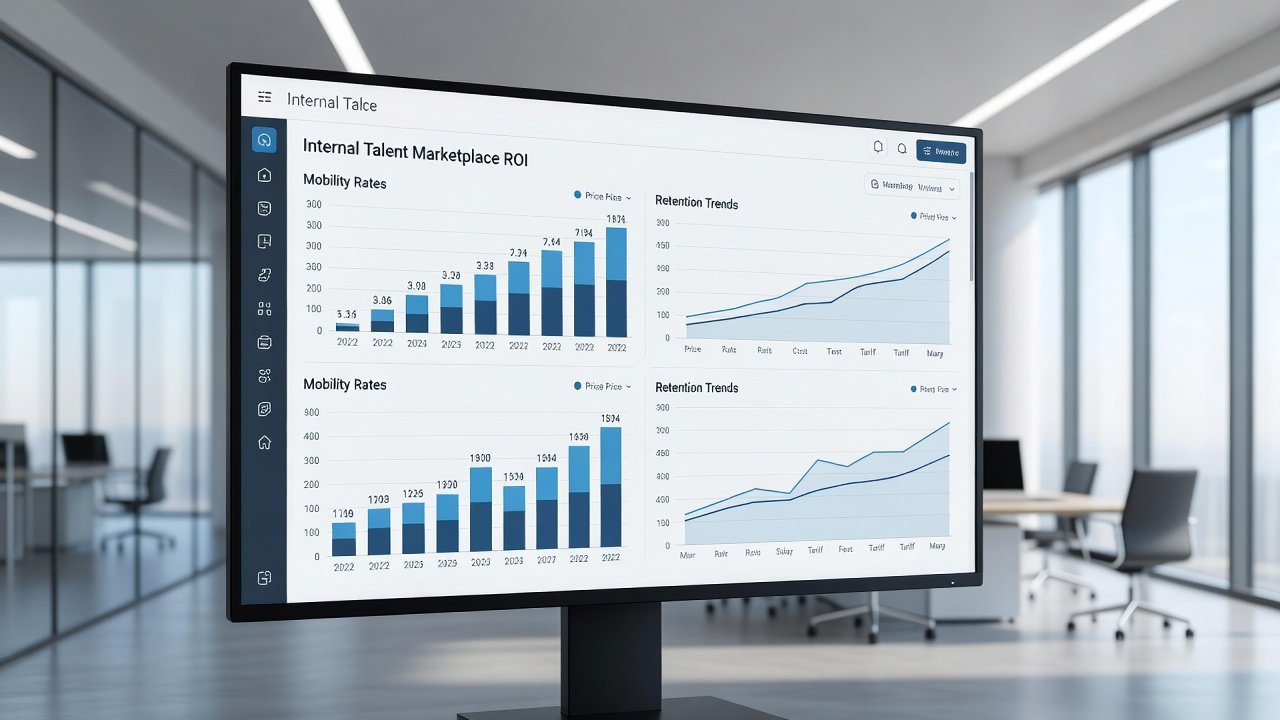
Modern dashboards visualize key performance indicators through heat maps of skill distribution, trend lines for mobility rates, and predictive forecasts. Mid-sized companies often use tools that combine data from multiple sources into a single executive view, enabling quick identification of underutilized talent pools. Sample reports might display quarterly mobility percentages alongside retention comparisons, allowing leaders to spot patterns quickly and adjust strategies accordingly.
Advanced reporting features can include drill-down capabilities for individual business units and automated alerts when metrics fall below target thresholds. These tools transform raw data into actionable insights that support ongoing optimization of the marketplace.
Before-and-After Case Studies from Mid-Sized Companies
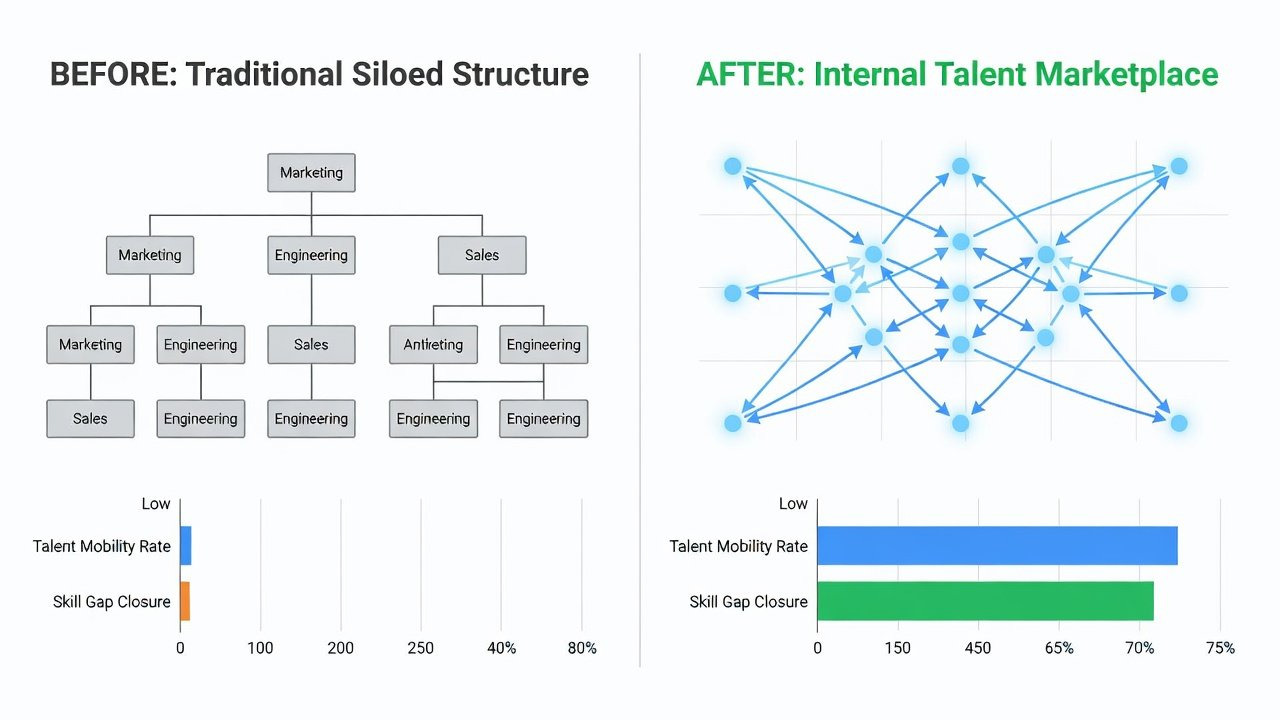
One manufacturing firm implemented an internal talent marketplace and saw internal mobility rise from 22% to 47% within 12 months. Retention among active users improved by 18%, translating to meaningful reductions in replacement costs and stronger team stability. The company also reported faster project staffing, with average time-to-fill dropping noticeably after the first six months of use.
A technology services company used the platform to close 65% of identified skill gaps internally. Leadership reported stronger alignment between workforce capabilities and strategic priorities as a direct result, along with improved cross-functional collaboration that accelerated innovation cycles. Both examples illustrate how targeted measurement can uncover both expected and unexpected benefits over time.
Common Pitfalls in ROI Reporting
Many organizations overstate benefits by ignoring baseline comparisons or failing to account for external market influences. Another frequent issue is inconsistent metric definitions across reporting periods, which undermines credibility with finance and executive stakeholders. To avoid these traps, establish clear measurement protocols upfront and involve finance teams in validating calculations before presenting results.
Additional pitfalls include neglecting to segment data by employee demographics or business unit, which can mask inequities or localized challenges. Regular training for HR analysts on consistent reporting standards helps maintain report integrity across the organization.
Alignment with Performance Management Systems
Integrating talent marketplaces with performance management creates a continuous feedback loop. Performance data informs opportunity matching while marketplace participation influences future reviews and development plans. This alignment encourages employees to pursue growth opportunities that directly support business objectives, strengthening overall organizational capability and creating a more dynamic talent ecosystem.
Successful integrations often involve shared goal-setting sessions between managers and employees, ensuring marketplace activities contribute to both individual career progression and team performance targets. Over time, this connection enhances the strategic value of both systems.
Predictive Analytics for Forecasting Returns
Advanced analytics models use historical mobility and retention data to predict future ROI scenarios. Machine learning techniques can identify which employee profiles are most likely to benefit from marketplace participation and estimate resulting cost savings. These forecasts help HR teams secure budget approvals by presenting data-driven projections rather than anecdotal evidence.
Implementation steps typically begin with cleaning historical datasets, followed by selecting relevant variables such as tenure, role type, and past mobility patterns. Regular model validation against actual outcomes ensures ongoing accuracy and builds trust in the predictions among leadership audiences. For more on workforce analytics best practices, see guidance from SHRM.
Step-by-Step Checklist for Measuring and Presenting ROI
- Define baseline metrics before platform launch.
- Establish integrations between ATS, HRIS, and the marketplace.
- Track mobility, retention, and skill metrics monthly.
- Calculate cost savings using standardized frameworks.
- Build visual dashboards for ongoing monitoring.
- Conduct quarterly reviews with cross-functional stakeholders.
- Prepare concise presentations highlighting business impact for leadership.
- Document assumptions and data sources for transparency.
FAQ: Presenting Results to Leadership for Continued Investment
How often should ROI be reported?
Quarterly updates combined with annual deep-dive analyses provide the right balance of frequency and depth, allowing timely adjustments while building a comprehensive annual narrative.
What if results are mixed?
Highlight leading indicators and outline targeted improvements to demonstrate proactive management and a commitment to continuous refinement.
Which stakeholders should receive the report?
Share tailored versions with the CFO, CHRO, and business unit leaders to address their specific concerns and gather diverse perspectives on next steps.
How can predictive models be validated?
Compare forecasts against actual results every quarter and adjust variables as needed to maintain reliability over multiple reporting cycles.
Conclusion
Measuring ROI for internal talent marketplaces in 2026 requires disciplined data practices and clear communication. By focusing on mobility rates, retention, and skill outcomes while leveraging integrated systems and predictive tools, HR teams can build compelling cases for sustained investment. Following the frameworks and checklist outlined above positions organizations to realize measurable workforce advantages and adapt effectively to evolving business demands. Additional resources on talent strategy are available through Gartner.

No comments yet. Be the first!