 Jobboy

Introduction: Why Hybrid Work Is Reshaping Recruiting in 2026
Hybrid work models have become a cornerstone of modern talent strategies. As organizations balance flexibility with collaboration, recruiters must adapt their approaches to attract and retain top talent. This guide explores how hybrid arrangements influence hiring success, offering actionable steps for HR professionals navigating 2026 workforce preferences. The shift toward hybrid setups allows companies to tap into wider talent pools while addressing employee demands for better work-life integration, ultimately driving higher engagement and reduced turnover.
Adapting Job Postings for Hybrid Roles
Effective job postings clearly communicate hybrid expectations. Specify office days, remote flexibility, and tools used for collaboration. Highlight benefits such as reduced commute time and improved work-life balance to appeal to diverse candidates. Use inclusive language that emphasizes outcomes over location. For instance, detail the exact hybrid schedule such as two or three days in-office per week, and mention any provided stipends for home office setups. Include keywords like flexible hybrid schedule and location-flexible role to improve search visibility on job boards. Recruiters should also outline technology requirements upfront to set realistic expectations and filter candidates who are well-suited for distributed work environments.
Optimizing Interviews for Hybrid Candidates
Interviews should mirror the hybrid environment. Incorporate video platforms alongside occasional in-person sessions to assess both remote communication skills and cultural fit. Prepare structured questions that evaluate self-motivation and adaptability, key traits for hybrid success. Consider using a mix of synchronous video interviews and asynchronous recorded responses to accommodate candidate schedules across time zones. Panel interviews with both remote and on-site team members can provide balanced perspectives. Additionally, include practical exercises such as collaborative virtual whiteboarding sessions to simulate real hybrid team interactions and gauge problem-solving abilities in distributed settings.
Maintaining Employer Branding Across Locations
Strong employer branding remains consistent whether employees work remotely or on-site. Share stories of hybrid team achievements on career pages and social channels. Invest in virtual events that foster connection and showcase company values. Update all recruitment materials to reflect hybrid success stories, including employee testimonials about how the model supports productivity. Leverage LinkedIn campaigns and internal newsletters to highlight leadership commitment to flexible arrangements, reinforcing the brand as progressive and employee-centric in a competitive talent market.
Preserving Company Culture in Hybrid Settings
Culture thrives through intentional practices. Schedule regular hybrid team-building activities and ensure remote employees have equal access to leadership. Transparent communication policies help prevent isolation and strengthen belonging. Organize quarterly in-person offsites combined with monthly virtual town halls to maintain cohesion. Encourage managers to host informal virtual coffee chats and recognize contributions equally regardless of work location. These efforts create an inclusive environment where all team members feel valued and connected to the organization's mission.
Comparing In-Office and Hybrid Hiring Costs
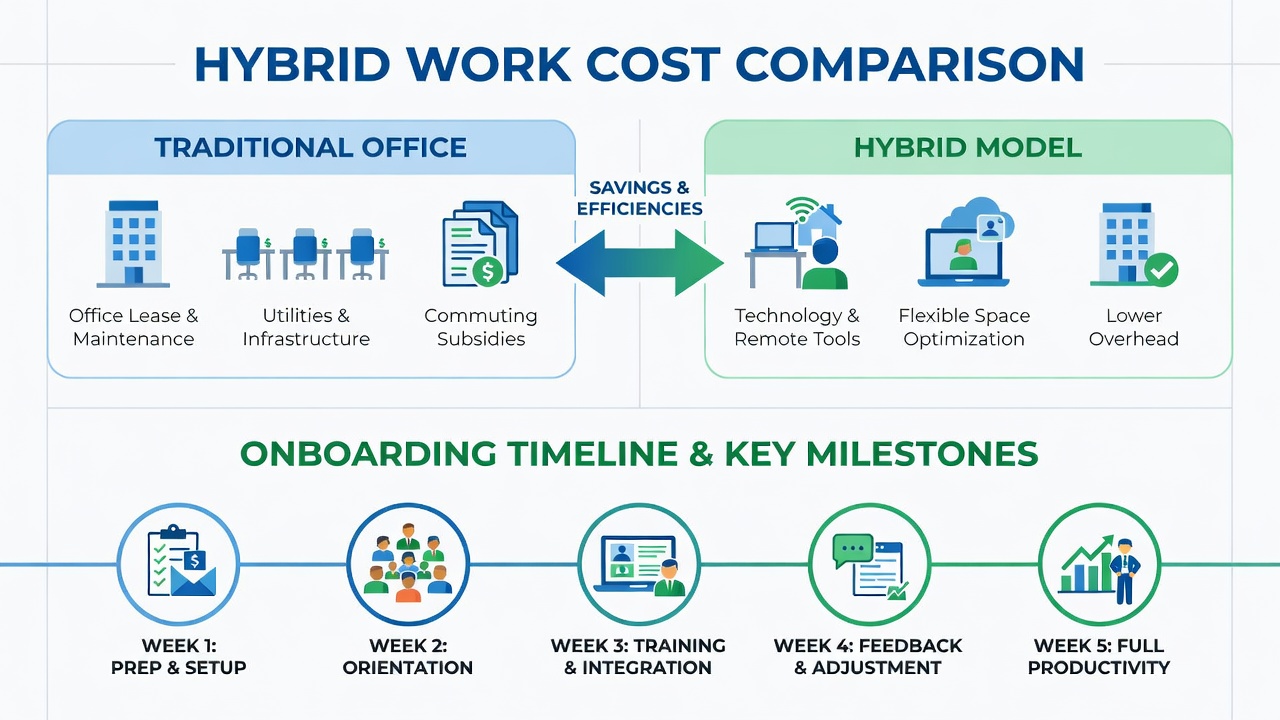
Hybrid models often reduce overhead related to office space and relocation packages while expanding talent pools geographically. Organizations report qualitative savings in operational expenses compared to fully in-office setups, allowing reallocation toward competitive compensation and professional development. Mid-sized companies frequently observe lower real estate utilization costs and decreased relocation reimbursements, freeing budgets for enhanced employee wellness programs and learning opportunities that further boost attraction and retention rates.
Practical Examples from Mid-Sized Companies
Mid-sized firms in tech and professional services have successfully implemented hybrid policies by piloting three-day office schedules. These examples demonstrate improved retention rates and broader applicant diversity when postings emphasize flexibility. One software company based in Austin reported faster hiring cycles after standardizing hybrid role descriptions and saw a 25 percent increase in qualified applications from candidates outside the local area. Another professional services firm introduced hybrid onboarding cohorts that paired new hires with mentors across locations, resulting in quicker productivity ramps and higher satisfaction scores during the first 90 days of employment.
Seamless Remote Onboarding Best Practices
Onboarding success depends on structured virtual programs. Provide new hires with digital welcome kits, scheduled check-ins, and access to collaborative platforms from day one. Pair remote employees with mentors to accelerate integration. Expand this process by creating a 30-60-90 day plan that includes specific milestones for both remote and hybrid elements. Use project management tools to assign initial tasks and track completion, while incorporating feedback loops through anonymous surveys. Ensure new hires receive equipment shipments promptly and participate in virtual team introductions to build early relationships that support long-term success in the hybrid model.
- Assign a dedicated onboarding buddy for the first 30 days
- Deliver role-specific training via interactive online modules
- Schedule hybrid team introductions within the first week
- Track progress with weekly feedback surveys
- Include virtual coffee chats with cross-functional leaders
- Provide access to recorded company history and culture sessions
Metrics to Track Hybrid Recruiting Success
Monitor key indicators including time-to-hire, offer acceptance rates, employee retention after six months, and engagement survey scores. These metrics reveal the effectiveness of hybrid strategies and highlight areas for refinement. Additional measures such as diversity in applicant sources, internal mobility rates within hybrid teams, and manager satisfaction with new hire performance provide deeper insights. Regular quarterly reviews of these data points enable HR teams to iterate on policies and demonstrate ROI to leadership.
FAQ: Common Hybrid Hiring Challenges
How do we handle timezone differences in hybrid teams?
Establish core collaboration hours and leverage asynchronous tools to accommodate global talent.
What if candidates prefer fully remote options?
Emphasize the benefits of occasional in-person connection while offering flexibility within the hybrid framework.
How can we ensure fair evaluation of remote versus on-site candidates?
Use standardized rubrics focused on skills and results rather than physical presence.
What legal considerations apply to hybrid roles across states?
Consult employment counsel to address tax, benefits, and compliance variations when hiring across multiple jurisdictions.
Conclusion
Hybrid work models present significant opportunities for recruiting success when implemented thoughtfully. By refining postings, interviews, branding, and onboarding, HR teams can build resilient, high-performing teams in 2026 and beyond. Continued attention to evolving employee preferences and data-driven adjustments will keep organizations competitive. SHRM and Harvard Business Review provide ongoing research supporting these evolving practices.

No comments yet. Be the first!