 Jobboy

In the competitive talent landscape of 2026, recruiters must prioritize candidate experience to stand out and secure top performers. A positive journey from application through offer acceptance not only boosts acceptance rates but also strengthens long-term employer reputation and employee retention. This comprehensive guide provides practical strategies tailored for mid-sized organizations navigating a fast-evolving market where candidates have more choices than ever before. Organizations that treat every interaction as an opportunity to build trust see direct benefits in their ability to attract and retain high-caliber professionals amid evolving workforce expectations.
Why Candidate Experience Matters in 2026
The hiring environment has shifted dramatically, with skilled professionals evaluating employers as carefully as companies assess talent. Poor experiences lead to negative reviews on public platforms, reducing future application volumes by significant margins. Conversely, seamless processes create advocates who share their stories, indirectly aiding recruitment efforts across multiple channels. Mid-sized firms that invest here often see compounding benefits in retention, as candidates who feel respected during hiring are more likely to stay engaged post-offer and contribute meaningfully to team dynamics over time. Research from industry leaders consistently shows that companies focusing on candidate-centric approaches outperform competitors in both speed and quality of hires.
Mapping the Candidate Journey Touchpoints
Effective optimization starts with a detailed map of every interaction point. Begin at job discovery through social media or career pages, then proceed to application submission, initial screening, interviews, assessments, offer negotiation, and final acceptance. Document delays, communication gaps, and emotional highs and lows at each stage to uncover hidden inefficiencies. A 450-employee software company in Denver used journey mapping workshops with their HR team and hiring managers, identifying a three-day lag in interview feedback that caused 30 percent of candidates to disengage. After streamlining notifications with automated yet personalized alerts, they achieved measurable gains in completion rates across the funnel within two hiring cycles.
Practical mapping steps include interviewing recent hires about their perceptions, auditing email and portal logs for response times, and creating visual flowcharts that highlight bottlenecks. Update the map quarterly to reflect changes in tools or team structures, ensuring the process remains aligned with business growth and market shifts. This ongoing refinement prevents stagnation and keeps the candidate journey responsive to feedback.
Personalizing Candidate Communications
Generic messages feel impersonal and increase drop-off rates throughout the process. Personalization involves referencing specific achievements from a candidate's background, acknowledging their career goals, and timing outreach thoughtfully to maintain momentum. For instance, a 320-employee healthcare provider in Chicago customized rejection emails to include growth resources relevant to the applicant's field, resulting in improved brand perception even among unsuccessful applicants who later applied for other roles.
Actionable Personalization Techniques
- Collect key details during application and store them in your ATS for easy retrieval during follow-ups.
- Segment audiences by role type, seniority, and source channel to craft relevant templates that resonate deeply.
- Incorporate dynamic fields that pull in resume keywords without manual editing each time, saving recruiter hours.
- Schedule follow-ups that add value, such as industry articles or team spotlights tailored to individual interests.
- Train recruiters on conversational tone to make automated messages sound human and approachable.
These steps foster genuine connection and demonstrate authentic interest, directly influencing whether candidates accept offers or recommend the company to peers in their networks.
Reducing Friction in the Application Process
Lengthy or cumbersome applications remain a top reason candidates abandon submissions before completion. Aim for mobile-optimized forms that take no more than eight minutes to complete on average. Enable one-click LinkedIn or resume imports and minimize required fields to essentials only, removing any redundant or optional queries that do not add immediate value. A 280-employee logistics firm in Atlanta shortened their process by removing redundant questions and adding clear progress indicators, lifting submission completion from 48 percent to 81 percent within one quarter while maintaining data quality.
Further tactics include A/B testing form layouts with small candidate groups, providing clear instructions with real examples at each step, and offering live support chat for technical issues that arise during submission. Avoid requiring cover letters unless truly necessary for the specific role, as this often creates unnecessary barriers for qualified applicants.
Comparing Tech Tools for Automation
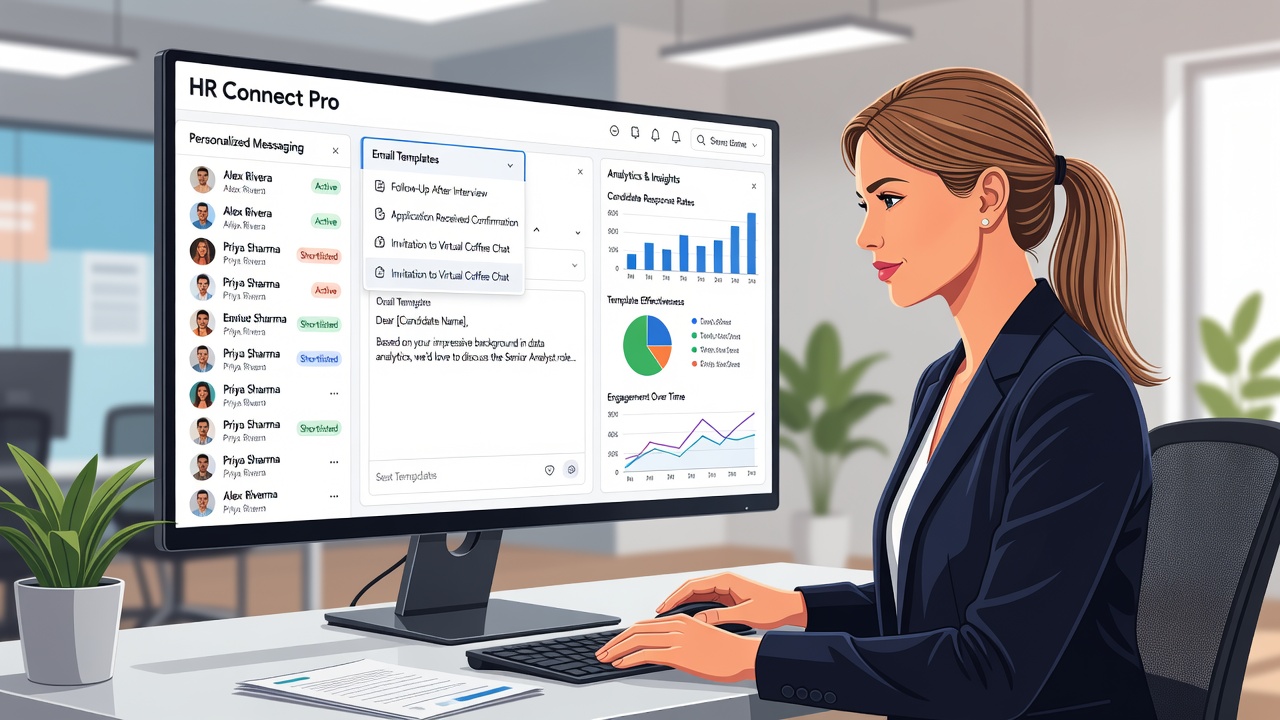
Selecting the right platform accelerates personalization and reduces manual work across the team. Lever emphasizes user-friendly candidate relationship management with strong email sequencing capabilities that allow for easy customization. Greenhouse integrates deeply with multiple ATS platforms and offers robust reporting on stage progression metrics that help identify drop-off points quickly. Phenom leverages AI for predictive insights into candidate preferences and engagement patterns, while Eightfold focuses on skills-based matching across large talent pools to surface hidden matches. Evaluate options by requesting live demos, testing mobile responsiveness thoroughly, and reviewing integration capabilities with existing HR systems. Mid-sized teams benefit most from platforms that scale without excessive complexity or extensive training time, ensuring quick adoption and consistent results.
Gathering and Acting on Post-Process Feedback
Post-hire and post-rejection surveys reveal blind spots invisible from internal views alone. Deploy short questionnaires after each major stage, asking about clarity, fairness, and overall satisfaction in a structured yet open format. A 380-employee manufacturing company in Ohio implemented automated surveys and discovered recurring concerns about interview scheduling flexibility that affected diverse candidate groups disproportionately. Adjustments such as offering evening slots and clearer calendar options led to higher candidate satisfaction scores and a noticeable uptick in offer acceptance rates.
Close the loop by sharing aggregated insights with leadership during monthly reviews and implementing at least one visible change per quarter based on responses. This demonstrates responsiveness and builds lasting trust with both successful and unsuccessful candidates.
Addressing Common Pain Points Like Ghosting and Bias
Frequently Asked Questions
How can recruiters minimize candidate ghosting? Set expectations early with clear timelines for each stage and send value-driven check-ins rather than generic reminders that feel automated. Consistent transparency reduces the likelihood of sudden silence from candidates who feel informed and respected throughout.
What proven methods reduce unconscious bias during screening? Adopt structured interview scorecards with predefined criteria, blind resume reviews that hide names and educational backgrounds, and diverse interview panels that bring multiple perspectives to evaluations. These practices promote equitable outcomes and strengthen team diversity.
How often should feedback be collected? After every interaction point initially, then refine collection to key milestones once clear patterns emerge from the data. Keep surveys under five questions to maintain high response rates and actionable insights without overwhelming participants.
What role does technology play in reducing bias? Modern ATS platforms with built-in anonymization features and analytics dashboards allow teams to monitor and correct imbalances in real time, supporting fairer decision-making across all stages.
Measuring Impact on Retention and Reputation
Track offer acceptance rates, time-to-offer durations, candidate Net Promoter Scores, and downstream retention metrics at six and twelve months post-hire. Correlate improvements with employer review site sentiment to understand broader brand effects. Organizations that treat candidate experience as a strategic priority consistently outperform peers in talent acquisition efficiency and overall workforce stability, creating a virtuous cycle of better hires and stronger internal culture.
Building Employer Reputation Through Candidate Experience
Beyond immediate hiring goals, exceptional candidate journeys contribute to long-term employer branding that attracts passive talent. Encourage candidates to share experiences on review sites and leverage positive testimonials in recruitment marketing. Mid-sized companies that actively manage their reputation this way often report increased inbound applications and reduced time spent on sourcing, freeing resources for deeper engagement with active candidates.
Additional guidance is available from authoritative sources such as SHRM, EEOC, and U.S. Department of Labor resources on compliant hiring practices that support inclusive candidate experiences.
Conclusion
Optimizing candidate experience requires ongoing attention to mapping, personalization, friction reduction, feedback integration, and continuous measurement. Mid-sized companies that execute these elements thoughtfully position themselves as employers of choice, driving stronger hiring results, improved offer acceptance, and sustained organizational success throughout 2026 and beyond.


No comments yet. Be the first!