 Jobboy

Exit Interviews: Turn Feedback into Retention Wins
High employee turnover drains resources and disrupts teams. Structured exit interviews provide a powerful way for HR professionals to uncover hidden reasons behind departures and refine both hiring practices and workplace culture. This comprehensive guide delivers actionable strategies for preparing questions, leading empathetic conversations, spotting response patterns, and applying insights to recruiting and employer branding efforts. By treating exit interviews as a strategic retention tool rather than an administrative formality, organizations can reduce costly turnover and build stronger employer brands.
Why Exit Interviews Matter for Retention
Exit interviews go beyond simple goodbyes. They reveal patterns in why employees leave, from compensation concerns to management issues or lack of growth opportunities. Companies that systematically analyze this feedback often see measurable improvements in retention rates. Mid-sized organizations, in particular, benefit because they can quickly implement changes without layers of bureaucracy. Research from sources like the Bureau of Labor Statistics shows that voluntary quits remain a significant challenge, making proactive data collection essential. When done correctly, exit interviews transform individual departures into organization-wide learning opportunities that strengthen hiring pipelines and reduce future attrition.
Preparing Effective Exit Interview Questions
Start with a balanced mix of open-ended and specific questions. Focus on job satisfaction, team dynamics, leadership, and career development. Sample questions include: What prompted your decision to leave? How would you describe your relationship with your manager? Did you feel your contributions were recognized? What could the company have done differently to retain you? Categorize questions into themes such as role expectations, compensation fairness, work-life balance, and professional growth. Tailor questions to your industry while keeping them neutral to encourage honest responses. Include behavioral questions like “Describe a time when you felt unsupported” to elicit concrete examples rather than vague complaints. Update the question bank annually based on evolving workforce trends.
Conducting Empathetic Conversations
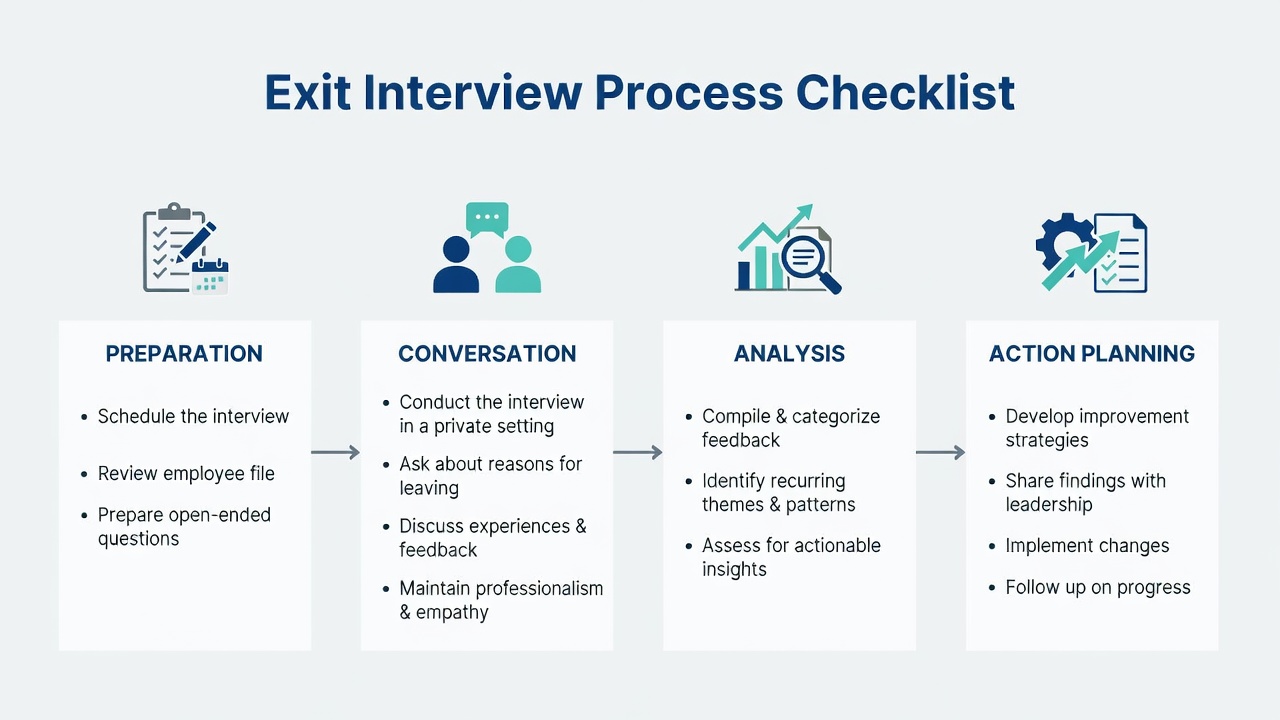
Approach each interview with genuine curiosity rather than defensiveness. Schedule sessions in a private, comfortable setting and assure confidentiality. Listen actively, avoid interrupting, and use follow-up probes like “Can you tell me more about that?” to deepen understanding. Train interviewers to remain neutral and thank departing employees for their time and candor. Begin with rapport-building small talk, then transition to structured questions. Pay attention to non-verbal cues and tone. If emotions run high, pause and acknowledge feelings before continuing. Offer multiple formats including in-person, video calls, or anonymous surveys to accommodate different comfort levels and increase participation rates.
Analyzing Patterns in Responses
Collect responses in a centralized, anonymized database. Look for recurring themes across departments or time periods. Use simple spreadsheets or HR analytics tools to categorize feedback into buckets such as compensation, culture, workload, and career progression. Quarterly reviews help identify trends that individual interviews might miss. Segment data by tenure, role level, and demographic factors to uncover hidden disparities. For example, junior employees may cite different issues than senior staff. Visualize results with charts to present findings to leadership in an accessible format. Cross-reference exit data with engagement survey results and exit reasons reported during stay interviews for a fuller picture of retention risks.
Real-World Examples from Mid-Sized Companies
A 450-employee software firm in Austin discovered through exit interviews that 62 percent of departing engineers cited unclear promotion paths. After revising career ladders and sharing them during onboarding, voluntary turnover dropped 18 percent within 12 months. Similarly, a healthcare provider with 800 staff learned that inflexible scheduling drove nurse exits. Introducing self-scheduling options improved retention and reduced agency staffing costs. Another mid-sized retail company identified that poor manager training was the top reason for store associate departures. They launched a targeted leadership development program that lowered turnover by 22 percent over two years. These examples demonstrate how targeted action based on exit feedback delivers tangible business results.
Step-by-Step Implementation Checklist
- Define clear objectives and success metrics before launching the program, such as reducing voluntary turnover by 15 percent within one year.
- Create a standardized question bank and train all interviewers on consistent delivery and note-taking techniques.
- Schedule interviews within one week of notice and offer multiple formats (in-person, video, or written) to maximize response quality.
- Store data securely and review trends monthly with HR leadership to spot emerging issues early.
- Share high-level findings with leadership and develop action plans with assigned owners and deadlines.
- Measure impact by tracking turnover rates, new-hire quality, and time-to-productivity six months after implementing changes.
Effective vs. Ineffective Interview Approaches
Effective interviews feel conversational and focus on learning. Interviewers ask follow-up questions, express appreciation, and maintain a neutral tone throughout. They document specific examples and themes for later analysis. Ineffective approaches include reading questions robotically, arguing with responses, failing to document insights, or making promises that cannot be kept. The difference often determines whether valuable data is captured or lost. Effective processes also include closing the loop by informing departing employees how their feedback will be used, which builds trust and encourages future referrals.
Mistakes to Avoid in Exit Interviews
Common pitfalls include conducting interviews too late after notice, allowing managers to lead sessions when they are part of the departure reason, or ignoring patterns in favor of individual anecdotes. Another frequent error is failing to act on feedback, which erodes employee trust over time. Avoid leading questions that steer answers toward predetermined conclusions. Ensure legal compliance by reviewing questions with counsel and never using the process to retaliate against departing staff. Regular training and process audits help prevent these mistakes.
Translating Insights into Recruiting and Employer Branding
Use exit data to refine job descriptions, adjust salary bands, and highlight authentic employee stories in recruitment marketing. For instance, addressing common complaints about limited remote-work options can strengthen your employer value proposition. Share improvements publicly on career pages and social channels to attract candidates who value transparency. Update onboarding programs to set clearer expectations based on recurring exit themes. This feedback loop turns negative experiences into positive employer branding opportunities that reduce future turnover.
Measuring the Success of Your Exit Interview Program
Track both quantitative metrics like response rates and turnover reduction, and qualitative outcomes such as improved manager feedback scores. Calculate the return on investment by comparing the cost of conducting interviews and implementing changes against savings from reduced recruiting and training expenses. Revisit your process annually and solicit input from hiring managers on how exit insights have influenced their teams.
FAQ
How can we improve low response rates?
Offer flexible timing, guarantee anonymity, and explain how feedback drives change. Some organizations provide small thank-you gifts or donation options to increase participation. Follow up with a brief thank-you note that reinforces the value of their input.
What legal considerations should we keep in mind?
Consult employment counsel to ensure questions do not create liability. Document that participation is voluntary and protect confidentiality under applicable privacy laws. Resources from EEOC and SHRM offer guidance on compliant practices.
Should we conduct interviews after every departure?
Prioritize roles with high turnover or strategic importance. A consistent process for at least 70 percent of exits usually provides sufficient data for meaningful analysis while remaining practical for HR teams.


No comments yet. Be the first!