 Jobboy

Introduction: Why Employee Advocacy Is Essential for Employer Branding in 2026
In today's competitive talent market, traditional job postings often fall short of reaching high-quality candidates. Employee advocacy programs empower your workforce to share authentic stories and experiences, turning staff into brand ambassadors. This approach builds trust with passive candidates who research companies through real employee voices rather than polished corporate messaging. By 2026, organizations that leverage employee advocacy see measurable lifts in application quality and engagement rates. This guide provides a step-by-step framework for recruiters and HR leaders to launch and sustain these initiatives without relying on artificial intelligence tools, focusing instead on genuine human connections and proven processes.
Passive candidates, who are not actively job hunting but open to opportunities, represent a significant portion of top talent. Advocacy programs allow employees to reach these individuals through personal networks on platforms like LinkedIn, creating credibility that corporate posts cannot match. Mid-sized firms especially benefit because they can highlight unique culture elements that differentiate them from larger competitors.
Understanding the Core Benefits for Talent Acquisition
Employee advocacy amplifies reach far beyond paid job ads. When employees share content on LinkedIn or other platforms, it generates organic visibility that resonates with job seekers. Referred candidates through advocacy are more likely to accept offers and stay longer, reducing overall hiring costs and improving team stability. Key advantages include improved employer brand perception, higher engagement on job postings, and access to passive talent pools that traditional recruiting misses. Companies report stronger cultural alignment when new hires come through employee networks, leading to faster onboarding and higher productivity.
Additional benefits extend to internal morale. Employees who participate feel more connected to the company's mission, which indirectly supports retention efforts. For recruiters, this means a dual impact: better external hiring outcomes paired with stronger internal engagement.
Step-by-Step Guide to Setting Up Your Employee Advocacy Program
Begin with clear objectives aligned to your hiring goals. Identify pilot participants from departments with high turnover or growth needs, such as engineering or sales teams. Secure executive sponsorship to signal importance across the organization and encourage broader buy-in. Conduct an initial assessment of current social media activity to understand baseline engagement levels before launching.
Next, audit existing social media policies and update them to encourage sharing while protecting company interests. Define success metrics early, such as increased profile views or application volume from employee-shared links. Assign a program coordinator, typically from HR or talent acquisition, to manage day-to-day operations and provide ongoing support.
Selecting the Right Employees and Building Buy-In
Not every employee needs to participate immediately. Start with enthusiastic volunteers who already have a social presence or strong storytelling skills. Offer opt-in sessions where employees learn the benefits, including personal brand growth and professional networking opportunities. This selective approach ensures higher quality content and sustained energy in the early stages.
Developing Training and Content Guidelines
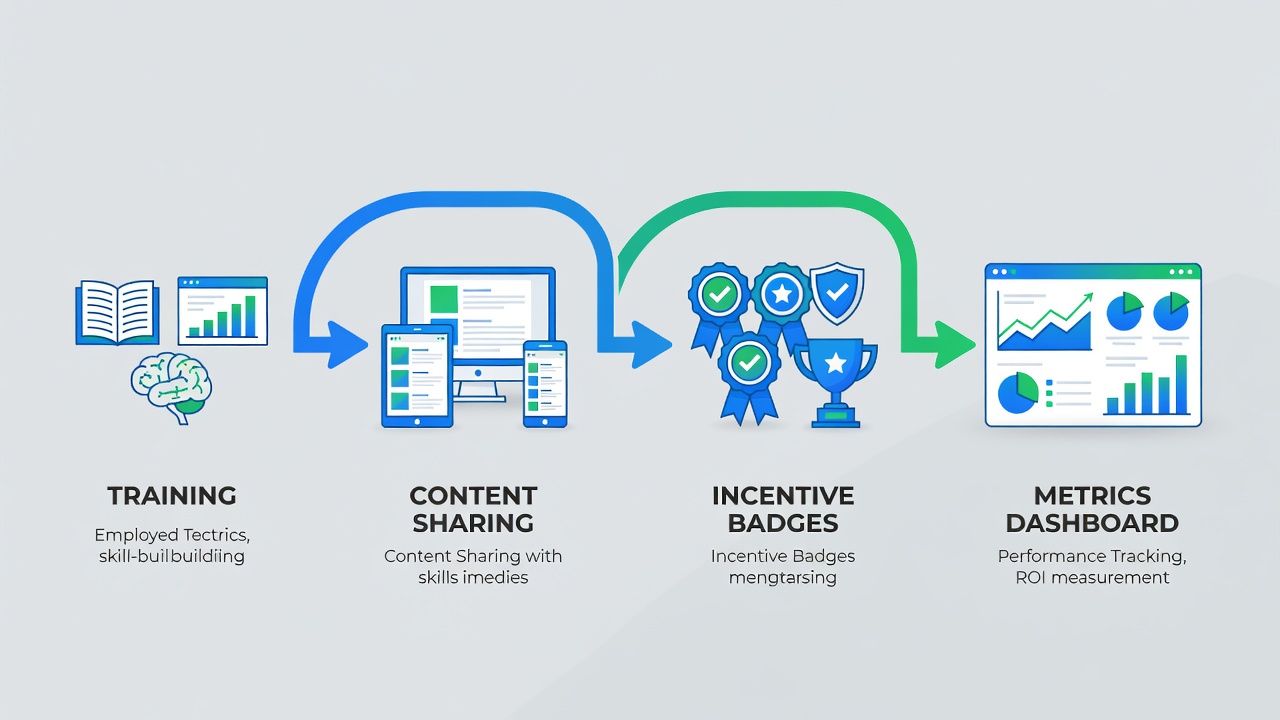
Provide mandatory workshops on effective posting techniques, including how to add personal context to company news. Create templates for job openings, culture highlights, and day-in-the-life content that employees can customize. Guidelines should cover tone, frequency, and disclosure rules to maintain authenticity. Encourage employees to focus on their unique perspectives rather than scripted messages. Include modules on visual content creation, such as taking appropriate workplace photos or short videos, and handling comments professionally. Role-playing exercises during training help employees practice responses to common questions from their networks.
Designing Incentive Structures That Drive Participation
Recognition programs work better than cash rewards alone. Spotlight top advocates in internal newsletters or offer professional development opportunities tied to advocacy efforts. Track participation transparently to foster healthy competition among teams. Non-monetary perks like extra time off or public awards maintain momentum without creating compliance issues. Regular feedback loops help refine incentives based on what motivates your specific workforce, such as featuring advocates at company town halls.
Navigating Legal Considerations in Recruiting Advocacy
Compliance is critical to avoid issues with labor laws or data privacy. Ensure all shared content respects confidentiality and does not imply endorsements that could mislead candidates. Consult legal experts when drafting participation agreements. Resources like the U.S. Equal Employment Opportunity Commission provide guidance on fair recruitment practices. Additionally, align your program with standards from SHRM to stay current on best practices for employer branding and employee communications. Consider data protection regulations when employees share content that might include colleague information, and include clear opt-out procedures for any employee who wishes to stop participating.
Measuring Impact on Job Posting Performance and Talent Metrics
Track both quantitative and qualitative indicators. Monitor referral application rates, time-to-hire reductions, and social reach generated by employee posts. Tools that integrate with your ATS can attribute hires directly to advocacy efforts. Survey new hires on how they discovered your company to quantify the influence of employee voices. Over time, correlate advocacy activity with retention rates among referred employees for a complete picture of ROI. Create monthly dashboards that compare pre-program metrics with current performance, highlighting improvements in candidate quality scores and diversity in applications.
Comparing Popular Advocacy Tools and Platforms
Several established platforms help scale programs efficiently. Evaluate options based on ease of content curation, analytics depth, and mobile accessibility for employees. Popular choices include enterprise solutions with robust compliance features and simpler tools focused on social scheduling. Mid-sized companies often start with integrated options that connect to existing HR systems before upgrading. Consider factors like reporting capabilities for leadership reviews and integration with common social networks. A practical comparison involves testing two platforms during the pilot phase to measure employee adoption rates and administrative time required.
HR Tips for Sustaining Long-Term Participation
Keep the program fresh by rotating themes and celebrating milestones quarterly. Provide ongoing micro-learning sessions and peer mentoring to prevent burnout among advocates. Address common barriers like time constraints by integrating advocacy into daily workflows, such as dedicating 15 minutes during team meetings for content planning. Leadership visibility through their own participation sets the tone and encourages broader involvement. Create an internal community forum where advocates can share successful posts and troubleshoot challenges together.
Common Mistakes to Avoid
Many programs fail due to overly rigid guidelines that stifle authenticity or lack of consistent communication from HR. Avoid pressuring employees to post, as this leads to low-quality content and resentment. Another pitfall is neglecting measurement, which makes it hard to justify continued investment. Instead, focus on voluntary participation, provide ample resources, and review progress openly with all stakeholders.
Real-World Examples from Mid-Sized Firms
One manufacturing company in the Midwest launched a pilot with 50 employees and saw a 40% increase in qualified applications within six months. They focused on video testimonials shared by production staff, which resonated strongly with local talent. A tech services firm used monthly challenges tied to specific job openings, resulting in improved diversity in their candidate pipeline. These cases highlight the importance of tailoring the program to industry and audience, with regular check-ins to adjust tactics based on what content performs best.
Frequently Asked Questions About Retention Benefits
- Does advocacy improve employee retention? Yes, participants often report higher engagement and connection to company mission, leading to lower turnover.
- How do I handle employees who opt out? Make participation voluntary and focus efforts on willing advocates to maintain positive energy.
- What retention metrics should I track? Look at tenure of referred hires and overall eNPS scores related to advocacy involvement.
- Can advocacy help with hard-to-fill roles? Absolutely, especially when employees in niche departments share targeted content about their work.
Conclusion: Taking the Next Steps
Employee advocacy programs offer a powerful, authentic way to differentiate your employer brand in 2026. By following structured setup, investing in training, and measuring outcomes rigorously, recruiters can attract better candidates while strengthening internal culture. Start small, iterate based on feedback, and watch your talent acquisition results improve through the power of real employee voices. Implement a 90-day pilot to test the framework, gather data, and refine your approach for long-term success.


No comments yet. Be the first!