 Jobboy

Introduction
Recruiters today face intense competition for top talent across industries. A well-crafted job description can make the difference between attracting high-quality candidates and wading through dozens of unqualified applications. This guide provides actionable strategies to create postings that convert, drawing on best practices for inclusive language, SEO optimization, and clear communication of company culture and benefits. Effective job descriptions go beyond listing duties. They speak directly to the search intent of job seekers while filtering for the right fit. By the end of this article, HR professionals will have concrete tools, multiple before-and-after examples, and a checklist to elevate their recruiting efforts in competitive markets.
Many organizations struggle because their postings lack clarity, use outdated phrasing, or fail to highlight what truly matters to modern candidates. Expanding on core techniques will help you stand out and build stronger talent pipelines over time.
Understanding Recruiter Search Intent and Audience Needs
Job seekers often search using specific phrases related to roles, benefits, and work arrangements. Understanding this intent helps recruiters optimize descriptions for both human readers and search engines. Focus on pain points such as unclear requirements or missing cultural signals that cause qualified candidates to scroll past postings. For instance, searches for "remote software engineer flexible hours" reveal that candidates prioritize work-life balance alongside technical skills. Tailor your language to match these queries while maintaining authenticity to reduce application volume from mismatched applicants.
Using Inclusive Language to Broaden Appeal
Inclusive wording reduces bias and widens the applicant pool. Avoid gendered terms like "rockstar" or "ninja" and replace them with neutral alternatives such as "high performer" or "skilled professional." Reference guidelines from the U.S. Equal Employment Opportunity Commission to ensure compliance and fairness. Additional examples include swapping "he or she" with "they" and removing unnecessary physical requirements unless essential to the role. Training your team on these adjustments can lead to more diverse applicant pools and stronger long-term retention rates.
Incorporating Keywords for SEO Visibility
Strategic keyword placement improves discoverability on job boards and search engines. Research common search terms for the role and integrate them naturally into the title, responsibilities, and requirements sections. Tools such as job board analytics or free keyword planners help identify high-volume phrases. This approach helps postings rank higher without sacrificing readability. For example, placing primary keywords like "data analyst" in the first paragraph and secondary terms like "SQL experience" in bullet points creates better indexing while guiding candidates through the content.
Highlighting Company Culture Effectively
Candidates want to understand the work environment before applying. Include authentic details about team collaboration, growth opportunities, and values. This section should feel genuine rather than generic to build trust and reduce early drop-offs. Share specific stories such as "Our quarterly innovation days allow team members to present ideas that have led to new product features" instead of vague statements about being "innovative." Linking to employee testimonials or your careers page further strengthens this section.
Balancing Requirements with Benefits
Strong postings clearly separate must-have qualifications from nice-to-haves while prominently featuring compensation ranges, perks, and work-life balance elements. This balance attracts serious applicants and sets realistic expectations. List three to five core requirements first, then follow with development opportunities and benefits. Candidates appreciate transparency about growth paths and team support structures, which can differentiate your organization from competitors.
Step-by-Step Examples: Before-and-After Job Descriptions
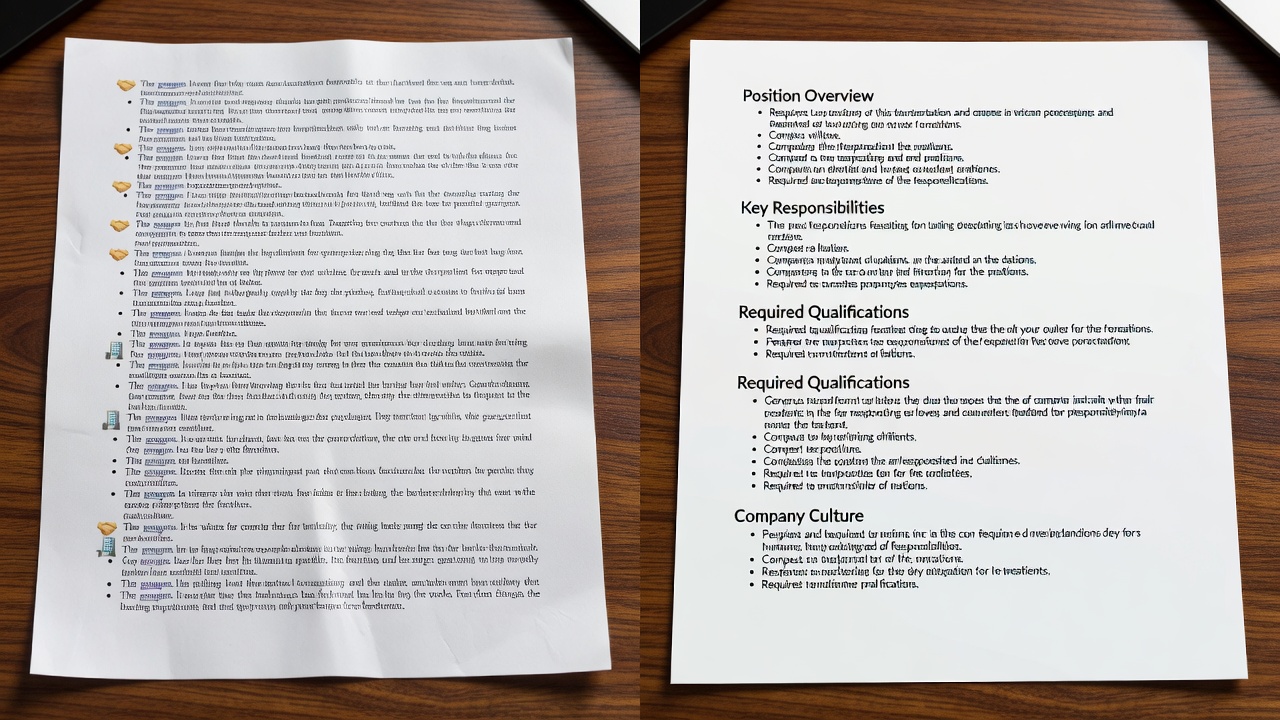
Consider a software engineer role. Before: "Must have 5+ years experience coding in Java. Rockstar needed for fast-paced team." After: "We seek a collaborative software engineer with 3–5 years of professional Java experience. You will contribute to scalable backend systems while enjoying flexible hours and professional development support."
Another example for a marketing manager: The original version listed 12 rigid requirements with no cultural context. The revised version uses bullet points for clarity, highlights remote flexibility, and emphasizes impact metrics, resulting in higher application quality. A third example for a customer success specialist shows how adding benefit highlights increased qualified applications by focusing on "career advancement programs" rather than only listing daily tasks.
Effective vs. Ineffective Postings: Key Comparisons
- Ineffective postings are overly long, use jargon, and bury benefits at the end.
- Effective postings use scannable formatting, active voice, and place culture and perks early.
- Ineffective versions trigger bias through subjective phrases; effective ones focus on measurable outcomes.
- Effective descriptions include clear next steps and application instructions, while ineffective ones leave candidates unsure how to proceed.
Practical Steps to Implement Improvements
Start by auditing your current templates for bias and length. Next, conduct a quick keyword review using free tools. Then rewrite one section at a time, testing the new version with a small group of colleagues. Finally, track application metrics over the first month to measure improvements in quality and volume. This iterative process ensures continuous refinement tailored to your specific roles and market.
Measuring Success and Adjusting Over Time
Track key metrics such as application-to-interview ratio and time-to-hire after implementing changes. Surveys sent to new applicants can reveal which elements resonated most. Adjust future postings based on this data to maintain relevance in evolving talent markets.
Common Pitfalls and How to Avoid Them
Many recruiters struggle with length—aim for 400–700 words. Overly broad requirements deter strong candidates, while vague benefits fail to differentiate the role. Regular audits using peer reviews help catch bias and clarity issues. Another frequent mistake is omitting equal opportunity statements, which can be addressed by adding a standard footer referencing the U.S. Department of Labor guidelines.
Frequently Asked Questions
How long should a job description be?
Keep the core content between 400 and 700 words to maintain engagement while providing necessary details.
What causes bias in job postings?
Subjective language, unnecessary degree requirements, and gendered wording are common culprits. Review against established inclusive guidelines from the Society for Human Resource Management.
Should salary ranges be included?
Transparency around compensation builds trust and attracts aligned candidates, especially in competitive markets.
How often should job descriptions be updated?
Review postings every six months or after major role changes to keep information current and relevant.
Conclusion
Crafting job descriptions that convert requires attention to language, structure, and candidate psychology. By applying these techniques—using inclusive wording, strategic keywords, cultural highlights, and balanced requirements—recruiters can improve application quality and hiring speed. Start implementing these changes in your next posting to see measurable results and build a more effective recruitment process overall.


No comments yet. Be the first!