 Jobboy

Introduction
In today's fast-evolving job market, professionals are increasingly turning to strategic sabbaticals as a deliberate tool for career growth and reinvention. A well-planned break in 2026 can provide the space needed for upskilling, industry immersion, and personal recharge while positioning you for promotions or career pivots upon return. This approach aligns perfectly with search intent around career planning and professional development, offering a structured way to step away without derailing your trajectory. Many workers feel stuck in routines that limit innovation, and a sabbatical breaks that cycle by allowing focused time on high-impact activities.
Why Strategic Sabbaticals Matter in 2026
The workplace landscape continues to emphasize continuous learning and adaptability. Taking a sabbatical allows you to address skill gaps, explore emerging fields, and return with fresh perspectives that employers value. Unlike unplanned leaves, strategic sabbaticals are tied to clear career objectives, such as mastering new technologies or building cross-industry networks. In 2026, with rapid advancements in AI, sustainability practices, and remote collaboration tools, professionals who invest in targeted breaks often outpace peers who remain in stagnant roles. Research from labor statistics highlights how planned time off correlates with higher retention and productivity upon return, making this a smart move for both individuals and organizations.
Financial and Career Preparation Checklist
Thorough preparation is essential to avoid stress during your time away. Start by assessing your savings and create a detailed budget covering living expenses during the break, including unexpected costs like medical needs or travel. Explore funding options like part-time freelance work aligned with your upskilling goals or grants for professional development programs. Update your professional network and secure references before departing by reaching out to mentors and colleagues with a clear summary of your plans. Define measurable objectives for the sabbatical, such as completing specific certifications or projects that directly tie to promotion criteria. Review health insurance, retirement contributions, and other benefits to avoid gaps, consulting official resources for continuity options. Finally, build a timeline that includes pre-sabbatical handovers and post-return milestones. Following this checklist ensures you return financially stable and professionally ready, reducing risks associated with extended leaves.
Negotiating Leave with Your Employer
Approaching your manager requires preparation and a business-oriented mindset. Frame the sabbatical as a mutual benefit by highlighting how new skills will enhance your contributions and bring innovative ideas back to the team. Provide a detailed proposal outlining your timeline, coverage plan for responsibilities including temporary team adjustments or knowledge transfer documents, and expected outcomes like improved processes or new expertise. Many companies now support such leaves as part of retention strategies, especially when tied to professional development. Practice your pitch with specific examples of how past training has benefited the company, and be ready to discuss flexible return dates or phased re-entry. Document everything in writing to create a clear agreement that protects both parties.
Aligning Sabbaticals with Upskilling Goals
Before finalizing plans, map your sabbatical directly to skill gaps identified in your current role or target positions. Review job descriptions for desired roles and select activities that close those gaps, such as advanced data analytics training or leadership workshops. This alignment transforms the break from a vacation into a strategic investment that strengthens your case for advancement.
Selecting Meaningful Activities
Focus on activities that directly support career goals. Options include skill-building projects such as developing an open-source tool, leading a community initiative, or pursuing industry immersion through short-term consulting or volunteer roles in target sectors. Consider enrolling in structured programs for certifications in high-demand areas like project management or digital marketing. Align these with upskilling to demonstrate tangible growth upon re-entry, and track progress with a personal journal or portfolio of outputs. For instance, a professional might dedicate time to building a prototype app while networking in a new sector to gain practical insights.
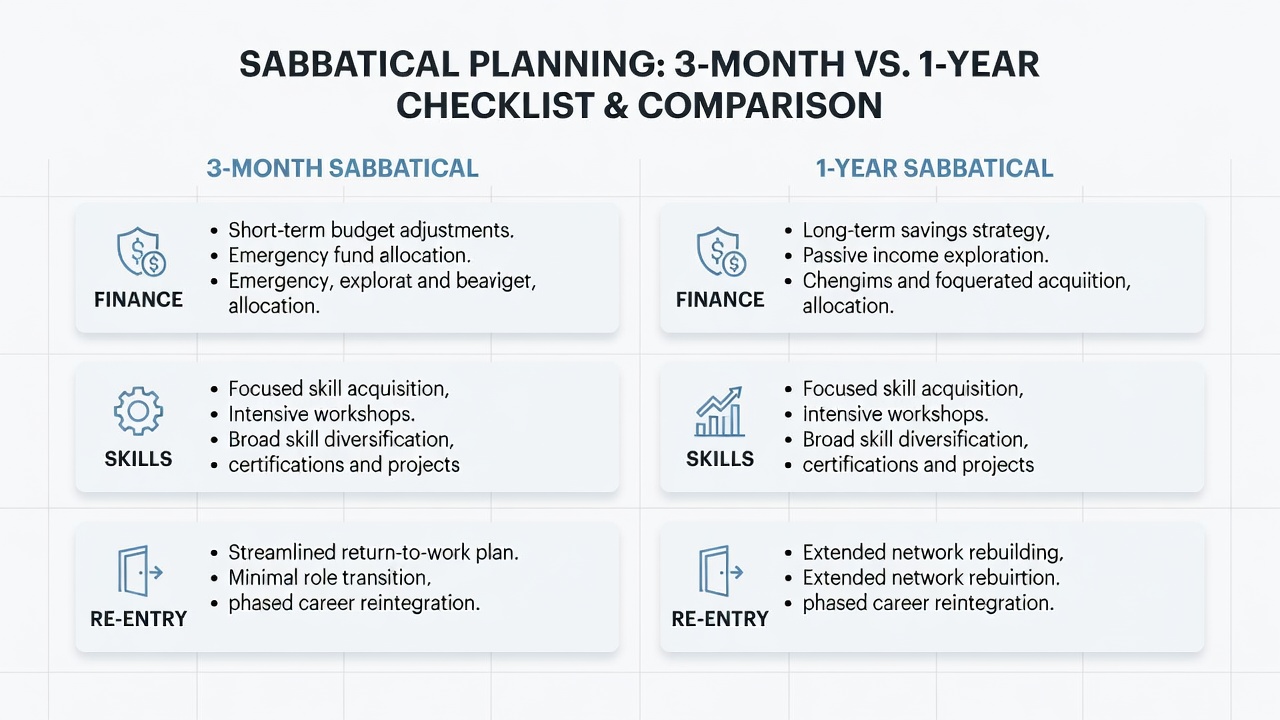
Three-Month vs. One-Year Sabbatical Comparison
A three-month break suits targeted upskilling, such as completing a focused certification program, with quicker re-entry and lower financial impact, allowing you to test new ideas without long-term disruption. In contrast, a one-year sabbatical enables deeper immersion, like relocating for international experience or launching a passion project, but demands stronger financial planning and may require more extensive re-entry preparation including potential role adjustments. Pros of shorter breaks include maintained momentum and easier employer approval, while longer ones offer transformative experiences but carry higher opportunity costs. Choose based on your career stage, financial buffer, and specific objectives like skill depth versus breadth.
Real-World Case Studies of Successful Sabbaticals
One marketing executive used a six-month sabbatical to complete an AI certification and freelance projects in emerging tech, returning to secure a promotion to director level by implementing data-driven campaigns that increased revenue. Another software engineer took a nine-month break for industry immersion in renewable energy sectors, volunteering on sustainability projects that led to a role transition with increased responsibilities and leadership opportunities. A third example involves a human resources professional who spent four months in a structured upskilling program focused on diversity initiatives, resulting in a company-wide policy overhaul and a senior title upon return. These examples show how intentional planning translates to measurable career acceleration across industries.
Re-Entry Strategies for Securing Promotions
Prepare a re-entry plan months in advance to maximize impact. Schedule meetings with your manager to share learnings and propose how they apply to team goals, backed by data from your activities. Document achievements from the sabbatical in a portfolio or updated resume to showcase value, including quantifiable results like completed projects or new competencies. Leverage new networks for internal advocacy, positioning yourself as a forward-thinking leader ready for advancement. Consider requesting a formal review within the first 30 days to discuss role evolution and set promotion timelines.
Common Mistakes to Avoid
Many professionals fail by not securing written agreements, underestimating financial needs, or neglecting to maintain light professional contact. Avoid treating the sabbatical as unstructured downtime without defined goals, which can lead to difficulty articulating benefits later. Always plan for contingencies like extended job searches if re-entry takes longer than expected.
FAQ
How can I maintain networking during a sabbatical?
Stay active through virtual events, LinkedIn updates focused on your learning journey, and occasional informational interviews. This keeps connections warm without full-time commitments and positions you as engaged in growth.
How do I measure the long-term impact of a sabbatical?
Track metrics like new skills acquired, roles advanced, salary progression, and professional satisfaction surveys over 12-24 months post-return. Compare against pre-sabbatical benchmarks for clear evidence of growth and adjust future plans accordingly.
What if my employer rejects the sabbatical request?
Explore alternatives like unpaid leave, reduced hours, or internal transfers to roles with built-in development time, and use the feedback to refine your proposal for future attempts.
For more on workforce trends, visit U.S. Department of Labor, Bureau of Labor Statistics, and CareerOneStop.
Conclusion
Strategic sabbaticals in 2026 represent a powerful lever for career growth when executed with clear planning, employer alignment, and focused activities. By investing time in preparation, meaningful pursuits, and thoughtful re-entry, professionals can achieve promotions, role changes, and renewed motivation that far outweigh the temporary pause.


No comments yet. Be the first!