 Jobboy

Introduction: Why a Skills Audit Matters in 2026
Mid-career professionals face rapid industry shifts driven by technology, automation, and evolving market demands. A skills audit provides a structured way to assess current abilities, align them with future opportunities, and create targeted upskilling strategies. This foundational step supports promotions, role changes, or industry pivots by identifying strengths and gaps with precision. In today’s competitive landscape, where roles evolve quickly due to digital transformation, professionals who regularly evaluate their competencies are better positioned to seize emerging opportunities and avoid stagnation.
Conducting an audit transforms vague career goals into measurable actions. It helps professionals stay competitive while building confidence in their development journey. Without this clarity, many mid-career individuals invest time and resources in training that does not align with actual market needs, leading to frustration and slower progress.
What Is a Skills Audit?
A skills audit is a systematic evaluation of technical, soft, and industry-specific competencies. It goes beyond listing qualifications to map abilities against job requirements and emerging trends. Professionals use it to create a clear picture of where they excel and where growth is needed. The process typically involves self-reflection, external input, and data comparison to ensure objectivity. Unlike a simple resume update, a skills audit examines proficiency levels, relevance to future roles, and potential for transferability across industries.
Step-by-Step Guide to Conducting a Skills Audit
Follow this proven process for thorough results. Each step builds on the previous one to create a comprehensive profile.
- Define your career objectives. Clarify short- and long-term goals, such as moving into leadership or switching to a new sector. Write specific outcomes you want to achieve within the next 12 to 24 months.
- List all current skills. Categorize them into technical, interpersonal, and leadership areas. Include both formal training and on-the-job experience. Be exhaustive—include software proficiency, project management methodologies, communication styles, and even niche tools used in daily work.
- Rate proficiency levels. Use a simple scale from beginner to expert for honest self-assessment. Consider frequency of use and outcomes achieved to avoid over- or under-rating.
- Gather external feedback. Consult colleagues, managers, or mentors to reduce personal bias. Request specific examples of when your skills made a measurable impact.
- Document everything. Use spreadsheets or templates for easy tracking and updates. Organize data so you can revisit and refine it quarterly.
Mapping Skills to Industry Trends
Align your audit with data from reliable sources like the Bureau of Labor Statistics. Focus on high-growth areas such as data analytics, AI integration, and sustainable practices. Compare your inventory against job postings and reports from O*NET Online to identify in-demand competencies. For instance, many traditional marketing roles now require familiarity with automation platforms and performance analytics. Professionals who map their existing skills against these trends often discover transferable abilities they can highlight during job applications or promotion discussions.
Identifying Gaps with Practical Templates
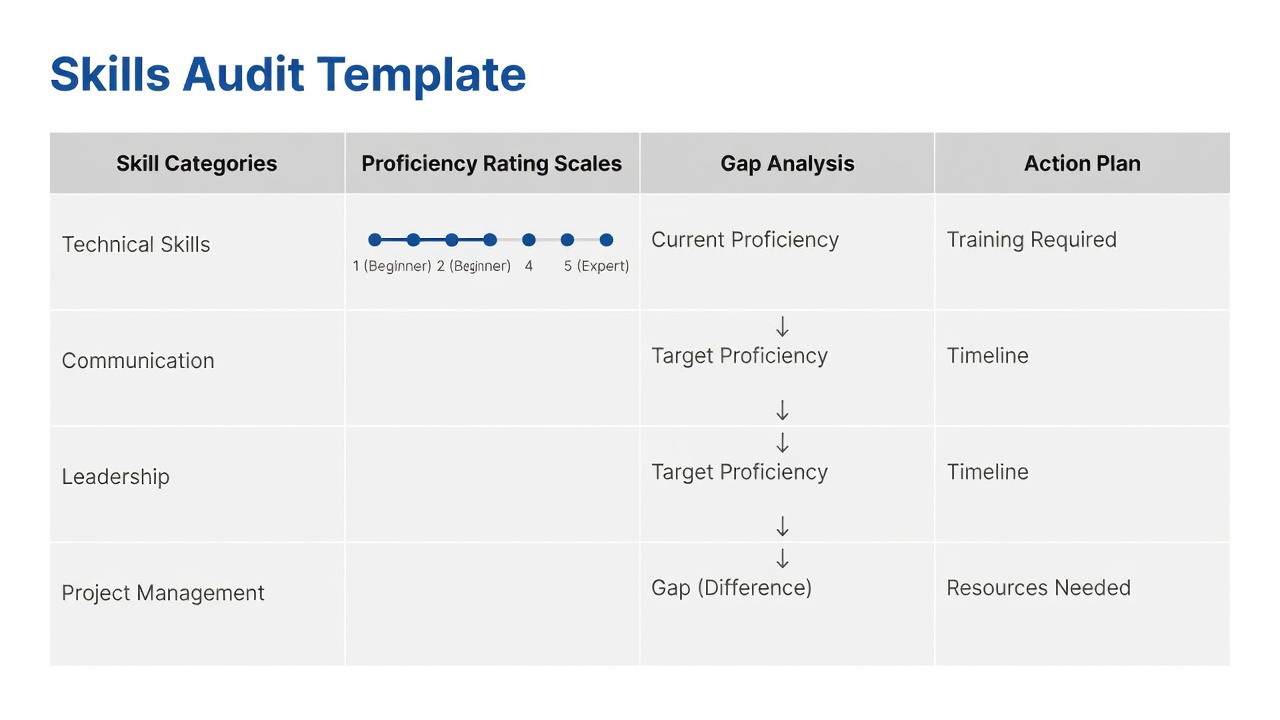
Use a simple matrix template with columns for skill name, current level, required level, and action plan. Highlight gaps in priority order. For example, a marketing manager might discover a need for advanced SEO tools or change-management expertise. Populate the template with real data from your audit, then sort gaps by urgency and career impact. This visual approach makes it easier to allocate limited time and budget effectively. Many professionals add a column for estimated time to close each gap, turning the template into a living roadmap rather than a static document.
Real-World Examples of Successful Pivots
One project manager used an audit to transition into product management by focusing on agile methodologies and stakeholder communication training. Within 18 months, they secured a promotion. Another professional in finance identified digital literacy gaps and completed targeted courses, leading to a role in fintech. A third example involves a human resources specialist who discovered strengths in data interpretation during the audit process. By building on those strengths with targeted learning in people analytics, they moved into a strategic HR business partner position at a larger organization. These cases illustrate how an audit can reveal hidden strengths and guide focused development that leads to tangible career advancement.
Free vs. Paid Tools Comparison
Free options like basic spreadsheets or online self-assessment quizzes offer solid starting points for individuals. They require more manual effort but provide full control over the process. Paid platforms provide advanced analytics, personalized recommendations, and progress tracking. Choose based on the depth of insights required and time available. Free tools work well for initial audits, while paid solutions become valuable when tracking multiple competencies over time or when organizations want team-wide visibility. The decision often depends on whether you prefer simplicity or detailed reporting features.
Integrating Results into Actionable Development Plans
Translate audit findings into SMART goals. Schedule regular reviews, seek mentorship, and allocate time for learning. Combine formal courses with practical projects to reinforce new skills. Break larger goals into quarterly milestones and track completion rates. For example, if a gap exists in leadership skills, plan to lead a cross-functional initiative within six months while also completing a relevant certification. Revisit the plan every 90 days to adjust based on new industry developments or personal progress.
Measuring Progress and Sustaining Momentum
After creating your development plan, establish clear metrics for success. These might include completed projects, new responsibilities taken on, or feedback received from supervisors. Many professionals schedule monthly check-ins with a mentor or accountability partner. Documenting small wins helps maintain motivation during longer upskilling journeys. Over time, the skills audit becomes a recurring practice rather than a one-time exercise, supporting continuous career growth.
FAQ: Common Challenges and Solutions
- How do I avoid bias in self-assessment? Combine self-ratings with 360-degree feedback from peers and supervisors.
- How often should I repeat the audit? Conduct one annually or after major role changes.
- What if my gaps seem overwhelming? Prioritize the top three and break them into small milestones.
- Can audits help with promotions? Yes, they demonstrate proactive growth to leadership.
- Should I share audit results with my employer? Selectively share relevant portions during performance reviews to show strategic thinking.
Conclusion
A well-executed skills audit serves as the cornerstone of career advancement in 2026. By following structured steps, mapping to trends, and creating focused plans, mid-career professionals can confidently navigate change and achieve meaningful growth. The process rewards consistency and honest reflection, turning potential career plateaus into opportunities for advancement.


No comments yet. Be the first!