 Jobboy

Introduction
As global sustainability efforts accelerate into 2026, professionals across all industries are recognizing the need to weave environmental stewardship and social responsibility into their long-term career strategies. Integrating sustainability goals into career planning is no longer a niche pursuit reserved for environmental activists; it has become a mainstream approach that enhances employability, drives innovation, and delivers measurable personal fulfillment. This comprehensive guide explores how individuals can align personal ambitions with ESG frameworks, identify in-demand competencies, build strategic networks, and track meaningful progress. Whether you work in finance, technology, healthcare, or manufacturing, the principles outlined here will help you create a resilient, purpose-driven path that responds to evolving market demands and regulatory pressures.
Understanding Sustainability Trends Shaping Careers in 2026
The transition toward net-zero economies and the continued implementation of the United Nations Sustainable Development Goals are fundamentally reshaping job markets worldwide. Governments and corporations are investing heavily in renewable infrastructure, circular supply chains, and climate adaptation projects. As a result, roles focused on carbon management, sustainable finance, and responsible sourcing are expanding rapidly. Professionals who understand these macro trends can anticipate skill requirements and position themselves ahead of competitors. Key drivers include stricter emissions regulations, investor expectations around ESG reporting, and consumer preference for ethically produced goods and services. Staying informed through authoritative sources such as the World Economic Forum enables proactive career adjustments rather than reactive responses.
Identifying Green Skills for Upskilling
Green skills fall into two broad categories: technical abilities and transversal competencies. Technical skills include carbon accounting using protocols such as the Greenhouse Gas Protocol, life-cycle assessment methodologies, renewable energy system design, and data analytics for sustainability reporting. Transversal skills encompass stakeholder engagement, systems thinking, ethical leadership, and change management. To identify gaps, conduct a personal skills audit by reviewing job descriptions in target roles and comparing them against your current resume. Consider enrolling in targeted programs from recognized providers in areas such as sustainable supply chain management or climate risk assessment. Real-world application matters; seek opportunities to apply new knowledge through internal projects or volunteer initiatives that demonstrate tangible outcomes like reduced waste or improved energy efficiency.
Networking in Eco-Focused Industries
Strategic networking accelerates access to hidden opportunities in sustainability-driven sectors. Begin by identifying professional associations, industry conferences, and online communities dedicated to ESG topics. Attend virtual or in-person events hosted by organizations advancing climate solutions and prepare thoughtful questions that showcase genuine interest. Follow up promptly with personalized messages referencing specific conversations. 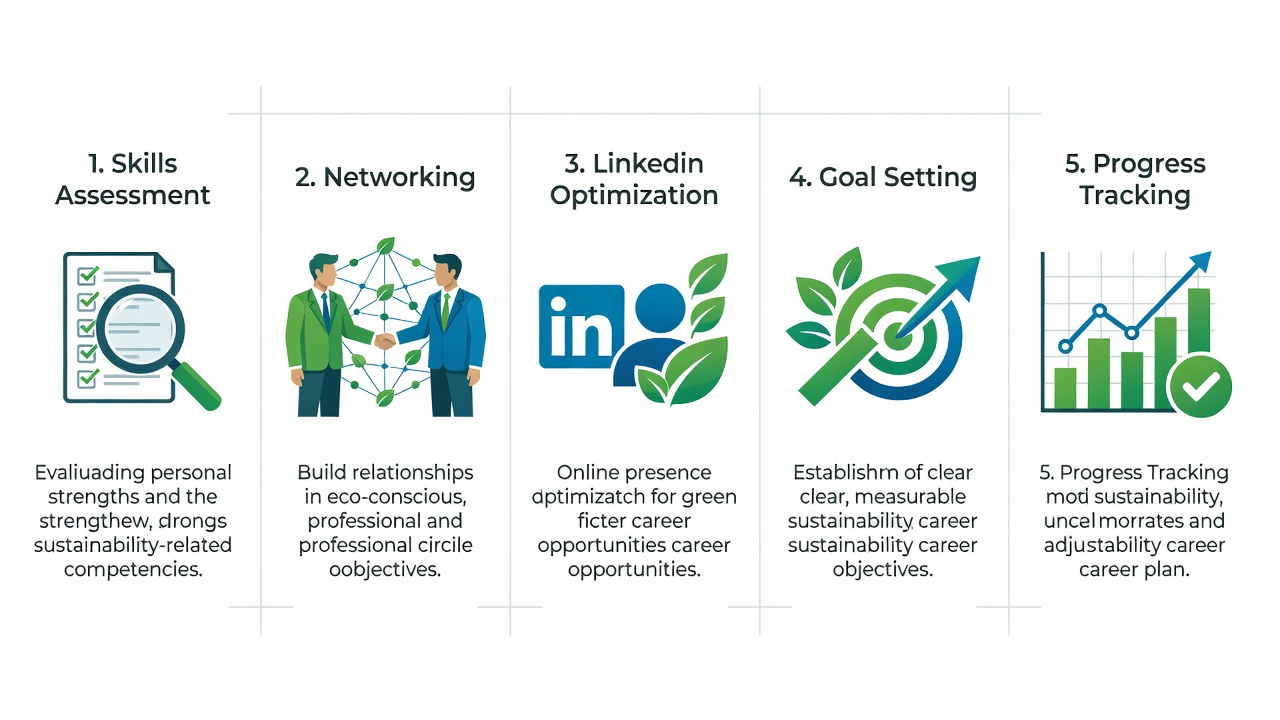
Further guidance on emerging workforce trends is available from the OECD.
Leveraging LinkedIn to Showcase Sustainability Achievements
LinkedIn remains one of the most powerful platforms for demonstrating sustainability expertise to recruiters and hiring managers. Start by rewriting your headline and about section to incorporate relevant keywords such as “ESG strategy,” “net-zero transition,” and “sustainable innovation.” Quantify achievements wherever possible—for example, “Led cross-functional team that reduced Scope 3 emissions by 18% within 12 months.” Use the featured section to upload case studies, white papers, or presentation slides that highlight your contributions. Publish regular posts analyzing sustainability news or sharing lessons from recent projects. Engage thoughtfully with content from thought leaders in the field to increase algorithmic reach. Over time, these consistent efforts position you as a credible candidate for roles requiring both business acumen and environmental consciousness.
Creating a Sustainability-Integrated Career Development Plan
A robust plan transforms aspirations into actionable milestones. Follow these detailed steps:
- Articulate a clear long-term vision that integrates personal values with global sustainability priorities, such as contributing to climate resilience or advancing social equity.
- Perform a comprehensive skills gap analysis using frameworks from international bodies and map required competencies against your current profile.
- Establish quarterly objectives that combine formal learning, practical application, and relationship-building activities.
- Research and rank potential employers based on their publicly disclosed sustainability commitments, governance practices, and employee resource groups.
- Schedule biannual reviews to evaluate progress, adjust for regulatory changes, and incorporate feedback from mentors or performance discussions.
Document everything in a living digital workspace that includes timelines, success metrics, and contingency options.
Real-World Examples from Various Sectors
Finance professionals are moving into climate-risk modeling and green-bond structuring at institutions prioritizing sustainable investment portfolios. In technology, specialists optimize data-center energy consumption and develop AI tools for environmental monitoring. Healthcare workers focus on reducing medical waste streams and implementing low-carbon procurement policies. Manufacturing leaders champion circular-economy redesigns that extend product lifespans while cutting material costs. Retail executives create traceable supply chains that meet emerging due-diligence legislation. These examples illustrate that sustainability integration is possible in virtually every industry when professionals combine domain expertise with targeted green competencies.
Traditional vs. Purpose-Driven Career Paths
Traditional career trajectories often emphasize rapid promotions, salary maximization, and short-term performance metrics. In contrast, purpose-driven paths balance financial rewards with demonstrable societal impact. Employees on purpose-driven tracks frequently experience higher engagement levels, greater access to cross-functional innovation projects, and stronger professional networks within values-aligned communities. While traditional paths may offer faster initial advancement in some organizations, purpose-driven professionals tend to enjoy longer tenure and more resilient career trajectories during economic or regulatory shifts. The choice ultimately depends on individual priorities, yet evidence suggests that integrating sustainability considerations enhances both personal satisfaction and long-term employability.
Measuring Progress Toward Promotions in Sustainable Roles
Effective measurement relies on clearly defined key performance indicators. Track project-level outcomes such as emissions reductions achieved, stakeholder satisfaction scores, or policy changes influenced. Maintain a detailed portfolio documenting both quantitative results and qualitative testimonials. Schedule regular alignment conversations with supervisors to ensure sustainability contributions are visible during promotion cycles. Leverage internal ESG dashboards or external reporting frameworks to benchmark your impact against industry peers. Consistent documentation and transparent communication increase the likelihood that sustainability work is recognized during performance reviews.
Common FAQs About Transitioning into ESG-Related Positions
- How do I start if my background is unrelated? Begin with accessible online courses and volunteer projects that build foundational knowledge and demonstrable experience.
- Is a formal degree required? Many employers prioritize proven impact, relevant certifications, and transferable skills over specific academic credentials.
- What if my current company lacks sustainability focus? Propose pilot initiatives internally while simultaneously exploring external opportunities that align with your values.
- How long does a transition typically take? Most professionals require 12–24 months of deliberate upskilling and networking to secure meaningful ESG roles.
- Are remote opportunities available? Yes, many sustainability consulting and reporting positions offer hybrid or fully remote arrangements.
Conclusion
Integrating sustainability goals into career planning equips professionals to thrive amid 2026’s evolving economic and regulatory landscape. By systematically developing green skills, cultivating strategic networks, optimizing professional profiles, and measuring impact rigorously, individuals can build careers that deliver both personal advancement and meaningful contributions to global challenges. Begin today by conducting a skills audit and identifying one concrete action that moves you closer to a purpose-driven future.


No comments yet. Be the first!