 Jobboy

Introduction to Reverse Mentoring in 2026
Reverse mentoring has emerged as a powerful strategy for professionals seeking career growth beyond traditional methods. In this model, junior employees with strong tech skills mentor senior leaders, fostering mutual learning and innovative networking. As workplaces evolve with rapid technological changes, this approach addresses the search intent of those looking for fresh tactics in professional development. Unlike conventional mentoring where experience flows downward, reverse mentoring flips the dynamic to leverage digital fluency from younger staff while providing juniors with strategic insights from executives.
In 2026, organizations face unprecedented demands for digital transformation, including widespread AI adoption and remote collaboration tools. Reverse mentoring directly tackles skill gaps that hinder career progression for both groups. Professionals searching for networking opportunities beyond standard advice will find this model particularly effective for building cross-generational relationships that lead to promotions and enhanced visibility.
Understanding Reverse Mentoring and Its Relevance Today
Reverse mentoring originated in the early 2000s at companies like General Electric but has gained renewed traction amid accelerating tech shifts. It involves pairing less experienced but digitally native employees with seasoned leaders who may lack proficiency in current platforms. The goal is reciprocal growth: juniors gain leadership exposure, while seniors acquire practical knowledge of tools like generative AI, data analytics, and social media strategies. This setup proves especially valuable in 2026 as hybrid work environments demand continuous upskilling.
Comparing Reverse Mentoring to Classic Mentoring Models
Traditional mentoring typically involves senior professionals guiding juniors on career paths, leadership, and industry knowledge. Reverse mentoring, however, emphasizes upskilling seniors in emerging technologies while juniors gain insights into strategic decision-making. This bidirectional exchange leads to better retention and innovation. Classic models often focus on one-way knowledge transfer, which can feel hierarchical and limit fresh perspectives. In contrast, reverse mentoring encourages vulnerability from leaders and empowers juniors, resulting in stronger team cohesion. Studies from sources like Harvard Business Review highlight how such pairings outperform one-way models in adaptability and long-term career outcomes. Key differences include session focus, power dynamics, and measurable impacts on innovation metrics.
Key Benefits for Career Growth and Professional Networking
Participants report accelerated promotions through enhanced visibility and skill development. Juniors build networks at higher levels, accessing opportunities that might otherwise remain hidden. Seniors stay relevant in fast-changing fields, reducing the risk of obsolescence. Additional benefits encompass improved diversity in leadership pipelines, higher employee engagement, and better organizational agility. For those pursuing 2026 career growth, reverse mentoring serves as a strategic networking tactic that blends technical upskilling with interpersonal development.
Identifying Suitable Mentor-Mentee Pairs
Successful pairings require alignment in goals, availability, and complementary skills. Begin by assessing tech proficiency gaps among leaders through self-assessments or performance reviews. Simultaneously, evaluate junior employees' career aspirations and communication abilities. Criteria for ideal matches include overlapping interests such as AI adoption, content creation, or digital marketing, plus compatible schedules for regular meetings. HR departments can facilitate matching via internal platforms or surveys that capture both technical strengths and developmental needs. Avoid forcing pairings; voluntary participation yields higher success rates.
Structuring Effective Sessions Around LinkedIn and Emerging Tools
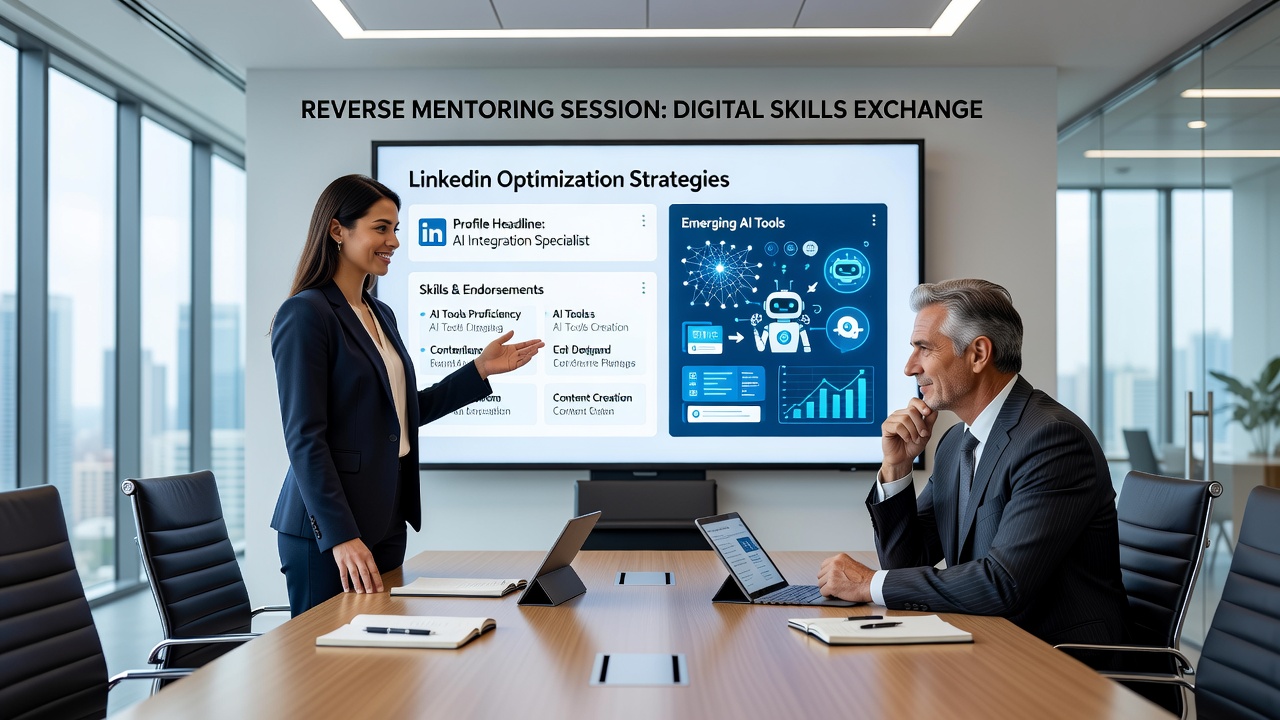
Sessions should be scheduled bi-weekly for 45-60 minutes to maintain momentum without overwhelming participants. A typical structure starts with goal review, followed by hands-on activities and action planning. Focus areas often include LinkedIn profile optimization for personal branding, exploration of emerging tools like AI analytics platforms and collaboration software, and real-time feedback on workplace challenges. Incorporate practical exercises such as live profile audits or tool demonstrations. End each session with clear next steps and accountability check-ins. This format ensures sessions remain productive and directly tied to career advancement.
Real-World Case Examples from Diverse Industries
In healthcare, a tech-savvy nurse mentored executives on telemedicine platforms, leading to streamlined patient portals and improved outcomes across multiple facilities. In finance, junior analysts guided C-suite members on fintech applications and blockchain basics, resulting in strategic pivots that enhanced competitive positioning. Manufacturing firms have reported successes with digital twin technologies, where young engineers trained leaders on simulation software to optimize production lines. Technology companies themselves use reverse mentoring to bridge gaps between product teams and executives, fostering quicker adoption of user-centric design principles. These examples demonstrate applicability across sectors and highlight tangible career benefits like expanded responsibilities and promotions.
Measuring Promotion Outcomes and Success Metrics
Track metrics such as promotion rates, skill certifications earned, network expansion via LinkedIn connections, and qualitative feedback on confidence levels. Pre- and post-program surveys reveal impact, with many organizations noting higher advancement for participants. Establish baselines at the start and review progress quarterly using dashboards that monitor engagement and knowledge transfer. Success indicators also include increased cross-departmental collaborations and retention improvements.
Practical Steps to Implement a Reverse Mentoring Program
- Secure executive buy-in by presenting pilot program data and potential ROI.
- Train participants on effective knowledge sharing techniques and cultural sensitivity.
- Integrate the program with existing learning management systems for tracking.
- Review progress quarterly and adjust pairings based on feedback.
- Scale successful pilots organization-wide while documenting best practices.
Overcoming Common Challenges in Setup
Resistance from senior leaders can be addressed by emphasizing mutual benefits and starting with low-stakes pilots. Time constraints are mitigated through flexible virtual sessions. Misaligned expectations are prevented by clear agreements on objectives upfront. Organizations that invest in facilitator training see smoother implementations and stronger long-term results.
FAQ: Common Setup Challenges and Success Metrics
How do you overcome generational resistance? Start with voluntary participation and shared wins that demonstrate value to both parties.
What metrics indicate success? Promotion rates, engagement scores, and skill acquisition within six months provide clear indicators.
Is it suitable for small teams? Yes, even informal pairings yield benefits when structured thoughtfully.
How long should programs run? Most effective programs last six to twelve months with periodic evaluations.
Conclusion
Reverse mentoring offers a strategic edge for 2026 career growth by bridging skill gaps and fostering inclusive networks. Professionals ready to innovate should explore this model for lasting impact on their trajectories and organizational success.


No comments yet. Be the first!