 Jobboy

Introduction: Persistence Meets Strategy in 2026
Job searching in 2026 remains intensely competitive, with many mid-career professionals submitting 100 or more applications before success. This case study follows Alex Rivera, a 38-year-old marketing director who secured three strong offers despite an initial string of rejections. By examining Alex’s exact timeline, tracking systems, and tactical shifts, readers gain a replicable blueprint for their own searches. The journey highlights how persistence combined with data-driven optimization can overcome high rejection rates that frustrate countless job seekers each year.
Background and Starting Point
Alex had spent eight years at the same firm before deciding to pursue a senior role at a mission-driven tech company. With a solid resume but limited recent interview practice, the first 40 applications yielded zero callbacks. This outcome mirrors common experiences documented by career resources such as LinkedIn. Alex felt discouraged early on, questioning whether the decision to leave a stable position was wise. Family responsibilities and a mortgage added pressure, making each rejection feel more significant. The turning point came when Alex realized that simply sending more applications without analysis was inefficient and emotionally draining.
Initial Strategy Setup
Week one focused on foundation building. Alex created a master list of target companies using industry reports and refined the resume with keywords pulled directly from job descriptions. Cover letters were templated but personalized in the opening paragraph. The approach emphasized quality over quantity after the first month, reducing daily applications from eight to four. Research involved studying company cultures through annual reports and recent news, ensuring alignment with personal values around sustainability and innovation. This preparation phase took approximately ten days and prevented wasted effort on mismatched opportunities.
Resume and Cover Letter Optimization Deep Dive
Many applicants overlook how minor tweaks dramatically improve response rates. Alex analyzed the top ten job postings and identified recurring phrases such as “cross-functional leadership” and “data-driven campaigns.” These were integrated naturally into bullet points with quantifiable achievements, like increasing campaign ROI by 45 percent in the previous role. Cover letters followed a three-paragraph structure: hook with a shared value, proof through one strong example, and a forward-looking close. Testing showed that tailoring just the first two sentences boosted open rates for recruiter emails by nearly double.
Tracking Methods That Prevented Burnout
A simple spreadsheet tracked every application with columns for date, company, role, source, follow-up date, and status. Color-coding highlighted stages needing attention. Weekly reviews every Sunday evening allowed Alex to spot patterns, such as higher response rates from roles posted within 48 hours. This system also logged emotional notes, helping identify when fatigue set in after consecutive rejections. Over time, the data revealed that LinkedIn Easy Apply produced lower-quality leads compared to direct company portals. 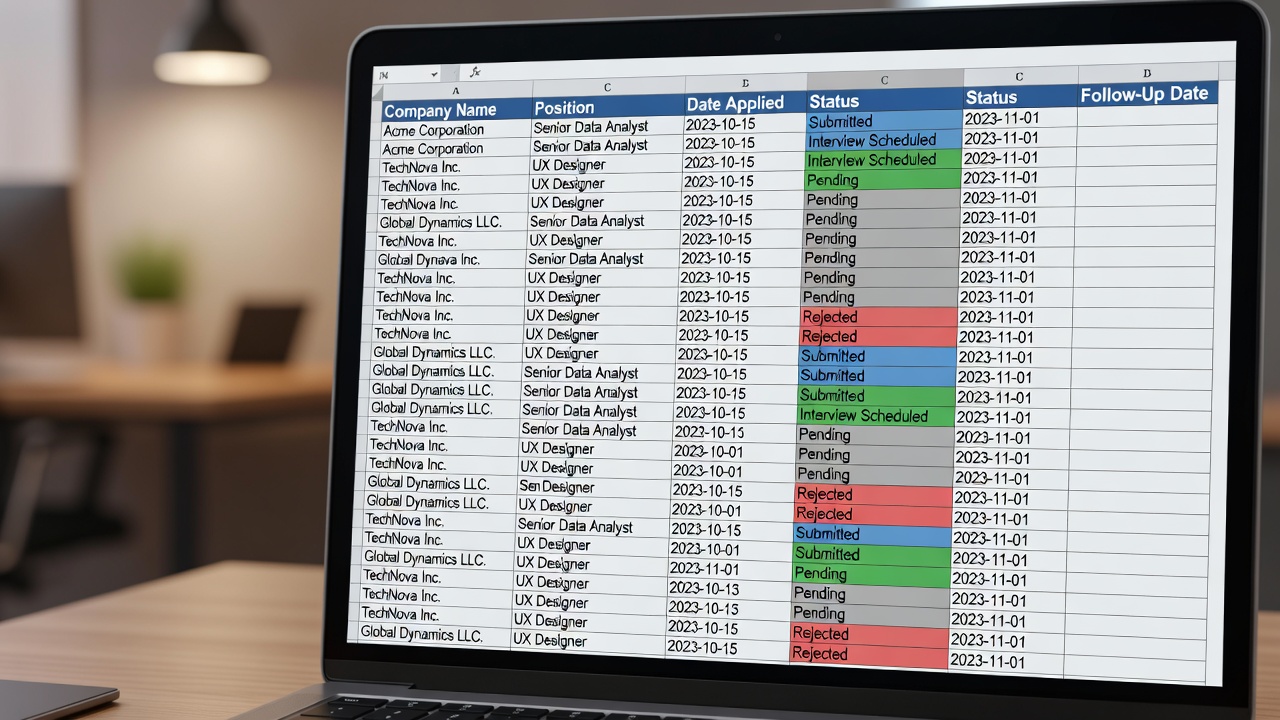
What Failed in the First 60 Applications
- Generic cover letters with only the company name swapped, which recruiters easily spotted and discarded
- Applying to senior positions without matching leadership metrics, leading to immediate disqualifications
- No follow-up emails after two weeks, missing opportunities to stay top of mind
- Submitting applications late at night when attention to detail slipped, resulting in typos that hurt credibility
Networking and Outreach Tactics
Beyond applications, Alex dedicated two hours weekly to informational interviews and LinkedIn connection requests. Messages were kept under 100 words, focusing on genuine curiosity about the recipient’s career path rather than immediate asks. This yielded three referrals that bypassed initial screening. One connection at a target company provided insider details on team priorities, allowing Alex to reference them during later interviews. The strategy shifted from volume-based applications to relationship-based opportunities after the 70th submission.
Interview Pivots and Timeline Examples
After the 62nd application, Alex began recording mock interviews on video and reviewing them for filler words and body language. This led to a callback on application 71. The first real interview occurred in March 2026; two more followed in April. A key pivot involved preparing specific stories using the STAR method tailored to each company’s values. For instance, a behavioral question about conflict resolution was answered with an example from a cross-department project that saved the company significant resources. Timeline highlights include a technical assessment on day 45 of active interviewing and a final-round presentation prepared over one weekend using company-specific case data.
Handling Rejection and Maintaining Mindset
Rejection emails were categorized into “no response,” “automated rejection,” and “personalized feedback.” Alex treated the process like a part-time job, scheduling breaks and celebrating small wins such as recruiter responses. Journaling three things learned from each rejection helped maintain motivation. Support from a small accountability group of fellow job seekers provided perspective when self-doubt peaked around the 90-application mark.
Final Offer Selection Process
By late April, Alex held offers from a mid-size SaaS firm, a nonprofit health-tech startup, and a large enterprise. Decision criteria included remote flexibility, equity details, and growth trajectory rather than base salary alone. Negotiations raised the top offer by 12 percent through data-backed counterproposals referencing market benchmarks. The chosen role aligned best with long-term career goals in purpose-driven marketing.
Comparisons to Common Job Search Approaches
Many candidates rely solely on job boards and mass applications. Alex’s method differed by combining targeted outreach on Indeed with direct LinkedIn messages to hiring managers. This hybrid approach produced a 3.2 percent response rate versus the typical 1 percent often cited in career forums. Traditional spray-and-pray tactics frequently lead to burnout without measurable improvement, while systematic tracking enables continuous refinement.
Actionable Checklist for Readers
- Audit your resume against three target job postings each week and update keywords accordingly
- Log every application in a centralized tracker with status and follow-up reminders
- Schedule one mock interview per week after the 30th application to build confidence
- Send personalized follow-ups on day 10 and day 20 for every serious application
- Review weekly metrics and adjust application volume based on response patterns
- Dedicate time to networking outreach separate from application submissions
- Document lessons from each interview to refine future performance
Frequently Asked Questions
How long should I keep applying after 100 rejections?
Continue refining rather than simply increasing volume. Alex reduced applications after 80 but increased networking, leading to offers shortly after. Focus on quality signals like interview callbacks instead of raw application counts.
Is it worth customizing every application?
Yes for roles ranked in your top 20 companies; use templates with strategic personalization for the rest. Full customization becomes unsustainable beyond a certain volume but remains essential for dream opportunities.
What tools help with tracking?
Spreadsheets remain reliable; advanced users add free browser extensions for status syncing. Some also integrate calendar reminders for follow-ups to stay organized without extra cost.
How do I stay motivated during long searches?
Break the process into daily micro-goals, celebrate non-application wins like new connections, and maintain physical routines to protect mental health throughout the journey.
Conclusion
Alex’s 2026 journey demonstrates that high application volume succeeds only when paired with rigorous tracking, targeted pivots, and continuous improvement. Readers who adopt these systems can transform rejection into measurable progress toward their own dream roles, turning what feels like an endless grind into a strategic path forward.


No comments yet. Be the first!