 Jobboy

Introduction: Why Cross-Industry Networking Matters in 2026
In today's rapidly evolving job market, staying within one industry can limit opportunities. Cross-industry networking enables mid-career professionals to leverage diverse connections for fresh roles, innovation, and upskilling. This approach helps identify hidden job markets and accelerates professional development beyond traditional boundaries. By 2026, economic shifts and technological advancements demand adaptable networks. Professionals who span industries often secure roles faster during transitions because they access opportunities unavailable to those confined to single sectors.
The search intent around career change and upskilling through diverse networks highlights a need for actionable tactics rather than generic advice. This guide provides in-depth strategies including skill mapping, platform optimization, event participation, and value-driven relationship building. Readers will find concrete examples, decision frameworks, and pitfalls to avoid, ensuring the content supports real career pivots.
Identifying Transferable Skills for Boundary-Spanning Moves
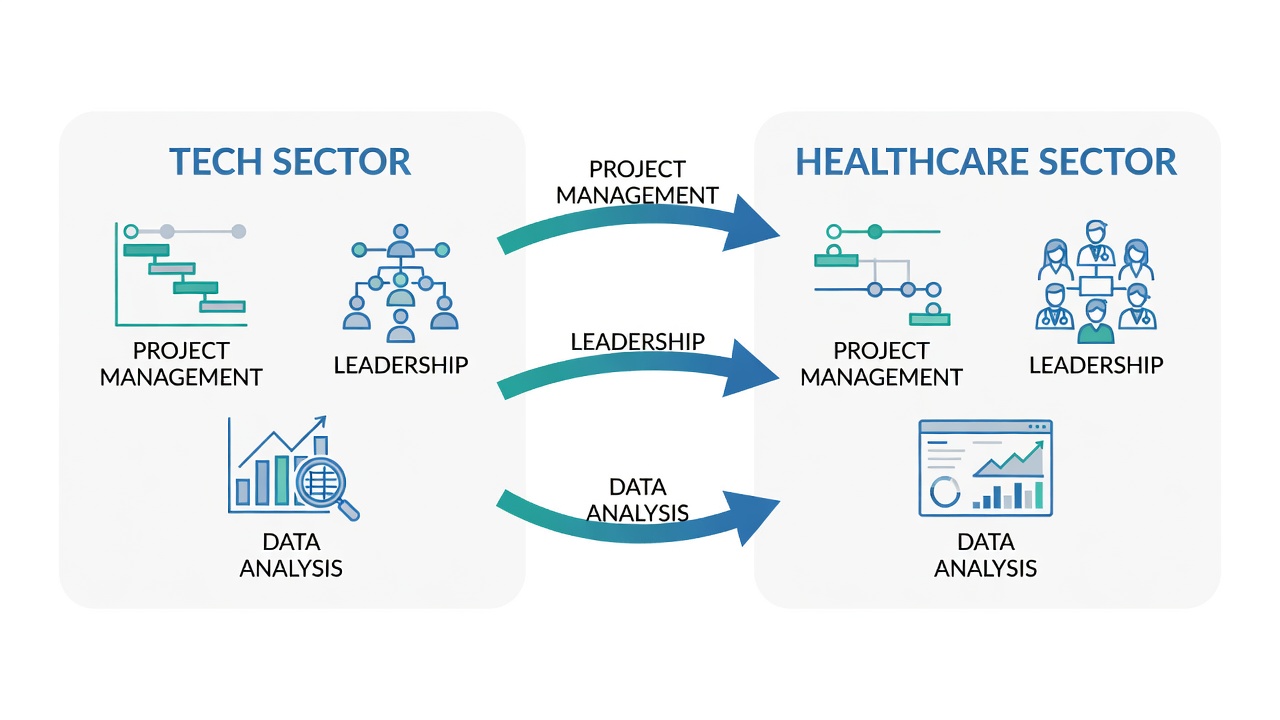
Start by mapping your existing expertise to new fields. Skills like project management, data analysis, and leadership transfer across sectors such as tech, healthcare, and finance. Begin with a thorough self-assessment that goes beyond surface-level lists. Review past performance reviews, project outcomes, and daily responsibilities to extract underlying competencies.
Practical Steps for Skill Identification
- Conduct a skills audit: List core competencies and research target industries via resources like the U.S. Bureau of Labor Statistics at BLS.gov. Compare occupational requirements across sectors to spot overlaps.
- Highlight soft skills: Communication and problem-solving resonate universally; quantify them with metrics such as team size led or efficiency improvements achieved.
- Use tools: Create a matrix comparing your background to desired roles. Include columns for current skill, evidence from past roles, and relevance to new industry.
- Seek external validation: Request feedback from mentors or peers in target fields to confirm which skills appear most valuable.
Real-world example: A marketing manager pivoted to renewable energy by emphasizing stakeholder engagement skills learned in consumer goods. She documented how she coordinated cross-functional teams of 12 people, directly translating to energy sector project coordination needs.
Leveraging LinkedIn for Cross-Industry Connections
LinkedIn remains the premier platform for boundary-spanning outreach. Optimize your profile with keywords from multiple industries and engage in groups outside your current field. Advanced features allow precise targeting of professionals who bridge sectors.
Detailed LinkedIn Tactics
Update your headline and about section to reflect both current expertise and future aspirations without appearing scattered. Use phrases that signal adaptability. Send personalized connection requests that reference shared interests or recent posts rather than generic templates. Share industry-agnostic insights such as leadership lessons or productivity frameworks that appeal across domains. Join and actively participate in virtual discussions within groups focused on innovation or emerging technologies. LinkedIn offers advanced search filters to find professionals in adjacent sectors by combining job titles with company types outside your primary field.
Follow up thoughtfully after connections accept by offering a small piece of value, such as an article link or introduction to another contact. Track outreach in a simple spreadsheet noting response rates and next actions.
Attending and Maximizing Hybrid Events
Hybrid conferences blend in-person and virtual formats, ideal for 2026 networking. Focus on events like industry summits or innovation forums that attract mixed audiences from multiple sectors. Preparation multiplies impact.
Research attendees via event apps or LinkedIn beforehand and identify 5-10 individuals whose backgrounds complement yours. Prepare concise elevator pitches that emphasize transferable value rather than current job title. During sessions, take notes on shared challenges and use breaks for meaningful conversations. Follow up within 48 hours with personalized messages referencing specific discussion points. These events foster reciprocal relationships through shared learning opportunities and often include breakout rooms designed for cross-pollination of ideas.
Building Reciprocal Value Exchanges
Networking succeeds when value flows both ways. Offer introductions, share resources, or provide mentorship to build lasting alliances. Avoid one-sided asks that damage credibility. Examples include collaborating on joint projects or co-authoring articles that benefit multiple fields. This strategy turns one-off contacts into career-long supporters who advocate for you during hiring processes.
Schedule quarterly check-ins even when not actively job searching. Send relevant industry reports or congratulate contacts on achievements to maintain presence without constant requests.
Step-by-Step Action Plan for Implementation
- Week 1: Audit skills using the matrix method and rewrite LinkedIn profile sections. Allocate 4 hours for research and updates.
- Week 2-3: Identify and attend 2-3 hybrid events. Prepare pitches and schedule follow-ups immediately after each session.
- Week 4: Schedule 5 informational interviews across industries. Prepare open-ended questions focused on challenges and skill needs in target sectors.
- Ongoing: Track interactions in a CRM or spreadsheet and nurture relationships quarterly with value-driven touchpoints such as resource sharing or introductions.
Monitor progress monthly by reviewing new connections made and opportunities uncovered. Adjust focus based on response quality rather than sheer volume.
Traditional vs. Cross-Industry Networking: A Comparison
Traditional networking stays within silos, yielding incremental gains through familiar contacts. Cross-industry methods deliver exponential growth through novel perspectives and opportunities. Key differences include broader idea exchange, access to emerging roles, and resilience against sector downturns. Traditional approaches often reinforce existing limitations while cross-industry tactics surface unexpected synergies, such as applying healthcare operations insights to logistics optimization.
Real-World Examples of Successful Pivots
One executive moved from automotive to fintech by networking at sustainability conferences, applying supply-chain knowledge to blockchain applications in supply finance. She secured her new role after three informational conversations that highlighted overlapping risk management expertise. Another transitioned from education to AI ethics consulting via LinkedIn groups, where she connected with technologists seeking human-centered perspectives. Her background in curriculum design translated directly into developing training modules for ethical AI deployment.
Common Mistakes to Avoid
Many professionals fail by casting too wide a net without clear positioning. Others neglect follow-up or appear transactional. Always research contacts thoroughly and frame outreach around mutual benefit. Avoid mentioning salary expectations early or requesting favors before establishing rapport.
FAQ: Addressing Common Pitfalls
How do I avoid seeming unfocused when networking across fields?
Frame your outreach around specific value you bring, not desperation. Research targets thoroughly and reference concrete intersections between your background and their challenges.
What if connections don't respond?
Follow up politely after two weeks and diversify outreach channels. Sometimes timing or inbox volume plays a role; persistence combined with new value offers improves results.
Is cross-industry networking time-intensive?
Start small with 2-3 hours weekly; quality trumps quantity. Focused efforts on 3-5 high-potential contacts yield better outcomes than broad but shallow activity.
Should I mention my career pivot plans immediately?
Reveal intentions gradually after demonstrating genuine interest in the other person's work. Premature disclosure can make interactions feel self-serving.
How do hybrid events differ from fully virtual ones?
Hybrid formats allow deeper in-person rapport while retaining virtual accessibility. Prioritize events with strong moderation to ensure balanced participation across formats.
Conclusion
Embracing cross-industry networking positions you for sustained 2026 career growth. By focusing on transferable skills, strategic platforms, and mutual value, mid-career professionals unlock transformative opportunities that traditional paths rarely provide. Consistent implementation of these tactics builds a resilient professional network ready for future shifts.


No comments yet. Be the first!