 Jobboy

Introduction: Why Mental Models Matter for 2026 Career Growth
In a rapidly evolving job market, professionals face constant pressure to upskill. Choosing the right path requires more than intuition. Mental models such as inversion, second-order thinking, and opportunity cost provide structured ways to evaluate options and maximize returns. These frameworks help mid-career individuals in tech and management roles make decisions that align with long-term promotion timelines and networking leverage. In 2026, with advancements in AI, remote collaboration tools, and specialized certifications reshaping industries, relying on gut feelings often leads to suboptimal choices. By applying these models systematically, you can sidestep common pitfalls and focus on investments that truly advance your career. This article explores each model in depth, offers concrete application steps, and provides checklists tailored to real scenarios.
Inversion: Starting from the End to Avoid Failure
Inversion involves thinking backward from undesired outcomes. Instead of asking what will make an upskilling choice successful, consider what would cause it to fail. For example, selecting a certification that does not match industry demands in 2026 could waste time and stall progress. Mid-career tech professionals might invert by listing reasons a bootcamp could lead to outdated skills, such as focusing on legacy programming languages instead of emerging ones like quantum computing basics or ethical AI frameworks. Then, they choose programs that counter those risks. This approach encourages thorough research into market trends before committing resources. Inversion also helps identify overlooked failure points like poor instructor quality or lack of hands-on projects that fail to build portfolio-worthy work. In practice, a software engineer might list ten ways a course could waste six months, revealing the need for programs with strong community support and post-course mentorship. This backward reasoning builds resilience against poor decisions.
Second-Order Thinking: Beyond Immediate Results
Second-order thinking examines consequences beyond the first level. Completing a course might boost your resume immediately, but what about the ripple effects on your network or promotion timeline? A management professional could consider how new leadership skills influence team dynamics and future opportunities two years later, such as enabling them to lead cross-functional initiatives that accelerate advancement. Applying this model reveals hidden benefits, such as stronger professional relationships formed through collaborative learning environments. It also uncovers potential downsides, like over-specialization that narrows future role options. For instance, pursuing a narrow data science certification might yield quick wins in analytics but limit broader strategic roles if second-order effects like reduced exposure to general management topics are ignored. Professionals who master this thinking often schedule regular reviews to assess how initial upskilling choices compound over time, leading to more adaptive career strategies in dynamic 2026 markets.
Opportunity Cost: Weighing What You Give Up
Every upskilling decision carries an opportunity cost—the value of the next best alternative. Time spent on one certification cannot be used for hands-on projects or networking events. Professionals should quantify these trade-offs by comparing potential salary growth or role advancements from different paths. For instance, dedicating evenings to LinkedIn Learning modules might delay participation in industry conferences that offer direct connections to hiring managers. In tech roles, choosing a free online resource over a paid bootcamp frees budget for tools or coaching but may reduce structured accountability. Management professionals often weigh the cost of missing team meetings against the long-term gains from enhanced strategic thinking skills. To apply this effectively, create a simple matrix listing three alternatives and their projected impacts on promotion timelines, allowing data-driven choices rather than emotional ones.
Overcoming the Sunk Cost Fallacy in Course Evaluations
The sunk cost fallacy leads people to continue investing in failing options because of prior commitments. When evaluating certifications, avoid sticking with a program simply because you have already paid for it. Instead, reassess based on current ROI potential. If a course no longer aligns with 2026 market needs, pivot early to prevent further losses. Real-world scenarios show tech workers abandoning partially completed bootcamps for targeted online modules that better fit their promotion goals. This bias often appears when professionals have invested weekends or significant funds, yet continuing yields diminishing returns. Counter it by setting predefined exit criteria at the start, such as lack of skill applicability after the first module. Regular audits help maintain objectivity and redirect efforts toward higher-value opportunities like targeted workshops or mentorship programs.
Step-by-Step Application for Tech Roles
Follow these steps to apply the models: 1. Define your target role in 2026, such as senior cloud architect. 2. Use inversion to list failure modes of popular courses, including outdated content or weak project components. 3. Apply second-order thinking to map networking impacts, like how alumni groups could lead to job referrals. 4. Calculate opportunity costs against your current workload, factoring in family time or side projects. This structured process helps tech professionals select high-value paths like specialized data analytics training. Additional examples include evaluating AWS certifications versus Google Cloud paths by inverting potential skill obsolescence and considering second-order effects on team leadership opportunities.
Step-by-Step Application for Management Roles
Management professionals can adapt the process by focusing on leadership competencies. Start with inversion to avoid programs lacking practical application, such as those without case studies on remote team management. Incorporate opportunity cost analysis when balancing study time against team leadership responsibilities. Second-order thinking highlights how new skills could accelerate promotion timelines through demonstrated strategic vision. A detailed example: A mid-level manager might list inverted risks like irrelevant theory, then prioritize courses with peer networking components that enhance visibility for executive tracks. This leads to choices that integrate seamlessly with quarterly performance goals.
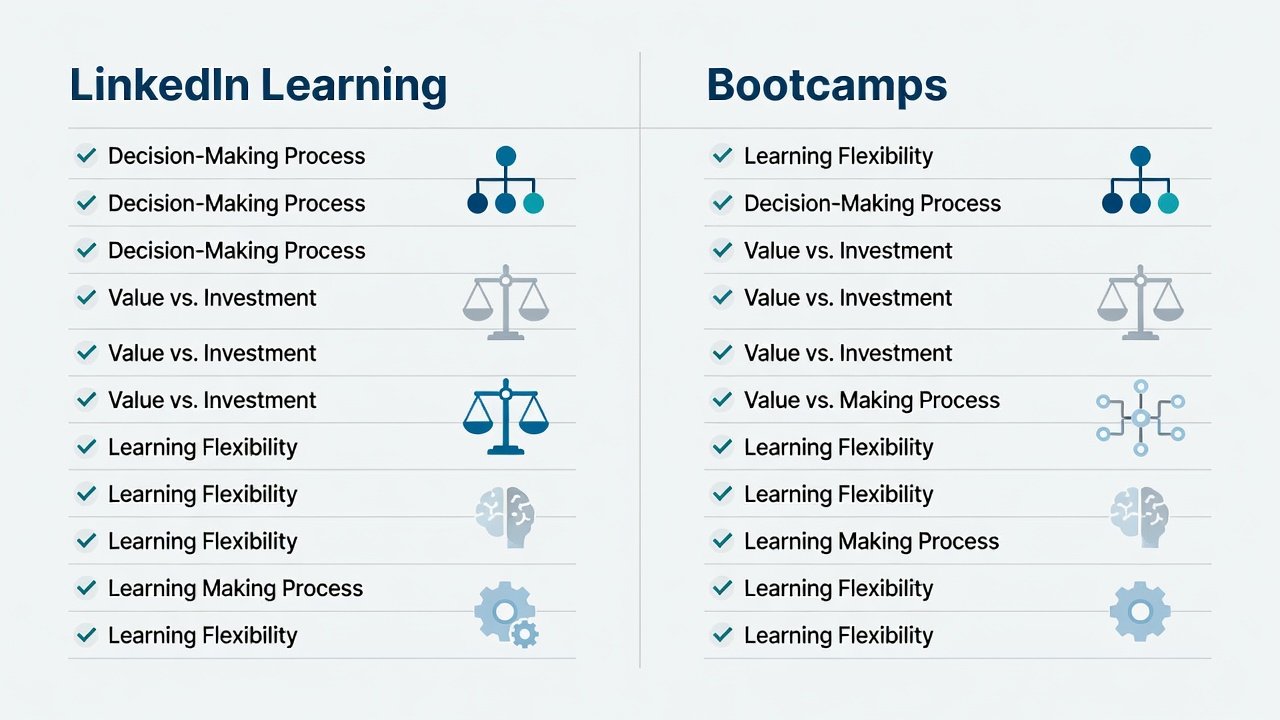
Checklist: LinkedIn Learning vs. Bootcamps
- Evaluate content depth using second-order thinking on long-term applicability to 2026 roles.
- Compare time commitments against opportunity costs for networking events or family obligations.
- Assess completion rates and support structures to counter sunk cost biases effectively.
- Check alignment with 2026 industry trends via inversion exercises on skill relevance.
- Review peer success stories for promotion leverage potential and real outcome data.
- Factor in flexibility for adjusting paths mid-course based on emerging market shifts.
Real-World Scenarios Involving Networking and Promotions
Consider a mid-level engineer weighing a bootcamp against self-paced learning. Inversion reveals the bootcamp's risk of limited networking, while opportunity cost analysis favors LinkedIn Learning for flexible scheduling that preserves conference attendance. Another scenario involves a manager using these models to time upskilling around annual reviews, resulting in faster advancement by aligning new credentials with performance discussions. A third example features a tech lead who applied second-order thinking to choose a program fostering connections with industry influencers, directly impacting their promotion within 18 months. These cases demonstrate how the models turn vague career aspirations into actionable, measurable plans.
Common Mistakes to Avoid When Using These Models
One frequent error is overcomplicating the analysis, leading to decision paralysis. Keep frameworks simple by limiting lists to five key points. Another mistake involves ignoring emotional factors, such as personal interest in a topic that second-order thinking might undervalue. Always balance quantitative opportunity costs with qualitative fulfillment. Finally, failing to revisit decisions quarterly allows biases like sunk costs to creep back in unnoticed.
Integrating Models into Quarterly Career Audits: FAQ
How often should I apply these models? Conduct quarterly audits to review progress and adjust paths before biases take hold, incorporating feedback from mentors or performance metrics.
Can these frameworks work with limited time? Yes, inversion and opportunity cost require minimal time but yield high clarity when applied consistently during short weekly reflections.
What if market conditions change mid-year? Second-order thinking prepares you for shifts by focusing on adaptable skills and building contingency plans into your upskilling roadmap.
How do I track results effectively? Maintain a simple journal logging decisions, inverted risks, and observed outcomes to refine your approach over successive audits.
Conclusion
Mental models transform upskilling from guesswork into strategic action. By mastering inversion, second-order thinking, and opportunity cost while avoiding sunk cost traps, professionals position themselves for meaningful 2026 career advancements. Start applying these today to build a resilient development plan that accounts for both immediate gains and long-term compounding effects.

No comments yet. Be the first!