 Jobboy

Mental Models for Smarter 2026 Career Upskilling
Mid-career professionals navigating 2026 encounter an overwhelming array of upskilling opportunities, from online platforms to advanced certifications. Success depends on moving beyond surface-level trends toward deliberate, framework-driven choices. Mental models including inversion, first principles, and opportunity cost equip individuals with tools to assess LinkedIn Learning subscriptions, professional certifications, and networking commitments for maximum return on investment and long-term career resilience.
Understanding the Three Core Mental Models
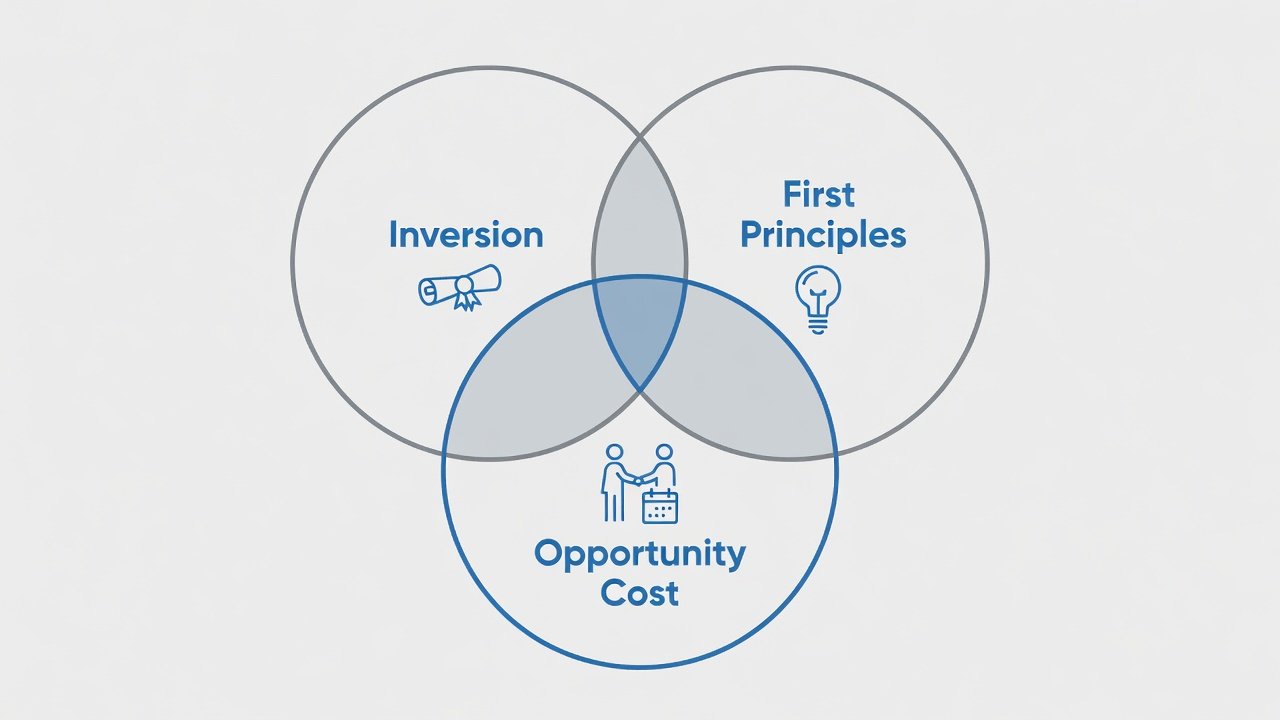
These frameworks originate from disciplines like philosophy, economics, and engineering but translate powerfully to career strategy. Inversion prevents costly mistakes by focusing on avoidance of failure. First principles reduce complex decisions to elemental components. Opportunity cost ensures resources are allocated where they generate the greatest incremental value.
Inversion in Career Decisions
Inversion works by reversing the typical question. Rather than listing desired outcomes, professionals enumerate potential pitfalls such as investing in outdated technologies or attending events that yield no actionable connections. This approach surfaces risks hidden in popular choices, such as pursuing certifications that recruiters overlook in favor of demonstrated project impact.
First Principles Thinking
First principles require deconstructing goals into irreducible truths. For instance, instead of accepting that a particular certification guarantees advancement, examine the underlying competencies like data analysis or stakeholder management that actually drive performance. This method uncovers personalized learning paths tailored to individual role requirements rather than generic recommendations.
Opportunity Cost Framework
Opportunity cost quantifies trade-offs. Time devoted to one course cannot be spent refining a key deliverable or cultivating relationships with mentors. Professionals calculate these costs by estimating weekly hours and projecting alternative uses, such as contributing to high-visibility initiatives that directly influence promotion cycles.
Applying Models to LinkedIn Learning Investments
LinkedIn Learning provides flexible access to skill-building content, yet indiscriminate consumption often leads to low retention and minimal career impact. Inversion helps filter offerings by identifying courses that fail to address specific skill gaps identified in performance reviews. First principles map individual modules to core job functions extracted from target role descriptions. Opportunity cost analysis reveals whether a multi-week program justifies reduced focus on current responsibilities.
Real-world example from tech: A software engineer at a mid-sized firm applied these models to select modules on cloud architecture over broad programming tutorials, resulting in direct contributions to a company migration project that accelerated their promotion timeline.
Management example: A marketing director used inversion to bypass generic strategy courses and prioritized data visualization training that improved campaign reporting accuracy, leading to executive recognition.
Evaluating Certifications with Structured Thinking
Certifications in areas like agile methodologies or cybersecurity remain staples for advancement. Inversion exposes the danger of accumulating credentials without corresponding experience, which can signal to employers a lack of practical application. First principles verify alignment by cross-referencing certification topics against skills listed in recent job postings from desired organizations. Opportunity cost weighs preparation time against potential earnings growth or role mobility.
Tech example: An IT professional evaluated multiple cloud certifications by breaking down required knowledge into fundamentals like networking protocols and security practices, ultimately choosing one that matched their employer's infrastructure roadmap.
Management example: A project lead compared PMP and PRINCE2 options by listing essential leadership principles, selecting the path that better complemented existing team structures and client expectations.
Networking Investments and Mental Models
Professional networking through conferences, webinars, and online groups demands significant time allocation. Inversion identifies low-value gatherings dominated by peers at similar career stages rather than influencers. First principles isolate the essential benefit of each interaction, such as gaining insights into industry shifts or securing referrals. Opportunity cost guides selective participation, favoring quality over quantity.
Real-world example from tech: A data scientist shifted from large-scale industry events to curated roundtables, securing collaborative opportunities that enhanced their portfolio and visibility within the organization.
Management example: An operations manager limited attendance to two targeted summits annually, using the saved time to implement process improvements that supported their case for a senior role.
Step-by-Step Exercises for Decision Making
- Define three primary career objectives for the coming year, including specific metrics such as role title or responsibility level.
- Conduct inversion analysis by documenting five failure scenarios for each objective tied to suboptimal learning choices.
- Decompose objectives using first principles to isolate foundational skills and knowledge areas required for success.
- Enumerate three viable upskilling options and assign estimated time investments alongside forgone alternatives.
- Score options quantitatively across the three mental models on a standardized scale, incorporating feedback from mentors or peers.
- Review outcomes quarterly and adjust based on new labor market information or personal performance data.
Common Biases to Avoid
- Authority bias leads professionals to overvalue credentials from well-known institutions without verifying relevance to their context.
- Recency bias causes overemphasis on skills highlighted in trending discussions rather than enduring competencies.
- Confirmation bias results in selective attention to information supporting pre-existing preferences for certain courses or events.
- Sunk cost fallacy encourages persistence with ineffective programs due to prior commitments of time or money.
- Availability bias prompts choices based on easily recalled success stories instead of comprehensive data analysis.
- Bandwagon effect drives adoption of skills popular among colleagues without individual assessment of fit.
Comparison Table of Mental Models
| Model | Best Used When | Key Question | Example Output | Potential Limitation |
|---|---|---|---|---|
| Inversion | High-risk decisions with clear downsides | What could cause failure? | Avoiding oversaturated certifications | May overlook positive opportunities if overapplied |
| First Principles | Complex skill gaps requiring customization | What are the fundamentals? | Building custom learning paths from core competencies | Requires significant initial research effort |
| Opportunity Cost | Time-constrained or resource-limited choices | What am I giving up? | Prioritizing work deliverables over additional courses | Difficult to quantify intangible benefits accurately |
Case Studies Demonstrating Integrated Application
In a technology firm, a mid-level developer integrated all three models to transition into machine learning engineering. Inversion prevented enrollment in overly broad AI programs, first principles identified programming and statistics as core needs, and opportunity cost calculations favored targeted projects over full-time study. The result was a successful internal move within nine months.
In management, a regional director facing stagnation used the frameworks to select executive education focused on digital transformation. This approach avoided generic MBA pathways and emphasized measurable leadership outcomes, leading to expanded team oversight.
Measuring Long-Term Impact
Track progress through quarterly self-assessments aligned with promotion criteria. Reference labor statistics from authoritative sources such as the Bureau of Labor Statistics to validate skill demand trends. Supplement with industry reports from McKinsey & Company for strategic context and demographic insights from the U.S. Census Bureau to anticipate market shifts.
FAQs on Applying These Models
How do these models support career changes?
They facilitate identification of transferable fundamentals while mitigating sunk-cost traps from prior roles, enabling efficient bridging of skill gaps through focused investments.
Can they improve promotion chances?
By directing resources toward competencies that directly influence performance indicators, these models generate tangible evidence of readiness for advancement during evaluation periods.
What data sources support these decisions?
Combine internal company metrics with external benchmarks from government agencies and consulting firms to ensure choices reflect current economic realities.
How frequently should professionals revisit their upskilling plans?
Conduct formal reviews every quarter or after major role changes, incorporating fresh data on industry developments and personal achievements.
Conclusion
Employing mental models transforms ad-hoc upskilling into a strategic advantage. Mid-career professionals who rigorously apply inversion, first principles, and opportunity cost cultivate clearer trajectories for advancement and adaptability throughout 2026 and subsequent years, fostering sustained professional growth amid evolving workplace demands.

No comments yet. Be the first!