 Jobboy

Introduction to Habit Stacking for Career Success
In 2026, professionals seeking faster career advancement are turning to habit stacking, a neuroscience-backed technique that integrates small career-focused actions into existing daily routines. This method leverages the brain's natural tendency to form automatic behaviors, making consistent progress toward goals like upskilling and networking feel effortless rather than overwhelming. Many workers struggle with traditional self-improvement plans that demand large blocks of time they simply do not have amid demanding jobs and personal responsibilities. Habit stacking solves this by anchoring new micro-habits to behaviors already embedded in your schedule, such as your commute or evening wind-down.
Unlike traditional goal-setting that often leads to burnout, habit stacking builds momentum by anchoring new micro-habits to established ones. Research from institutions like the National Institutes of Health supports how repeated cue-response patterns strengthen neural pathways over time. By 2026, the pace of workplace change requires continuous learning, and this approach allows professionals to stay competitive without sacrificing work-life balance.
Understanding the Neuroscience Behind Habit Stacking
Habit stacking works by piggybacking new behaviors onto automatic ones, reducing the cognitive load required for decision-making. The brain's basal ganglia handles routine actions, freeing the prefrontal cortex for higher-level thinking. In career contexts, this means attaching a 5-minute LinkedIn comment session to your morning coffee ritual. Neuroplasticity plays a key role here; each repetition reinforces connections between neurons, eventually making the new action feel as natural as the anchor habit itself.
Studies highlight that consistency in these stacked habits compounds results, leading to measurable improvements in skills and visibility within organizations. Over weeks and months, professionals notice enhanced confidence during performance reviews and greater ease when pursuing internal mobility opportunities. The science also shows that starting small prevents the resistance that often derails larger resolutions.
Step-by-Step Guide to Implementing Habit Stacking
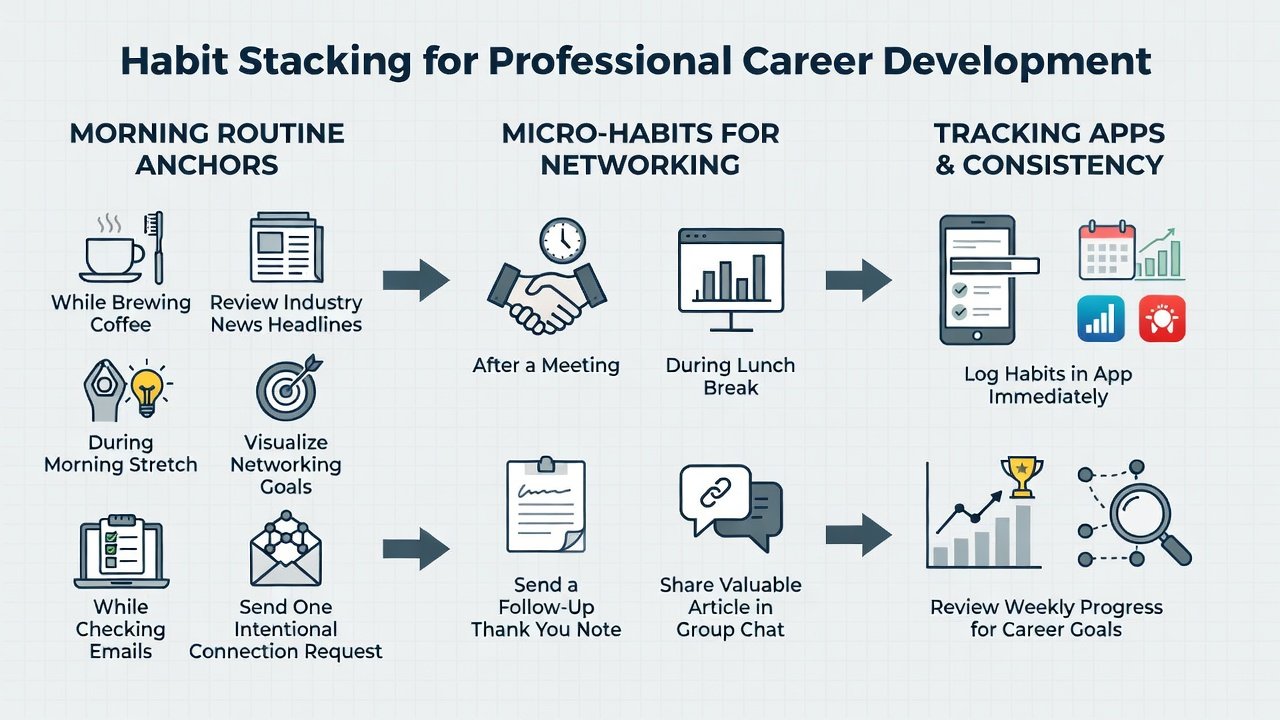
Follow these practical steps to start stacking habits effectively. Begin by auditing your typical day and listing five to seven reliable anchor habits, such as brushing teeth, preparing breakfast, or logging off your computer. Next, select micro-habits that directly support career objectives like upskilling, networking, or promotion tracking. Keep each addition under five minutes initially to ensure success.
- Identify your current anchor habits, such as brushing teeth or commuting.
- Choose micro-habits aligned with career goals, like reviewing industry news for 2 minutes.
- Stack them explicitly: After [anchor], I will [new habit].
- Track progress daily using simple logs or apps.
- Scale up gradually as the stack becomes automatic.
- Review and adjust monthly based on career milestones achieved.
This structured approach ensures sustainability and avoids common overload. For example, after finishing your morning coffee, spend two minutes updating a promotion tracking spreadsheet. After your evening commute, record one networking interaction in your notes app.
Real-World Examples from Professionals
Marketing manager Sarah stacks a 10-minute skill module on data analytics after her lunch walk, leading to a promotion within six months. Software engineer Jamal attaches networking messages to his evening wind-down routine, expanding his professional network by 50 contacts monthly. These examples demonstrate how layering actions onto existing behaviors accelerates growth without disrupting schedules.
Another case involves project coordinator Elena, who stacks 90 seconds of resume refinement after brushing her teeth each morning. Over four months this produced a polished document that helped her secure a senior role. Finance analyst Marcus adds a quick industry podcast summary note after his daily team stand-up, which later informed strategic contributions during quarterly meetings. Such stories illustrate the versatility of habit stacking across industries and roles.
Comparing Habit Stacking to Traditional Goal-Setting
Traditional goal-setting focuses on ambitious targets that can feel distant and demotivating. Habit stacking, by contrast, emphasizes process over outcomes, fostering resilience. While annual resolutions often fail by February, stacked micro-habits create lasting systems. Professionals report higher adherence rates and reduced stress when using this method. The key difference lies in identity shift: instead of aiming to become a better networker, you become someone who naturally performs networking actions daily.
Productivity Tools and Apps for Tracking
Several apps support habit stacking implementation. Popular options include digital journals for logging stacks and reminder systems that trigger at anchor times. Choose tools that integrate with your calendar for seamless adoption. The American Psychological Association emphasizes the value of external cues in maintaining new routines long-term. Additional resources from established health organizations like the World Health Organization underscore how small daily actions improve overall well-being and performance capacity.
Common Pitfalls and How to Avoid Them
- Overcomplicating stacks: Start with one addition only and master it before expanding.
- Ignoring consistency: Set non-negotiable minimums even on busy days.
- Neglecting measurement: Review weekly impacts on career metrics such as skills gained or connections made.
- Choosing irrelevant habits: Align strictly with upskilling or networking objectives to ensure relevance.
- Failing to celebrate small wins: Acknowledge each completed stack to reinforce motivation.
Measuring Long-Term Impact on Career Pivots and Resilience
Track indicators such as new skills acquired, connections made, and feedback received. Over 6-12 months, these stacks often facilitate smoother career pivots by building transferable competencies. Resilience improves as daily actions reduce anxiety around change. Professionals who maintain stacked habits report feeling more adaptable during organizational shifts or economic uncertainty.
Frequently Asked Questions
How long until results appear? Typically 30-60 days for habit automation, with visible career benefits emerging around the 90-day mark. Can it support major pivots? Yes, by accumulating relevant micro-experiences that strengthen your candidacy for new roles. What if an anchor habit changes? Simply reattach the micro-habit to a new reliable behavior. How do I measure impact on resilience? Monitor stress levels and confidence during professional challenges over time.
Advanced Techniques for Sustained Growth
Once basic stacks are established, combine multiple micro-habits or layer them across different parts of the day. Incorporate reflection periods every quarter to evaluate alignment with evolving career aspirations. Pair habit stacking with accountability partners for added support during challenging periods.
Conclusion
Habit stacking offers a powerful, science-supported path to career growth in 2026 by embedding development into everyday life. By following the guides and examples above, professionals can achieve sustainable advancement with minimal friction while building lasting resilience and adaptability.

No comments yet. Be the first!