 Jobboy
Introduction to Blockchain Credentials in HR
In 2026, professionals seeking faster career advancement are turning to blockchain credentials as a modern alternative to paper diplomas and static LinkedIn profiles. These digital badges and certificates leverage distributed ledger technology to create verifiable records of skills, achievements, and qualifications that cannot be altered or forged. This approach directly addresses search intent around tech-forward career strategies by providing employers with instant trust in candidate claims. As remote work and global hiring continue to rise, the need for portable, fraud-resistant proof of expertise has never been greater. Blockchain credentials empower individuals to own their professional narrative while giving recruiters reliable data at their fingertips.
Blockchain Basics Explained for Career Contexts
Blockchain functions as a decentralized database shared across multiple computers. Each transaction or credential issuance is recorded in a block that links cryptographically to previous blocks, forming an immutable chain. In human resources, this means a university or training provider can issue a credential once, and it remains permanently verifiable without needing third-party checks. Unlike centralized databases, no single entity controls the data, reducing risks of tampering. For career growth, this technology translates to micro-credentials for specific skills such as data analysis, project management, or cybersecurity protocols. The decentralized nature ensures that even if one node fails, the record stays intact and accessible worldwide. Professionals benefit from this transparency because it eliminates doubts about authenticity during international job applications.
Key Benefits of Tamper-Proof Skill Verification
The primary advantage lies in fraud prevention. Traditional resumes can contain exaggerations, while blockchain entries are mathematically secured. Benefits include faster hiring processes, global recognition without borders, and enhanced mobility for remote workers. Professionals can share credentials via secure links that employers verify in seconds, streamlining background checks significantly. Additional perks encompass ownership: individuals control their data and decide who views it. This aligns with growing privacy regulations and empowers freelancers to showcase verified micro-credentials from multiple sources. Another key benefit is reduced administrative burden on employers, who no longer spend hours validating documents. In competitive fields like technology and finance, these credentials can differentiate candidates by demonstrating commitment to continuous learning through timestamped achievements.
Comparing Blockchain Credentials to Traditional Resumes and LinkedIn
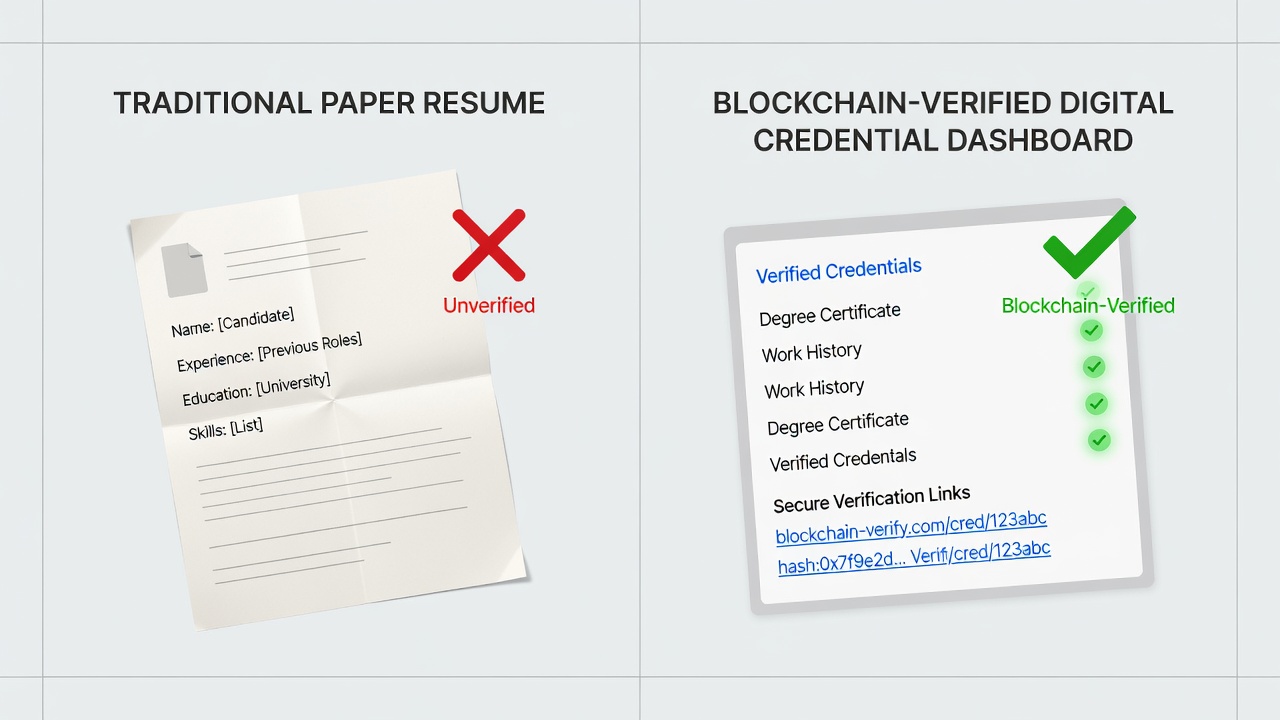
Resumes rely on self-reporting and require manual verification, often delaying offers by weeks. LinkedIn profiles offer some validation through endorsements but remain editable by users. Blockchain credentials, by contrast, provide cryptographic proof that stands up to audits. For example, a hiring manager can confirm a project management certification directly from the issuing institution's ledger entry rather than contacting references. While LinkedIn excels at networking, blockchain adds a layer of authenticity that complements it. Many experts recommend using both: maintain a dynamic profile on LinkedIn and attach blockchain-verified badges for credibility. The combination creates a powerful personal brand where visual networking meets immutable proof, leading to higher interview rates for users who adopt this hybrid approach.
Practical Steps for Obtaining and Showcasing Credentials
- Identify issuing platforms or institutions offering blockchain-backed programs in your field by researching accredited providers that integrate with major learning management systems.
- Complete the required learning or assessment to earn the credential, ensuring the program aligns with industry standards and includes hands-on projects for real-world applicability.
- Receive the digital badge stored on a blockchain network, often with a unique hash for verification that can be embedded in emails or portfolios.
- Share the credential link on resumes, portfolios, or professional networks while customizing visibility settings to target specific recruiters or companies.
- Update your professional profiles regularly as new skills are verified, tracking progress through personal dashboards that highlight growth over time.
- Monitor verification analytics to see how often employers access your credentials and refine your sharing strategy accordingly.
These steps help integrate credentials into daily career management without major technical barriers and can be completed within a few weeks for most users.
Real-World Examples from Credly and MIT Initiatives
Credly has become a leading platform for issuing blockchain-secured badges used by corporations and universities worldwide. Their system allows earners to display achievements across job applications with instant verification tools that integrate seamlessly with applicant tracking systems. MIT has pioneered blockchain credentials through its digital diploma program, enabling graduates to own and share tamper-proof records of their degrees. This initiative demonstrates how elite institutions are adopting the technology to enhance alumni career prospects globally. Other organizations such as IBM and various European universities have launched similar pilots, showing measurable improvements in credential portability for graduates entering competitive job markets.
Potential Challenges and Adoption Barriers
Despite benefits, widespread adoption faces hurdles. Many employers still lack familiarity with verification tools, leading to slower integration into standard hiring workflows. Technical literacy varies across industries, and some regions have limited blockchain infrastructure that can delay access for international candidates. Privacy concerns around permanent records also require careful navigation through clear consent protocols and data minimization practices. Overcoming these involves education campaigns and partnerships between tech providers and HR departments to demonstrate ease of use. Companies that invest in training their teams on blockchain verification report faster time-to-hire metrics and higher candidate satisfaction scores.
Integration with Modern HR Tools and ATS Systems
Leading applicant tracking systems are beginning to incorporate blockchain verification APIs, allowing seamless import of credentials into candidate profiles. This reduces manual data entry errors and provides recruiters with confidence scores based on ledger authenticity. For job seekers, this means their verified skills automatically populate application forms, saving time and improving match rates with open roles. Professionals should test compatibility with popular platforms like Workday or Greenhouse before investing heavily in new credentials.
Future Outlook for Blockchain Credentials in 2026
As more governments and standards bodies recognize blockchain records, their value in regulated industries such as healthcare and finance will grow. Expect increased interoperability between different blockchain networks, making it easier to combine credentials from multiple issuers. Early adopters who build comprehensive portfolios now will likely see advantages in promotions and cross-border opportunities throughout the year.
FAQ on Implementation for Different Career Stages
How do early-career professionals start with blockchain credentials?
Begin with entry-level certifications from recognized platforms that support blockchain issuance, then build a portfolio of verified skills to stand out in competitive entry-level markets while seeking mentorship on which credentials carry the most weight in target industries.
What about mid-career transitions?
Mid-level workers can add credentials for new skills like data analytics or leadership, using them to pivot industries with proof that bypasses traditional experience gaps and demonstrates proactive upskilling to potential employers.
Are blockchain credentials suitable for senior executives?
Yes, executives benefit from verified leadership programs or board certifications that enhance credibility in boardroom discussions and consulting opportunities, often leading to faster stakeholder trust during negotiations.
How long does verification typically take?
Most platforms enable near-instant checks once the credential is on the blockchain, compared to days or weeks for traditional methods, allowing quicker progression through multi-stage interview processes.
Can credentials expire or be revoked?
Some include expiration dates tied to continuing education, and issuers can revoke them if needed, with the change reflected transparently on the ledger for full auditability.
What costs are typically involved?
Many platforms offer free or low-cost issuance for learners, though premium verification services may carry small fees depending on the provider and volume of shares.
Conclusion
Blockchain credentials represent a transformative tool for verifiable career growth in 2026. By understanding the technology, leveraging real platforms, and following clear implementation steps, professionals across stages can accelerate mobility and build lasting trust with employers. Embracing this shift positions individuals ahead in an increasingly digital talent marketplace where authenticity drives opportunity.


No comments yet. Be the first!