 Jobboy

Introduction
Salary negotiations often feel intimidating because many professionals rely on gut feelings or vague market rumors rather than solid evidence. Backing your requests with concrete compensation intelligence changes the conversation from emotional to data-driven. This approach helps job seekers and current employees alike secure offers or raises that reflect true market value. In today’s competitive job market, understanding how to systematically collect, analyze, and present salary information gives you a significant advantage. Whether you are entering a new role or advocating for a raise in your current position, thorough research transforms uncertainty into confidence.
Why Reliable Salary Research Matters
Without research, you risk undervaluing yourself or making unrealistic demands that damage credibility. Data-backed requests demonstrate preparation and professionalism, increasing the likelihood of a positive outcome. Studies from career experts consistently show that candidates who present specific figures from trusted sources achieve better results than those who negotiate without evidence. Research also helps you anticipate counteroffers and understand the full picture of total compensation, including benefits, bonuses, and long-term incentives that go beyond base pay.
Understanding Different Types of Compensation Data
Salary data comes in several forms that serve different purposes. Base salary ranges provide the foundation but often exclude variable pay such as commissions or performance bonuses. Total compensation figures incorporate benefits like health insurance, retirement matching, stock options, and paid time off. Location-adjusted data accounts for cost-of-living differences across cities and regions. Experience-level breakdowns allow you to compare yourself against peers with similar years in the field or specialized certifications. Recognizing these distinctions prevents you from comparing apples to oranges during negotiations.
Best Sources for Gathering Compensation Intelligence
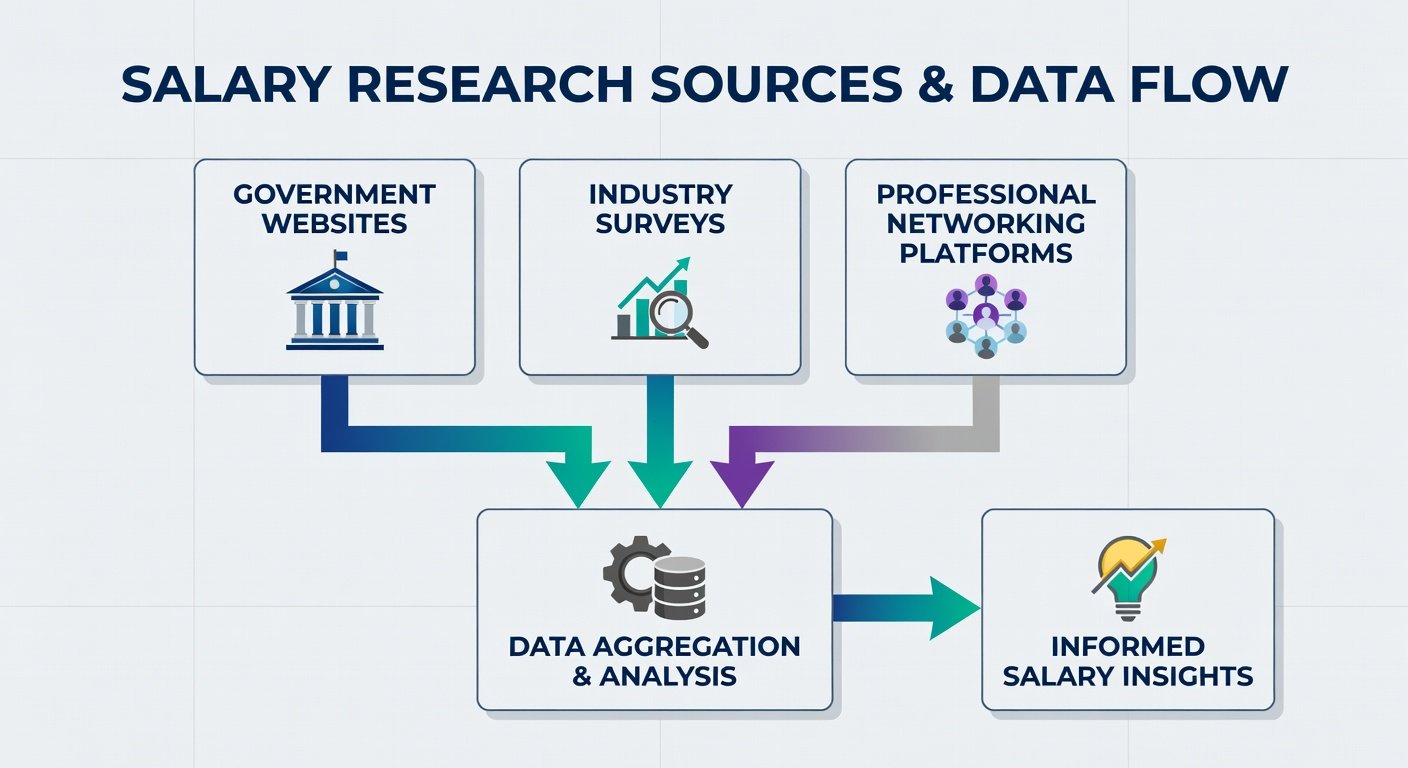
Start with government and nonprofit databases that provide transparent, large-scale data. The U.S. Bureau of Labor Statistics offers detailed occupational employment and wage statistics updated regularly. Industry surveys from professional associations and reputable compensation platforms add context for specific roles and experience levels. Professional networks such as LinkedIn and industry forums let you gather anonymized insights directly from peers in similar positions. Additional authoritative resources include the U.S. Census Bureau for broader economic trends and labor market reports that complement wage data with employment projections.
Selecting Tools for Salary Comparisons by Industry
Effective tools allow filtering by location, experience, education, and company size. Government sites provide broad benchmarks while specialized platforms offer role-specific ranges and trends. Cross-reference at least three sources to identify consistent patterns rather than outliers. This triangulation reduces bias and gives you a realistic range to work within. When choosing tools, prioritize those with recent data releases, clear methodologies, and the ability to segment by industry vertical such as technology, healthcare, or finance. Avoid over-relying on any single aggregator that may draw from limited or self-reported samples.
Steps to Build Your Personalized Total Compensation Target
- Identify your target role and key responsibilities by reviewing job descriptions from multiple employers.
- Collect base salary ranges, bonus structures, equity, and benefits from multiple sources, noting the date of each dataset for accuracy.
- Adjust figures for cost of living, years of experience, and specialized skills using publicly available cost-of-living calculators from reputable economic sites.
- Calculate total compensation by adding monetary value of benefits such as health coverage, retirement contributions, and flexible work options.
- Document your sources and methodology so you can reference them confidently during discussions.
- Establish a target range with a minimum acceptable figure, a realistic midpoint, and an aspirational high end based on your unique qualifications.
- Test your range against recent job postings and salary reports to ensure it aligns with current market conditions.
Real-World Example of the Research Process
Consider a mid-level marketing manager in the Midwest researching compensation. She begins by querying government wage statistics for her occupation and filters for similar metropolitan areas. Next, she reviews three industry survey reports that break down pay by company size and years of experience. She then reaches out to five contacts on professional networks who hold comparable titles, asking about typical bonus percentages and equity grants without requesting personal details. After compiling the numbers, she adjusts upward for her advanced certification and recent successful campaign that generated measurable revenue. Her final target range reflects both external benchmarks and internal value she brings to the organization.
How Data Strengthens Pay Raise Conversations
Presenting researched numbers shifts the focus to objective market realities. For example, share that similar roles in your region and industry command a certain range according to official labor statistics. Pair this with your documented achievements and contributions to justify where you fit within or above that range. Managers respond better when requests are framed around external benchmarks rather than personal needs alone. Prepare a one-page summary of your findings that you can reference or leave behind, making the discussion collaborative rather than confrontational.
Negotiation Results: With Research Versus Without
Candidates who prepare data typically receive offers higher than their initial ask because they set a strong anchor. Those without research often accept the first offer or settle for modest increases. Real-world scenarios show that researched negotiations also lead to better non-salary terms such as professional development budgets or remote work flexibility because the conversation covers total value. In contrast, individuals who enter discussions unprepared frequently leave money on the table and later regret not having gathered supporting evidence beforehand.
Preparing for Pushback and Objections
Even with strong data, hiring managers may cite budget constraints or internal equity concerns. Anticipate these responses by preparing alternative proposals such as phased salary increases, additional paid time off, or performance-based bonuses. Practice delivering your research findings calmly and concisely. Role-play scenarios with a trusted colleague or mentor to refine your delivery and build resilience against unexpected questions.
Common Mistakes to Avoid
- Relying on a single source that may be outdated or biased.
- Ignoring total compensation in favor of base salary only.
- Using data from unrelated industries or locations without proper adjustment.
- Failing to practice how to present findings naturally in conversation.
- Neglecting to update your research close to the actual negotiation date.
- Overlooking company-specific factors such as recent funding rounds or growth stage that may influence pay flexibility.
Frequently Asked Questions
How accurate are online salary databases?
Accuracy varies. Government sources tend to be highly reliable for broad trends while user-submitted platforms require cross-checking with multiple references to account for self-reporting bias.
What if the data I find seems lower than expected?
Consider factors like company size, location, and your unique qualifications. Use the research to identify skill gaps or negotiate other benefits instead of focusing solely on base pay. Sometimes lower figures indicate opportunities to highlight specialized expertise that justifies moving above the reported average.
How often should I update my salary research?
Review data quarterly or before any job search or performance review to stay current with market shifts and economic changes that affect compensation trends.
Should I share my exact sources during the negotiation?
Reference the type of source without naming every website. For instance, mention that figures come from national labor statistics and recent industry surveys to maintain professionalism while demonstrating credibility.
Can salary data help with internal promotions as well as external offers?
Absolutely. Internal salary research strengthens your case for promotions by showing how your contributions align with market rates for the next level, making it easier for your manager to advocate on your behalf.
Conclusion
Thorough salary research transforms negotiations from guesswork into strategic discussions. By systematically collecting data from authoritative sources, personalizing it to your situation, and presenting it effectively, you position yourself for compensation that truly reflects your worth. Incorporate these practices into your career management routine and you will approach every salary conversation with greater confidence, clarity, and success.

No comments yet. Be the first!