 Jobboy

Introduction: Why Company Size Matters for 2026 Compensation
Understanding how company size influences average salary and total compensation helps job seekers make informed decisions. In 2026, small businesses, mid-sized firms, and large corporations offer distinct pay structures, benefits packages, and career growth opportunities. This guide explores these differences with real-world examples from tech and finance, salary benchmarks, and practical negotiation advice. Company scale directly impacts not only base pay but also the broader elements of total compensation such as health coverage, retirement contributions, equity grants, and opportunities for advancement through structured pay raises.
Job candidates evaluating offers must look beyond headline numbers to assess long-term value. Factors like work-life balance, professional development access, and stability vary widely depending on whether an employer operates with fewer than 50 employees, between 50 and 500, or at enterprise scale. By examining each category in detail, professionals can align their choices with personal financial goals and career aspirations.
Compensation at Small Businesses (Under 50 Employees)
Small companies often provide competitive base pay to attract talent but may lack extensive benefits. Average salary tends to be flexible, with total compensation heavily reliant on cash bonuses rather than equity. Employees frequently wear multiple hats, leading to faster skill development but potentially higher workloads. In practice, founders at these organizations prioritize immediate contributions, which can translate into quicker decision-making around compensation adjustments.
Key Characteristics
- Base pay can be negotiated more personally due to direct founder involvement.
- Benefits packages are leaner, often focusing on health insurance and limited PTO.
- Pay raise potential is high for top performers but depends on company revenue.
- Equity offerings are rare unless the business is venture-backed, and even then they carry high risk.
Real-world examples from the tech sector show early-stage startups rewarding early employees with meaningful ownership stakes that could appreciate significantly, though liquidity events remain uncertain. In finance, small advisory firms might emphasize performance bonuses tied directly to client acquisition rather than standardized corporate plans.
Mid-Sized Firms (50–500 Employees)
Mid-sized organizations strike a balance between agility and structure. They typically offer solid average salary levels combined with improving benefits. Total compensation often includes modest equity grants and structured annual reviews. These companies have grown enough to implement more formal HR processes while retaining a collaborative culture that appeals to many professionals.
Real-World Example from Finance
A regional bank in the 200-employee range might provide base salaries competitive with larger peers while adding profit-sharing plans that boost overall earnings. In tech, a mid-sized software company could offer stock options that vest over four years, giving employees a stake in future growth without the complexity of public company reporting requirements.
Large Corporations (500+ Employees)
Enterprise-level companies deliver the most comprehensive total compensation packages. These include robust benefits, significant equity offerings, and predictable pay raise cycles tied to performance metrics and market data. Large organizations often maintain dedicated compensation teams that benchmark roles against industry standards, ensuring packages remain attractive in competitive talent markets.
Bureau of Labor Statistics data highlights how large firms consistently report higher median wages across industries. Additional resources from Department of Labor provide guidance on mandated benefits that scale with employer size.
Industry Comparisons: Tech vs. Finance in 2026
Tech startups (small) emphasize equity over base pay, while large tech firms like established software giants offer both high salaries and RSUs. Finance follows a similar pattern, with boutique firms focusing on bonuses and global banks providing comprehensive benefits. Across both sectors, company size influences how raises are determined—smaller entities may tie increases to individual revenue generation, whereas corporations use formalized merit matrices.
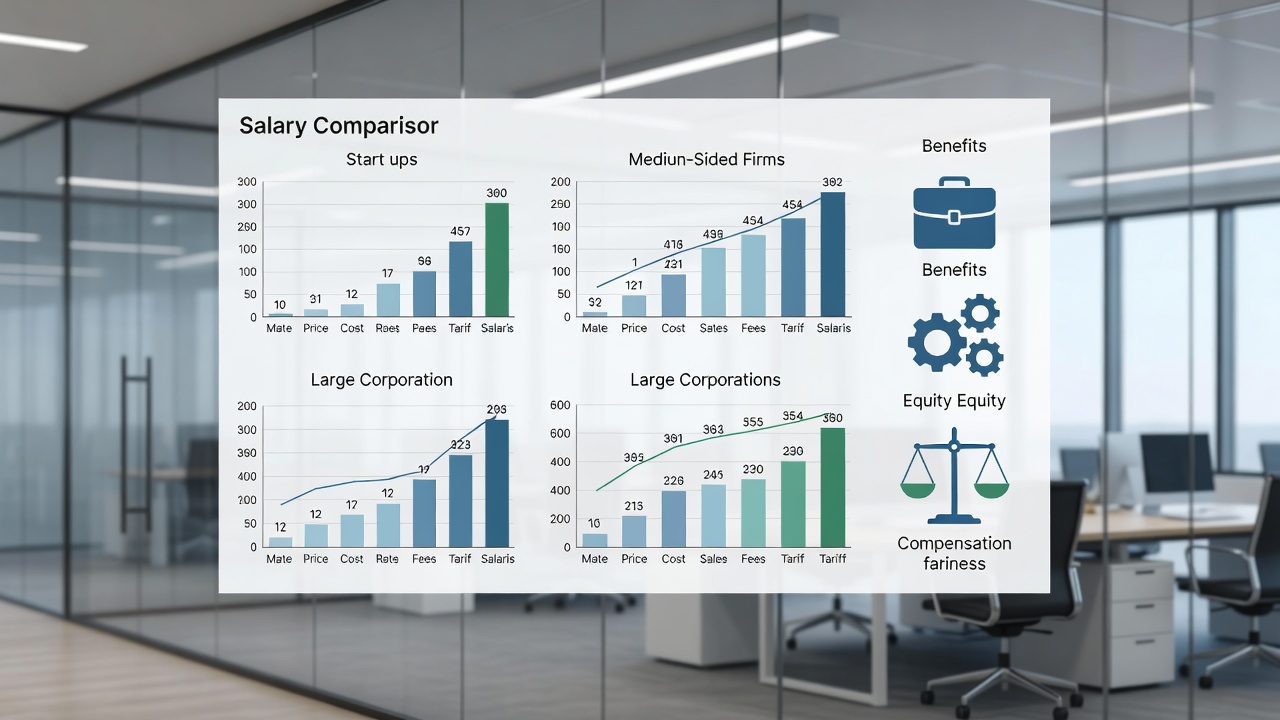
Data Table: Average Total Compensation by Company Size (Qualitative Benchmarks)
| Company Size | Base Pay | Benefits Value | Equity Potential | Pay Raise Frequency |
|---|---|---|---|---|
| Small | Flexible, role-dependent | Basic coverage | Limited or none | Ad-hoc, performance-driven |
| Mid-sized | Market-aligned | Moderate packages | Modest grants | Annual reviews |
| Large | Premium levels | Comprehensive | Significant RSUs/options | Structured cycles |
Step-by-Step Valuation Methods for Offers
Evaluating an offer requires a systematic approach to avoid overlooking hidden value or risks. Follow these steps to compare opportunities across different company sizes effectively.
- Calculate base salary plus estimated bonus percentage by reviewing the offer letter and any variable pay components.
- Assign monetary value to benefits like health premiums and retirement matches, considering both employer contributions and out-of-pocket costs.
- Estimate equity using company valuation multiples and vesting schedules, factoring in dilution risks for private firms.
- Compare against industry averages from authoritative sources such as government labor statistics.
- Factor in work-life elements such as remote flexibility, professional development budgets, and parental leave policies.
- Project long-term earnings by modeling potential pay raises over three to five years based on historical patterns at similar organizations.
Negotiation Tactics by Company Scale
For small businesses, emphasize immediate impact and request flexible hours or professional development stipends. In mid-sized firms, leverage competing offers to improve equity or PTO. Large corporations respond well to data-backed requests referencing market rates. Always prepare multiple scenarios and practice articulating your value with specific achievements from past roles.
Common Mistakes to Avoid
- Overvaluing equity in early-stage companies without liquidity paths.
- Ignoring total compensation in favor of base pay alone.
- Failing to research industry-specific benchmarks before interviews.
- Accepting the first offer without exploring non-salary elements like title or reporting structure.
- Neglecting to consider tax implications of equity versus cash compensation.
FAQ: How Much to Ask for During Offers
What percentage above the initial offer is reasonable?
Most candidates successfully negotiate 5–15% higher depending on company size and role scarcity. Smaller firms may have more latitude for creative adjustments, while large organizations follow stricter bands.
How do equity packages differ?
Small firms may offer ownership stakes with high upside potential but limited liquidity; large corporations provide RSU grants that vest predictably and can be sold on public markets.
Should benefits influence my counteroffer?
Yes—strong retirement matching or parental leave can add substantial value equivalent to several thousand dollars yearly, often outweighing a modest base increase.
How does company size affect long-term earning potential?
Larger employers generally provide more consistent raises and internal mobility, while smaller ones may accelerate growth through rapid promotions if the business scales successfully.
Conclusion
Company size significantly shapes 2026 salaries and benefits. By evaluating average salary, total compensation, and growth potential across scales, professionals can select roles that align with their financial and career goals. Use the benchmarks and tactics above to negotiate confidently and maximize your offer.

No comments yet. Be the first!