 Jobboy

In the competitive job market of 2026, technical skills alone no longer guarantee success during interviews. Emotional intelligence (EQ) has emerged as a critical differentiator, helping candidates navigate high-pressure situations, build rapport, and demonstrate resilience. This comprehensive guide provides in-depth strategies to develop and apply EQ throughout your interview preparation and execution, ensuring you stand out as a well-rounded professional.
Why Emotional Intelligence Matters in Modern Interviews
Employers increasingly prioritize EQ because it predicts workplace performance, collaboration, and leadership potential. Research from sources like Harvard Business Review highlights how emotionally intelligent candidates outperform others in dynamic environments. In 2026, with hybrid work and rapid change, interviewers assess how you handle stress, conflicts, and feedback beyond rote answers. Candidates who demonstrate strong EQ often advance further because they show they can contribute to positive team dynamics and adapt to evolving business needs. Without EQ, even the most qualified applicants may struggle to convey their fit for the role during nuanced conversations.
Core Elements of EQ for Interview Success
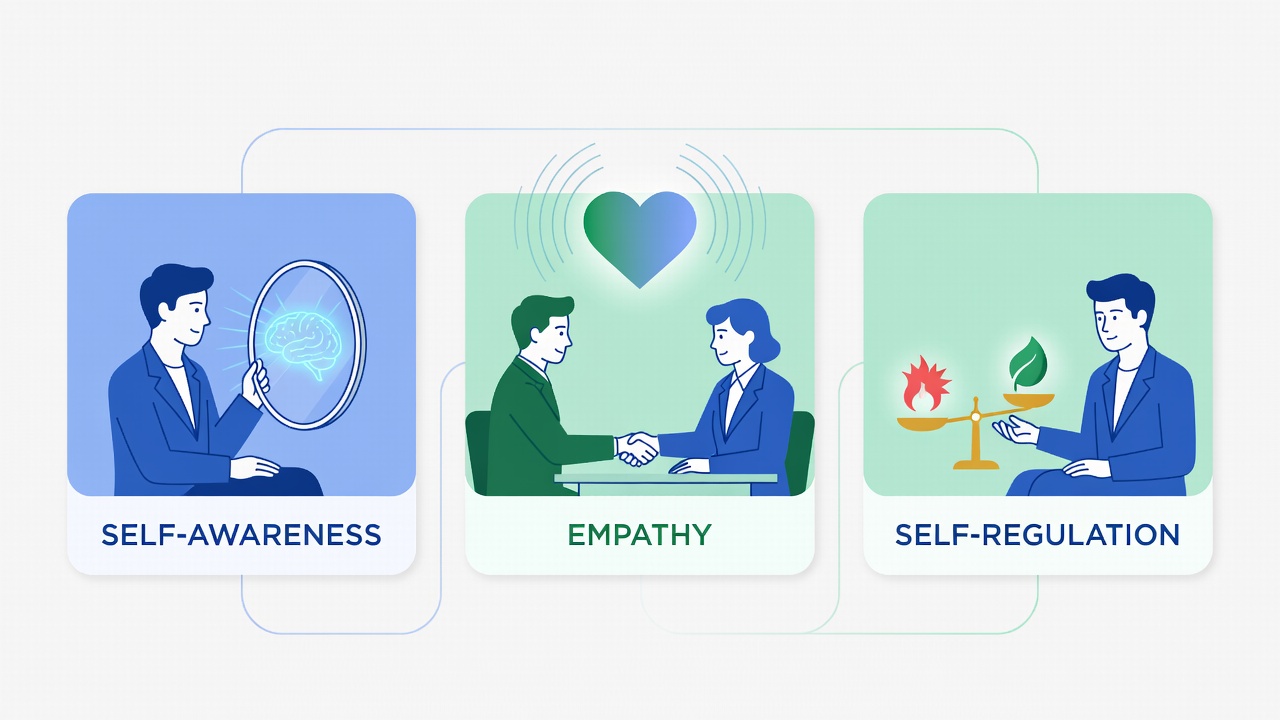
Self-Awareness During High-Pressure Questions
Recognize your emotional triggers before an interview. Practice identifying feelings like anxiety when asked about weaknesses. Pause, breathe, and reframe responses to show growth rather than defensiveness. Self-awareness allows you to understand how your emotions influence your answers, helping you present a balanced view of your experiences. For example, if a question about past failures stirs discomfort, acknowledge that internally and pivot to lessons learned. This element forms the foundation for all other EQ skills in interviews.
Self-Regulation to Handle Curveballs
Stay composed when facing unexpected queries. Techniques include counting to three before answering and focusing on facts over frustration. This prevents impulsive replies that could undermine your candidacy. Self-regulation involves managing your reactions in real time, such as maintaining steady eye contact and a calm tone even when the interviewer challenges your experience. Over time, this skill helps you recover quickly from missteps and keep the conversation productive.
Empathy When Discussing Team Conflicts
Show understanding of others' perspectives. For instance, when describing a project disagreement, acknowledge teammates' viewpoints before explaining your contribution to resolution. Empathy signals that you value relationships and can navigate interpersonal dynamics effectively. In 2026 interviews, hiring managers often probe for this trait through situational questions to gauge your ability to foster inclusive workplaces.
Recognizing Emotional Cues from Interviewers
Observe body language, tone shifts, and facial expressions. If an interviewer leans in during your answer, expand on that point. Mirroring positive cues builds subconscious connection. Practice with mock interviews to hone this skill. Paying attention to these nonverbal signals allows you to adjust your delivery, whether slowing down for complex topics or injecting enthusiasm where appropriate. This awareness transforms interviews into two-way dialogues rather than one-sided interrogations.
Real-World Examples of EQ Responses
Scenario one: "Tell me about a time you failed." A purely factual answer might be: "I missed a deadline due to poor planning." An EQ-enhanced response could be: "I missed a deadline because I underestimated team dependencies. Recognizing my oversight through self-reflection, I took ownership by communicating transparently with stakeholders and implemented better tracking tools, which improved our on-time delivery rate. This experience taught me the value of proactive empathy toward colleagues' workloads." This demonstrates self-awareness, regulation, and growth.
Scenario two: "How do you resolve team conflicts?" Factual: "I mediate discussions." EQ version: "When tensions arise, I first seek to understand each person's emotional state and underlying concerns. In one case, by empathizing with a frustrated colleague's workload pressures, we reached a compromise that strengthened our collaboration and met project goals ahead of schedule." Such responses highlight relational intelligence.
Step-by-Step Exercises for EQ Development
Building EQ requires consistent practice. Follow these detailed exercises:
- Daily journaling: After stressful events, record the specific emotions felt, their triggers, and alternative responses you could have used. Review weekly to identify patterns.
- Role-playing sessions: Simulate full interviews with a trusted friend or mentor, incorporating unexpected curveball questions and focusing on empathetic phrasing in replies.
- Mindfulness meditation: Dedicate 10 minutes each morning to breath-focused meditation, which strengthens self-regulation by training your mind to pause before reacting.
- Feedback loops: Request targeted input from colleagues or coaches on how your emotional responses come across in professional settings, then iterate on improvements.
- Video self-review: Record practice answers and analyze your tone, facial expressions, and pacing for emotional congruence.
These steps, when repeated over several weeks, create measurable improvements in interview performance.
EQ-Focused Answers vs. Purely Factual Ones
Factual responses list achievements chronologically without emotional context, often sounding robotic. EQ versions weave in self-reflection, relational awareness, and adaptive learning. Use this checklist during preparation: Does the answer reveal self-awareness of my role? Does it show regulation under pressure? Does it express empathy toward others? Revise drafts until all elements are present. This comparison helps candidates move beyond surface-level storytelling to memorable, human-centered narratives.
Practical Checklists for Interview Day
- Pre-interview: Review three past emotional wins and prepare concise reframes; visualize successful interactions to build confidence.
- During the interview: Monitor your tone and energy, adapting to the interviewer's pace; pause deliberately after tough questions to demonstrate regulation.
- Post-interview: Reflect in writing on moments where EQ was applied effectively or could be strengthened for the next opportunity.
Sample Dialogue Scripts
Interviewer: "How do you handle criticism?" EQ script example: "I view constructive criticism as an opportunity for self-awareness and growth. Recently, feedback on my presentation style highlighted areas for improvement. By empathizing with the reviewer's perspective on clarity, I joined a communication workshop and subsequently received positive notes on team updates. This approach turned the experience into a collaborative win."
Another script for behavioral questions: When asked about leadership, respond by describing not just actions but the emotional considerations involved in motivating team members during challenging periods.
Common Mistakes to Avoid
Many candidates overlook EQ by rushing answers without reflection, appearing defensive when discussing failures, or failing to acknowledge team contributions. Avoid generic empathy statements that lack specificity, as interviewers can detect inauthenticity. Instead, ground examples in real emotional insights to maintain credibility.
FAQs on Authenticity and Measurement
How do I stay authentic while applying EQ techniques? Prioritize genuine self-reflection over memorized phrases. Authenticity emerges when you connect techniques to your actual experiences, making responses feel natural and trustworthy.
Can EQ be measured during interviews? Interviewers evaluate it indirectly through behavioral and situational questions. Track personal progress using validated self-assessments or resources from the American Psychological Association.
What if I naturally have lower EQ? Consistent practice through the exercises outlined above can strengthen these skills over time, turning them into reliable interview assets.
Conclusion
Integrating emotional intelligence transforms interviews from interrogations into meaningful conversations. By focusing on self-awareness, regulation, empathy, and cue recognition, you position yourself as a thoughtful, adaptable professional prepared for the demands of 2026 workplaces. Start practicing these strategies today to achieve lasting interview success.


No comments yet. Be the first!