 Jobboy

Why Total Compensation Trumps Base Salary Alone
In today's competitive job market, it's easy to fixate on the base salary figure when evaluating a job offer. However, savvy know that the real value lies in the total compensation package. This encompasses not just your annual pay but a suite of benefits, bonuses, and perks that can significantly enhance your financial well-being and overall job satisfaction. By looking beyond the salary, you can make informed decisions that align with your long-term goals.
Total compensation refers to the full array of monetary and non-monetary rewards provided by an employer. According to recent data from the U.S. Bureau of Labor Statistics, benefits alone can add up to 30% or more to an employee's total remuneration. Ignoring these elements might mean leaving money and opportunities on the table.
The Components of Total Compensation
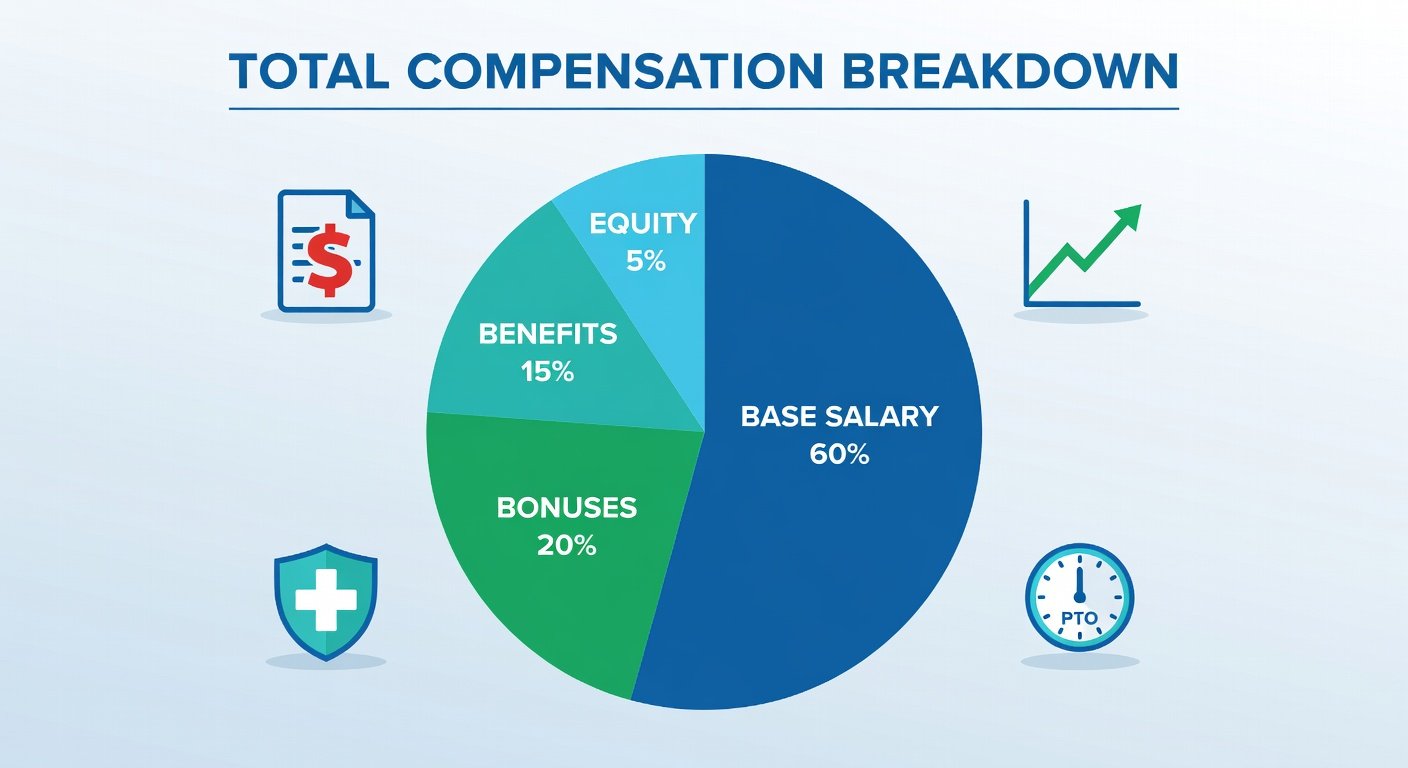
Understanding the breakdown of total compensation is key to negotiating effectively and choosing the right role. Let's dive into the main elements:
- Base Salary: The fixed annual pay before deductions. It's the foundation, but not the whole story.
- Bonuses and Incentives: Performance-based payments, signing bonuses, or profit-sharing that can boost earnings by 10-20% annually.
- Health and Wellness Benefits: Medical, dental, vision insurance, and wellness programs that save thousands in out-of-pocket costs.
- Retirement Plans: 401(k) matching, pensions, or IRAs that build long-term wealth.
- Paid Time Off (PTO): Vacation, sick days, and holidays that contribute to work-life balance.
- Equity and Stock Options: Especially in tech and startups, these can lead to substantial gains.
- Perks and Allowances: Tuition reimbursement, gym memberships, commuter benefits, or flexible work arrangements.
Each of these can vary widely by industry, company size, and location, making it essential to compare apples to apples when .
The Financial Impact of a Strong Benefits Package
Consider this: A job offer with a $80,000 base salary but robust benefits might outpace a $90,000 offer with minimal perks. For instance, employer-sponsored health insurance can cover premiums worth $5,000-$10,000 per year per employee. Add in 401(k) matching—often 3-6% of salary—and you're looking at an additional $2,400-$4,800 annually without lifting a finger.
Bonuses play a pivotal role too. In sales or executive roles, annual incentives can equal or exceed base pay. Even in non-commission fields, end-of-year bonuses average 5-10% of salary, per Glassdoor insights. These variable components reward performance and align employee success with company goals.
Don't overlook non-cash perks. Flexible hours or options can reduce commuting costs and childcare expenses, indirectly padding your wallet. Tuition assistance programs enable career advancement without debt, potentially increasing future earning potential by 20-50% through higher education or certifications.
Real-World Examples of Total Compensation in Action
Take Sarah, a marketing professional. She turned down a $95,000 salary offer from Company A because it lacked comprehensive benefits. Instead, she accepted $85,000 from Company B, which included full health coverage, a 5% 401(k) match, and unlimited PTO. Over five years, the perks added an estimated $50,000 in value, plus better work-life balance.
In tech, equity compensation shines. Early employees at companies like Google or Amazon saw stock options turn modest salaries into millions. Even today, RSUs (restricted stock units) in established firms can vest into significant wealth, far outstripping base pay alone.
How Total Compensation Affects Job Satisfaction
Beyond finances, a well-rounded package fosters greater employee engagement and retention. Studies from Gallup show that comprehensive benefits correlate with 21% higher productivity and lower turnover rates. When employees feel valued through perks like mental health days or stipends, they're more likely to stay committed.
Work-life integration is another boon. Parental leave policies, for example, support family needs without financial strain. Companies offering 12+ weeks of paid leave see 50% less voluntary attrition among new parents, according to SHRM research.
Moreover, perks signal company culture. A firm providing free meals, on-site childcare, or sabbaticals demonstrates investment in holistic employee well-being, leading to higher morale and innovation.
Navigating Negotiations for Maximum Value
To leverage total compensation, preparation is crucial. Research industry standards using sites like Salary.com or Payscale. During interviews, ask targeted questions: "What does the full benefits package entail?" or "How does bonus structure work?"
When negotiating, prioritize based on your needs. If family health coverage is key, emphasize that over a slight salary bump. Propose alternatives like additional PTO if salary is capped. Remember, employers often have flexibility in non-salary areas.
- Review the offer letter thoroughly for hidden gems like deferred compensation.
- Calculate the total value using online tools to compare offers objectively.
- Consult a financial advisor for personalized insights, especially on equity or retirement.
Industry Variations in Compensation Packages
Total compensation isn't one-size-fits-all. In finance and consulting, bonuses dominate, often comprising 50% of total pay. Tech leans on stock grants, while healthcare emphasizes robust insurance due to industry demands.
Startups might offer lower base but higher equity upside, appealing to risk-takers. Established corporations provide stability through pensions and generous PTO. Remote roles increasingly include home office stipends, reflecting post-pandemic shifts.
For global positions, factor in relocation assistance or expat packages, which can include housing allowances worth tens of thousands.
Future Trends in Total Compensation
As talent wars intensify, expect more innovative perks. Mental health benefits, like therapy reimbursements, are surging—up 40% since 2020 per Mercer surveys. Sustainability perks, such as carbon offset programs, appeal to eco-conscious workers.
AI and automation may reshape packages, with allowances becoming standard to future-proof careers. platforms are experimenting with portable benefits, allowing freelancers to accrue PTO or retirement across jobs.
Final Thoughts: Evaluate Holistically for Career Success
In summary, fixating on base salary alone can shortchange your career trajectory. A comprehensive total compensation package not only bolsters your finances but also enhances satisfaction and security. As you navigate job offers, weigh all elements—benefits, bonuses, and perks—to secure a role that truly rewards your talents.
By prioritizing the full picture, you'll position yourself for greater prosperity and fulfillment in your professional journey.

No comments yet. Be the first!