 Jobboy

Introduction to Navigating 2026 Compensation Landscape
In the evolving job market of 2026, understanding average salaries and total compensation packages is crucial for career advancement. With industries shifting due to technological advancements and economic changes, professionals must research data effectively, evaluate their transferable skills, and negotiate confidently. This guide provides step-by-step strategies to help you determine fair pay, compare key sectors from tech to healthcare, and handle tough conversations with scripts. We'll also explore emerging trends influencing cross-industry moves.
Step 1: Researching Average Salaries and Total Compensation by Industry
Begin by gathering reliable data on salaries and benefits. Total compensation includes base pay, bonuses, equity, health benefits, retirement contributions, and perks like remote work stipends.
- Identify Reliable Sources: Use government databases and industry reports. The U.S. Bureau of Labor Statistics (BLS) offers comprehensive wage data updated annually.
- Focus on 2026 Projections: Look for forecasts incorporating inflation, skill shortages, and sector growth. For instance, tech roles may see 5-7% increases due to AI integration.
- Segment by Industry and Role: Break down data by experience level, location, and company size. Tools like salary calculators can personalize estimates.
- Account for Total Compensation: Don't overlook non-salary elements. A healthcare role might offer robust benefits offsetting a lower base pay.
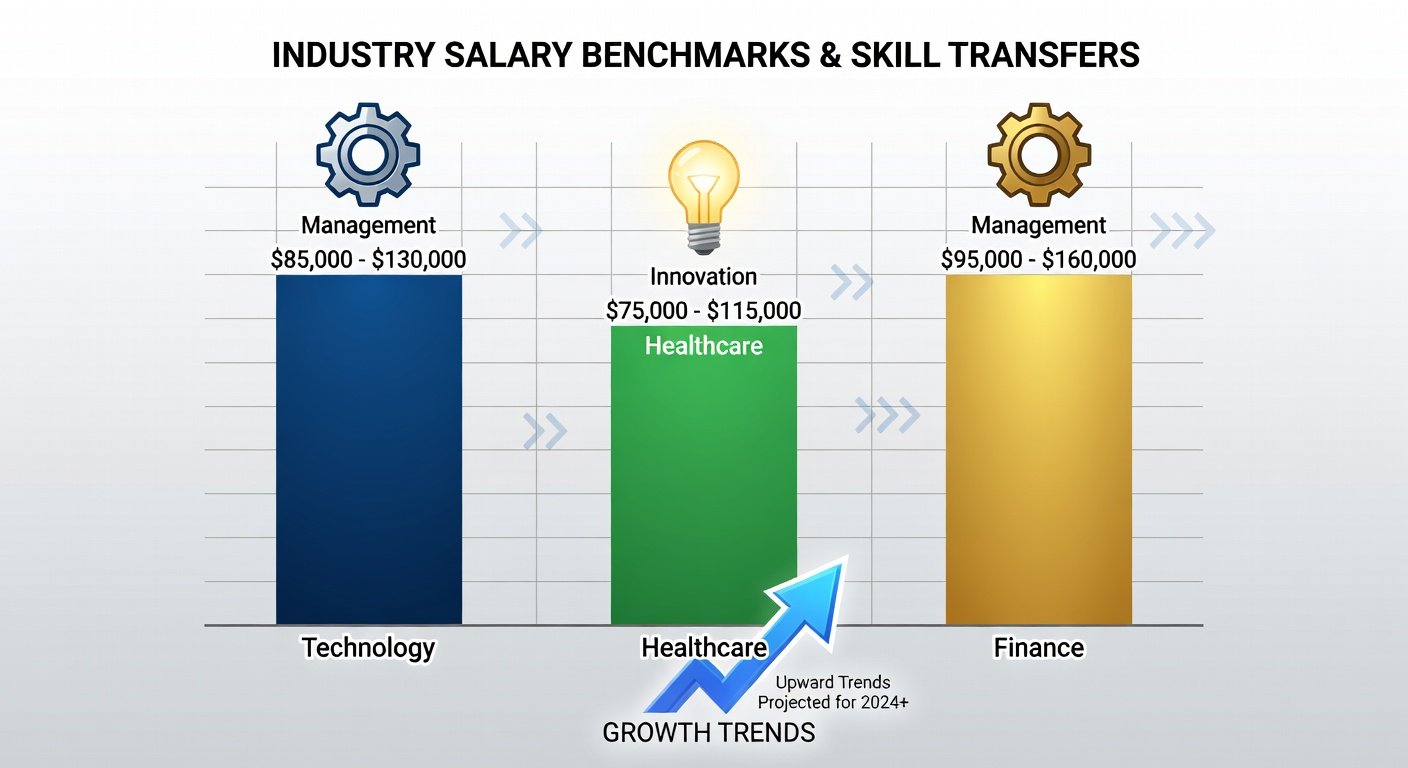
To compare key sectors, here's a projected 2026 overview based on emerging economic indicators:
| Industry | Average Base Salary (USD) | Total Compensation Range (USD) | Key Growth Factors |
|---|---|---|---|
| Technology | $120,000 - $160,000 | $150,000 - $220,000 | AI and cybersecurity demand |
| Healthcare | $90,000 - $130,000 | $110,000 - $160,000 | Aging population and telehealth expansion |
| Finance | $100,000 - $140,000 | $130,000 - $180,000 | Fintech innovations and regulatory changes |
| Manufacturing | $80,000 - $110,000 | $100,000 - $140,000 | Automation and supply chain resilience |
| Education | $70,000 - $100,000 | $85,000 - $120,000 | EdTech adoption and lifelong learning trends |
This table highlights variances; tech leads in pay due to high demand, while healthcare emphasizes stability. For global perspectives, consult the OECD for international benchmarks.
Step 2: Determining Your Ask Based on Transferable Skills
Transferable skills like project management, data analysis, or communication can bridge industries, allowing you to command higher pay during cross-moves.
- Assess Your Skill Set: List core competencies from your current role. For example, a marketer moving to tech can leverage analytics skills for product roles.
- Quantify Value: Research how these skills impact productivity. A transferable leader in operations might justify a 15-20% premium in manufacturing.
- Benchmark Against Peers: Use your experience level to adjust averages. Mid-career professionals (5-10 years) often add 10-15% to entry-level figures.
- Factor in Market Trends: Emerging trends like sustainability expertise boost value in green sectors, potentially increasing offers by 8-12%.
Calculate your target: Start with industry average, add 10-20% for unique skills, and include benefits worth 20-30% of base pay.
Step 3: Negotiating Pay Raises or Job Offers with Benefits
Negotiation is key to maximizing compensation. Approach with data-backed confidence, focusing on mutual value.
Preparation Strategies
- Gather Evidence: Prepare a one-pager summarizing achievements and market data.
- Time It Right: For raises, align with performance reviews; for offers, wait until after the verbal commitment.
- Prioritize Elements: Rank salary, bonuses, PTO, and professional development.
Scripts for Tough Conversations
Requesting a Raise:
'I've contributed to [specific achievement, e.g., increasing team efficiency by 25%]. Based on 2026 market data from BLS, similar roles average $X. Considering my transferable skills in [skill], I'd like to discuss adjusting my compensation to $Y, plus enhanced benefits.'
Negotiating a Job Offer:
'I'm excited about this opportunity. The offer aligns well, but factoring in total compensation trends, including equity and health perks, could we explore $Z base with [specific benefit, e.g., flexible hours]? My experience in [industry/skill] brings immediate value.'
Handling Pushback:
'I understand budget constraints. What alternatives, like performance bonuses or additional training, could bridge the gap?'
For HR best practices, refer to the Society for Human Resource Management (SHRM).
Emerging Trends Affecting Cross-Industry Moves
Several trends are reshaping compensation in 2026, making cross-industry transitions more viable and lucrative.
- Hybrid Skill Demands: Roles blending tech with traditional sectors (e.g., AI in healthcare) reward versatile professionals, often with 10-15% higher pay.
- Remote Work Normalization: This reduces location premiums but increases stipends, benefiting moves to lower-cost areas.
- Sustainability and DEI Focus: Skills in ESG (Environmental, Social, Governance) add value across industries, potentially elevating offers by 5-10%.
- Gig Economy Integration: Freelance experience now bolsters full-time negotiations, with platforms emphasizing total comp packages.
- Inflation-Adjusted Equity: Stock options in startups gain traction in non-tech fields, diversifying compensation.
These trends encourage proactive upskilling. For instance, a finance expert transitioning to tech can use blockchain knowledge for fintech roles, negotiating equity-heavy packages.
Conclusion: Empower Your Career in 2026
By researching thoroughly, leveraging transferable skills, and negotiating strategically, you can secure compensation that reflects your worth. Stay informed on trends to capitalize on cross-industry opportunities. Implement these steps to not just meet but exceed 2026 market standards.


No comments yet. Be the first!