 Jobboy

Introduction to Long-Term Compensation Planning
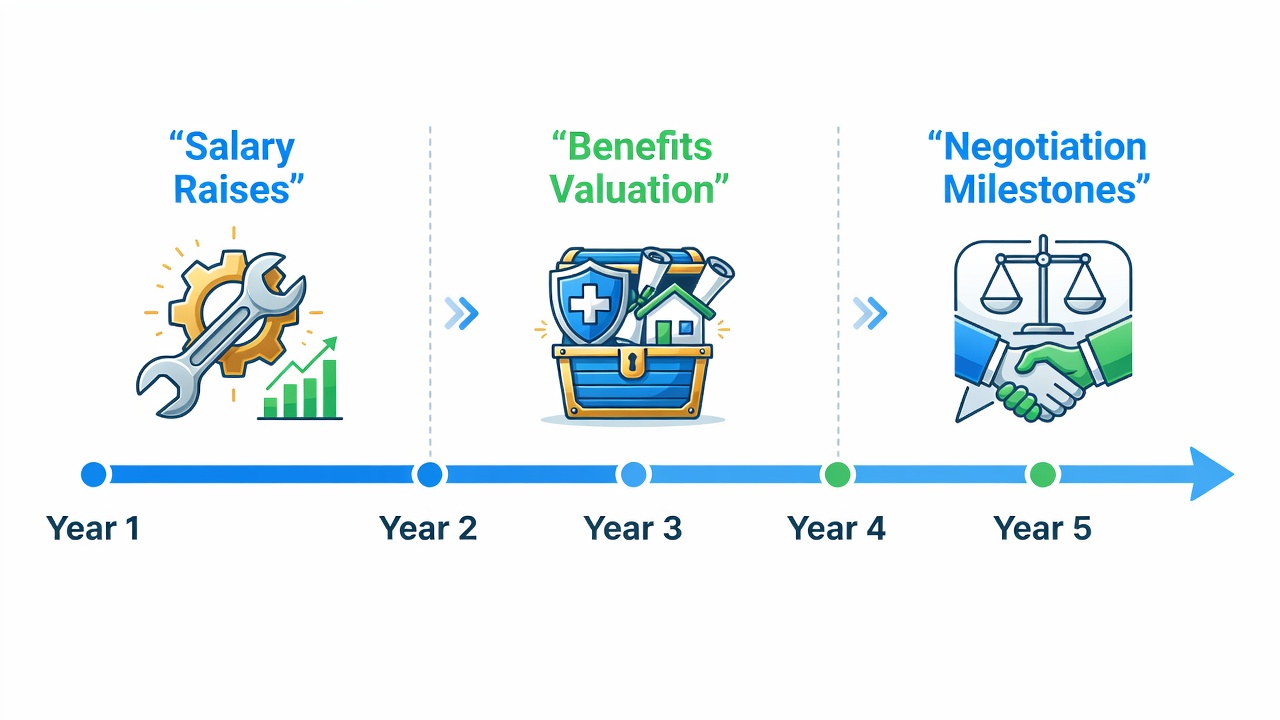
Professionals today recognize that salary is only one piece of the puzzle. A robust 5-year earnings strategy integrates projected pay raises, total compensation valuation, and strategic negotiation to maximize lifetime earnings. This guide provides actionable frameworks tailored for 2026 and beyond, helping you move beyond annual reviews toward sustained financial growth. Many workers focus solely on immediate paychecks, but forward-thinking individuals build comprehensive plans that account for inflation, career progression, skill development, and shifting market conditions. By treating compensation as a dynamic portfolio rather than a static number, you can achieve compounding growth that significantly impacts retirement savings, lifestyle choices, and financial security. The following sections break down each component with practical tools, real examples, and decision frameworks you can apply immediately.
Projecting Average Salary Increases by Industry
Understanding industry-specific trends forms the foundation of any multi-year plan. While individual results vary, sectors like technology and finance often outpace others due to talent demand and performance-based structures. Conservative estimates focus on steady 2-4% annual adjustments, while aggressive paths leverage promotions and role changes for larger jumps. Review data from authoritative sources such as the Bureau of Labor Statistics to benchmark your expectations realistically. In healthcare, growth tends to align closely with regulatory changes and aging populations, whereas manufacturing may see slower but more predictable increases tied to automation and supply chain shifts. Create a spreadsheet that pulls historical averages for your sector and overlays optimistic, baseline, and pessimistic scenarios. Update this projection quarterly using new economic reports to stay responsive to recessions, booms, or technological disruptions that could accelerate or stall wage growth through 2030.
Valuing Benefits Within Total Compensation
Many overlook how benefits contribute to overall earnings. Health insurance, retirement matching, stock options, and flexible work policies can add substantial value beyond base pay. When building your strategy, assign dollar equivalents to each perk and track how they compound over five years. This holistic view prevents underestimating opportunities at companies that emphasize non-cash rewards. Start by listing every benefit offered: medical premiums paid by the employer, 401(k) matches, tuition reimbursement, wellness stipends, parental leave, and remote-work allowances. Convert each into an annual monetary figure using current market rates for similar coverage. Revisit valuations annually because benefit costs fluctuate with healthcare inflation and policy changes. Professionals who master this exercise often discover that a slightly lower base salary at one firm delivers higher total compensation than a higher-paying role elsewhere.
Factoring Negotiation Outcomes Across Multiple Years
Negotiation is not a one-time event. A successful 5-year plan includes scheduled conversations at promotion points, annual reviews, and market shifts. Document your achievements quarterly and prepare data-driven cases for increases. Over time, even modest compounding from successful negotiations creates substantial differences in lifetime earnings. Prepare by maintaining a running log of projects, metrics, and peer benchmarks. Schedule practice conversations with mentors or career coaches before high-stakes meetings. Consider timing requests around company performance milestones when budgets are more flexible. Track outcomes in a simple table that records your ask, the final agreement, and the gap, then analyze patterns to refine future approaches. This disciplined record-keeping turns negotiation from an emotional discussion into a repeatable business process.
Step-by-Step Earnings Calculator Framework
Follow this expanded template to project your path:
- Start with current base salary and benefits valuation.
- Apply industry growth rates for each year, adjusting for role changes.
- Factor in three negotiation scenarios: low, medium, and high outcomes.
- Include inflation adjustments and career pivot impacts.
- Model the effect of skill certifications or advanced degrees on earning potential.
- Run sensitivity analyses for economic downturns or unexpected promotions.
- Review and refine the model annually with actual results.
This calculator approach turns vague goals into measurable milestones. Use free tools such as spreadsheet templates or online compound-interest calculators to visualize cumulative earnings. Add columns for taxes and net income to understand true take-home growth. Professionals who maintain this living document report greater confidence during salary discussions and clearer visibility into long-term financial targets.
Real-World Case Studies: Tech and Finance
Consider a mid-level software engineer who began with a conservative plan emphasizing internal promotions. Over five years, steady raises plus one major negotiation yielded strong cumulative growth through consistent performance reviews and targeted skill upgrades. In contrast, a finance analyst pursued aggressive moves between firms, accelerating earnings faster but with higher risk of burnout and relocation stress. Both approaches demonstrate that personalization is key. A third example from marketing shows how hybrid strategies—combining internal growth with one external move—balanced stability and acceleration. Analyze these cases by mapping each individual’s risk tolerance, industry mobility, and family considerations. Adapt the lessons to your own situation rather than copying any single path verbatim.
Conservative vs. Aggressive Raise Strategies Compared
Conservative strategies prioritize stability, focusing on internal growth and benefit maximization. They reduce volatility but may cap upside potential. Aggressive paths involve frequent role changes and bold negotiations, delivering faster gains at the cost of higher uncertainty. Compare your risk tolerance, industry mobility, and personal circumstances before choosing. A hybrid model often works best for most professionals. Create a decision matrix listing pros and cons of each approach across categories such as work-life balance, relocation needs, skill development time, and network building. Review this matrix with a trusted advisor before committing to one dominant style.
Practical 5-Year Plan Examples and Customizable Templates
Year 1: Establish baseline and secure initial benefits review while documenting achievements. Year 2: Target first major raise or promotion using collected data. Year 3: Evaluate total compensation and explore lateral moves if internal ceilings appear. Year 4: Incorporate skill development for higher-value roles and reassess benefit valuations. Year 5: Assess overall progress, celebrate milestones, and set next-cycle goals. Customize this template in a spreadsheet by inserting your actual numbers and adjusting timelines based on life events. Add conditional formatting to highlight years where aggressive moves may be necessary. Revisit the entire plan every January to incorporate new industry data and personal reflections.
Addressing Inflation and Economic Factors
Inflation erodes purchasing power, so build annual adjustments into every projection. Monitor official reports to understand how rising costs affect housing, education, and healthcare. Adjust your earnings targets upward accordingly while also seeking roles that historically outpace inflation. Economic downturns may temporarily slow raises, but they also create opportunities for skilled professionals to negotiate from positions of proven value.
Career Pivots and Adaptability
Career changes require recalculating projections based on new industry benchmarks and transferable skills. Identify pivot points early by tracking emerging job categories and required competencies. Build a personal development fund for courses or certifications that open higher-paying doors. Flexibility in your five-year plan allows you to capitalize on unexpected opportunities without derailing long-term financial objectives.
FAQ: Inflation, Career Pivots, and Common Concerns
How does inflation affect my plan? Build in annual adjustments to maintain purchasing power and review economic indicators regularly. What if I pivot careers? Recalculate projections based on new industry benchmarks and transferable skills while preserving core benefits where possible. Should I prioritize salary or benefits? Balance both according to your life stage and financial needs, revisiting the weighting each year. How often should I renegotiate? Schedule reviews at least annually and immediately after major achievements or market shifts. What tools help track progress? Spreadsheets, goal-tracking apps, and mentor feedback loops provide the clearest visibility into your trajectory.
Conclusion
Effective compensation planning transforms reactive salary discussions into proactive wealth-building. By applying these frameworks, tracking progress, and adapting to change, you position yourself for meaningful earnings growth through 2030 and beyond. Start today by auditing your current total compensation and sketching your first five-year projection.

No comments yet. Be the first!