 Jobboy

Understanding Total Compensation in 2026
Job seekers and early-career professionals frequently make the mistake of focusing only on the base salary number when they receive a job offer. In reality, total compensation includes many additional elements that can dramatically change the overall value of a package. This comprehensive guide explains every major component so readers can evaluate offers with confidence, compare them against industry data, and negotiate effectively in 2026.
Compensation packages have grown more complex over the past decade. Employers now bundle health benefits, retirement contributions, equity grants, performance bonuses, and flexible perks into a single offer. Understanding how these pieces fit together helps you avoid accepting an offer that looks attractive on paper but falls short in practice.
Core Components of a Compensation Package
Every compensation package contains several layers. Base salary remains the most visible part, yet it often represents only 60 to 80 percent of total value depending on the role and industry. The remaining portion comes from benefits, equity, bonuses, and less obvious perks.
Base Salary and Market Benchmarks
Base salary provides the steady foundation of your earnings. To determine whether a quoted figure is competitive, consult reliable data sources such as the U.S. Bureau of Labor Statistics. Compare the offer against median wages for your specific job title, years of experience, and geographic location. Remember that cost-of-living differences between cities can shift the real purchasing power of the same salary by thousands of dollars annually.
Benefits Valuation
Employer-sponsored benefits often add significant monetary value. Health insurance premiums paid by the company, dental and vision coverage, life insurance, and disability protection can easily total several thousand dollars each year. Retirement plans such as 401(k) matching represent another major line item. A common employer match of 50 percent up to 6 percent of salary delivers immediate returns that compound over time.
Equity, Stock Options, and RSUs
In technology, startups, and some publicly traded companies, equity forms a large part of compensation. Restricted stock units (RSUs) and stock options carry both opportunity and risk. You must understand the vesting schedule, current share price, and tax implications before assigning value. A grant that appears generous on day one may lose worth if the company stock declines or if you leave before full vesting.
Bonuses and Variable Pay
Performance bonuses, signing bonuses, and profit-sharing arrangements add another variable layer. These payments depend on individual, team, or company results. Review historical payout rates and any guaranteed minimums written into the offer letter. Signing bonuses can provide immediate cash but sometimes come with repayment clauses if you depart early.
Hidden Perks and Non-Cash Benefits
Many packages include wellness stipends, professional development budgets, commuter benefits, parental leave, and remote-work allowances. These items improve quality of life and reduce out-of-pocket expenses. Quantify each perk by estimating how much you would otherwise spend from your own pocket.
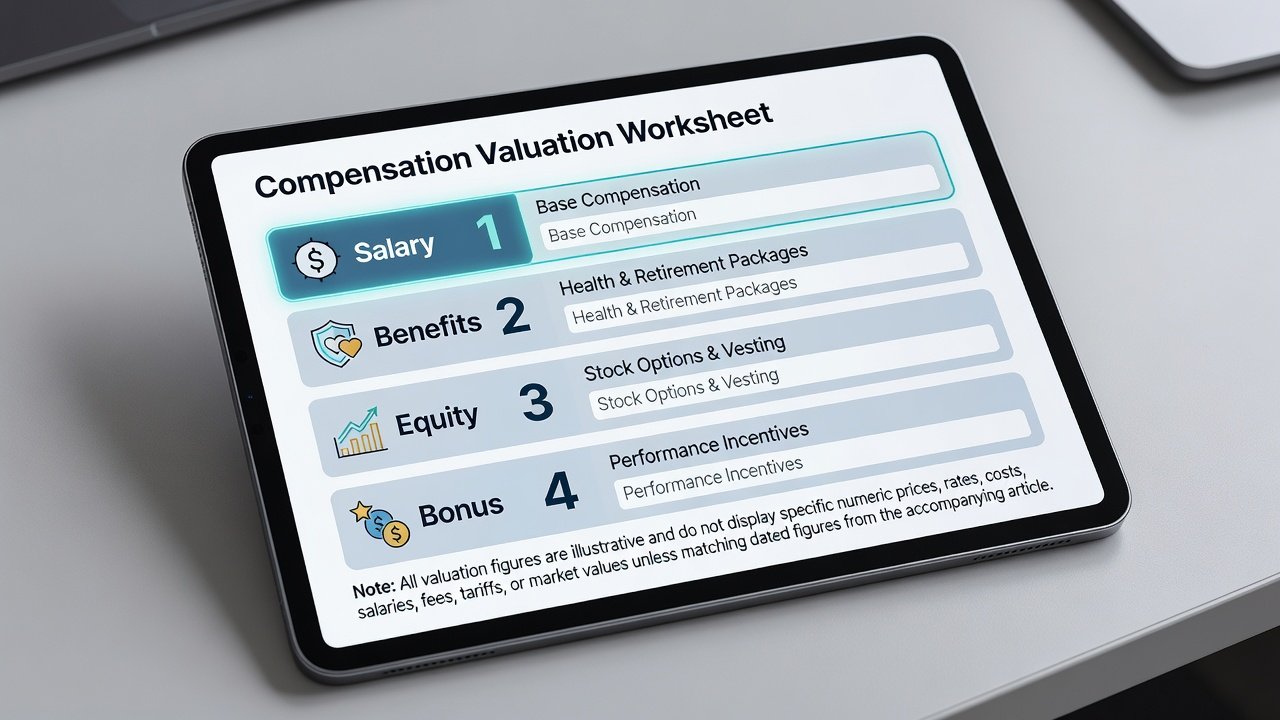
Step-by-Step Valuation Worksheet
Follow this structured process to calculate the true worth of any offer:
- Record the annual base salary and any guaranteed bonuses.
- Estimate the annual employer cost of health, dental, and vision coverage using the summary plan description provided during onboarding.
- Calculate the value of retirement matching by multiplying your expected contribution percentage by the match rate.
- Assign a conservative present value to equity grants by multiplying the number of shares by the current fair market value and discounting for vesting risk.
- Add the estimated annual value of all additional perks such as stipends and leave.
- Sum every line item to arrive at total compensation.
- Divide the grand total by twelve to understand monthly impact and compare against your current monthly cash flow.
Revisit the worksheet whenever new data arrives or when you receive multiple offers.
Real-World Offer Comparisons Across Three Industries
Consider how packages differ in technology, healthcare, and finance. A mid-level software engineer at a growth-stage tech company may receive a modest base salary paired with substantial equity that could multiply in value over four years. A registered nurse at a hospital system typically sees strong retirement contributions, shift differentials, and tuition reimbursement. A financial analyst at a large bank might receive a competitive base plus a discretionary bonus tied to annual performance reviews. Normalizing these offers through the valuation worksheet reveals which package delivers the highest total value for your personal priorities.
Common Pitfalls When Interpreting Pay Packages
- Overlooking geographic cost-of-living adjustments that reduce real purchasing power.
- Assigning full face value to equity without factoring in tax events or stock volatility.
- Ignoring repayment clauses attached to signing bonuses or relocation assistance.
- Failing to negotiate non-salary items such as additional vacation days or flexible hours.
- Comparing offers solely on base salary instead of total compensation.
- Neglecting long-term elements like career growth opportunities and promotion timelines.
Building and Using a Total Compensation Calculator Template
Create a simple spreadsheet with columns labeled Base Salary, Health Benefits, Retirement Match, Equity Value, Bonuses, and Perks. Use formulas to sum each row and calculate a grand total. Add a second tab for side-by-side comparison of two or three offers. Update the template with fresh benchmark data from the Department of Labor whenever you begin a new job search. This reusable tool turns abstract offers into clear numerical comparisons.
Negotiating Your Compensation Package
Once you have calculated total compensation, prepare a counter-offer. Start by expressing enthusiasm for the role, then present your researched market data and explain which elements matter most to you. Request improvements in areas such as base salary, signing bonus, equity grant size, or additional paid time off. Practice your talking points and remain professional throughout the discussion.
Frequently Asked Questions
How much should I ask for during negotiation?
Research current market rates first. Most candidates can reasonably target 10 to 15 percent above their current total compensation when the new role demands greater responsibility or relocation.
What benefits add the most immediate value?
Employer-paid health insurance premiums and retirement matching usually deliver the highest dollar-for-dollar return. Unlimited paid time off and professional development budgets follow closely for professionals planning long-term skill growth.
How should I value equity in a startup versus a public company?
Public company RSUs have a clear market price. Startup equity requires conservative assumptions about future liquidity events and should be discounted heavily until shares trade on an established exchange.
Conclusion
Decoding compensation packages empowers you to make informed career decisions. By breaking down every element, using valuation worksheets, comparing real-world examples, and avoiding common mistakes, you can negotiate offers that truly reflect your worth in 2026 and beyond.

No comments yet. Be the first!