 Jobboy

Introduction
In 2026, recruiters spend an average of just seven seconds scanning each resume. A powerful resume summary serves as your professional elevator pitch, instantly communicating your value, expertise, and fit for the role. This guide delivers a step-by-step approach to writing concise, keyword-rich summaries that satisfy both applicant tracking systems (ATS) and human readers. Search intent around “how to write a resume” often centers on practical techniques that improve visibility and engagement. By focusing on core strengths, tailoring content to job descriptions, and incorporating quantifiable achievements, you can create an opening paragraph that drives more interview invitations. The modern job market demands summaries that balance technical precision with storytelling flair, helping candidates from all backgrounds rise above the competition.
What Is a Resume Summary and Why It Matters in 2026
A resume summary is a 3–5 sentence professional overview placed at the top of your resume. It replaces the outdated objective statement and highlights your most relevant qualifications, years of experience, and key accomplishments. In today’s competitive market, it helps you stand out in a sea of generic applications. Employers receive hundreds of resumes for each opening, so your summary must immediately answer the question: “Why should we interview this person?” Studies from major career platforms show that resumes with strong opening summaries receive up to 40% more recruiter views than those without. Additionally, ATS software continues to evolve, using natural language processing to evaluate how well your opening aligns with posted requirements.
Step-by-Step Guide to Writing Your Summary
1. Identify Your Core Strengths
Begin by listing your top three to five professional strengths, technical skills, and soft skills that align with your target role. Review performance reviews, LinkedIn recommendations, and past job descriptions for recurring themes. Ask yourself what unique combination of experience and results you bring that others may lack. For instance, a project manager might list agile methodologies, stakeholder communication, and budget optimization as core strengths. Spend time reflecting on both hard skills like software proficiency and soft skills like leadership under pressure. This foundation ensures your summary feels authentic rather than generic.
2. Tailor to the Job Description
Copy key phrases from the job posting and naturally integrate them into your summary. This targeted approach signals relevance to both ATS algorithms and hiring managers. Read the posting multiple times and note repeated terms such as “cross-functional collaboration” or “data-driven decision making.” Weave these phrases into your sentences without forcing them. For example, if the role emphasizes “customer experience innovation,” include a brief mention of how you improved client satisfaction metrics. Tailoring takes extra time but dramatically increases response rates, especially when applying to multiple positions.
3. Integrate Quantifiable Achievements
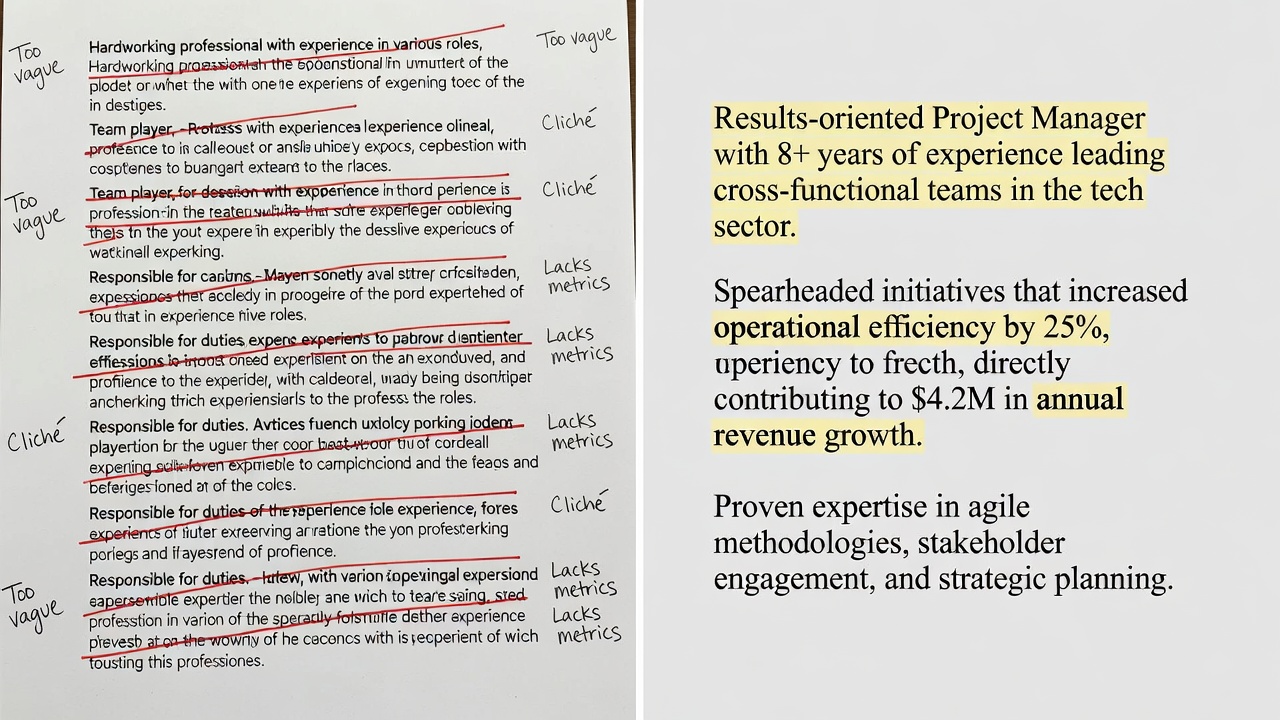
Replace vague claims with specific results. Instead of “managed a team,” write “led a 12-person team that increased quarterly revenue by 28%.” Numbers create credibility and help your summary pop. Whenever possible, use percentages, dollar amounts, time savings, or team sizes. If exact figures are unavailable, use ranges or relative improvements such as “more than doubled user engagement.” Quantifiable details transform a bland statement into a compelling narrative that demonstrates real impact.
4. Avoid Generic Phrases
Steer clear of overused terms such as “hardworking,” “team player,” or “results-driven.” Replace them with concrete descriptors tied to your industry and achievements. Recruiters see these clichés dozens of times daily, so they lose impact quickly. Instead of saying you are “detail-oriented,” describe how your attention to detail reduced error rates by 15% in quarterly reports. Specificity builds trust and keeps readers engaged through the rest of your resume.
Before-and-After Examples Across Career Levels
Entry-Level Marketing Coordinator
Before: “Recent graduate seeking a marketing position where I can utilize my skills in social media and content creation.”
After: “Digital marketing graduate with hands-on experience running Instagram and TikTok campaigns that grew engagement by 45%. Proficient in SEO, Google Analytics, and Canva. Eager to drive brand growth at a fast-paced agency.”
Mid-Career Software Engineer
Before: “Experienced software engineer looking for new opportunities in tech.”
After: “Full-stack engineer with 6 years of experience building scalable React and Node.js applications. Reduced API latency by 60% at a Series B startup and mentored 4 junior developers. Seeking to architect cloud-native solutions at a product-led company.”
Senior Finance Manager
Before: “Finance professional with leadership experience.”
After: “Senior finance manager with 14 years driving strategic planning and M&A due diligence. Delivered $4.2M in annual cost savings through process automation in 2025. Expert in SAP S/4HANA and IFRS reporting, ready to optimize capital allocation for a multinational enterprise.”
These transformations show how adding specificity and metrics elevates the entire document. You can apply the same principles to any field by replacing industry keywords and results accordingly.
ATS Optimization Techniques
Use standard section headings and standard fonts such as Arial or Calibri. Incorporate exact job-title variations and industry acronyms mentioned in the posting. Keep formatting simple—avoid tables, text boxes, or graphics that ATS cannot read. Test your resume by submitting it through free online ATS simulators before sending applications. Many candidates overlook that even minor formatting choices can cause parsing failures, leading to lost opportunities. For more guidance on resume best practices, consult resources from Indeed and LinkedIn.
Common Mistakes to Avoid
Many job seekers make the error of writing a one-size-fits-all summary. This approach fails to address the unique needs of each employer. Another frequent issue is focusing too heavily on responsibilities rather than outcomes. Always prioritize results over duties. Length is also critical—summaries exceeding five lines risk losing reader attention. Finally, avoid spelling or grammar mistakes, which immediately signal a lack of professionalism. Proofread multiple times and consider asking a trusted colleague for feedback.
Tailoring for Different Industries
Tech roles often benefit from mentioning specific programming languages and frameworks. Healthcare summaries should emphasize compliance knowledge and patient outcomes. Creative fields allow slightly more personality while still remaining professional. Sales positions thrive on revenue targets and client acquisition numbers. Adjust tone and emphasis based on the sector while maintaining the core structure of strength identification, tailoring, and quantification.
Updating Your Summary Over Time
Your summary should evolve with your career. Review it every six months or whenever you complete a major project. Add new skills, certifications, or accomplishments as they occur. This habit keeps your materials fresh and ready for unexpected opportunities. Many professionals maintain a master version and create tailored copies for each application.
Quick Implementation Checklist
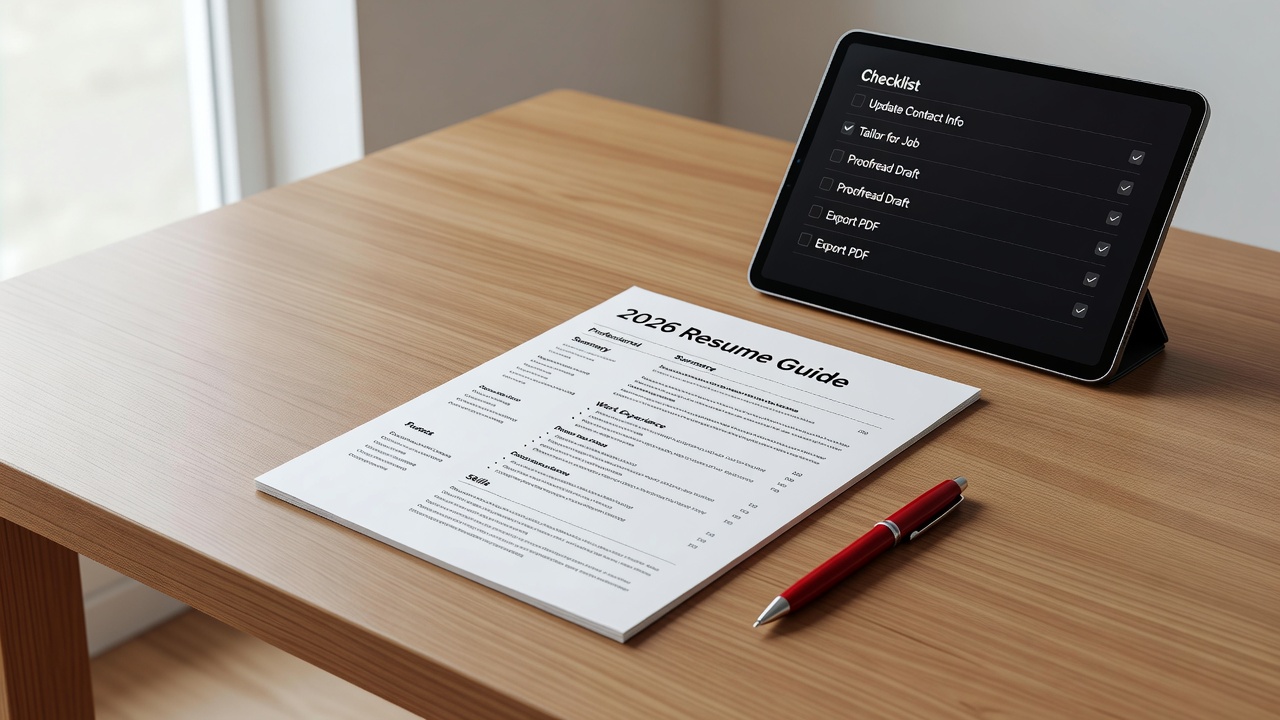
- Limit summary to 3–5 lines or 50–80 words
- Include job title, years of experience, 2–3 key skills, and one major achievement
- Match at least 70% of keywords from the job description
- Proofread for grammar and spelling errors
- Update summary for every application
- Test formatting through an ATS checker
- Seek feedback from a mentor or career coach
Conclusion
A strong resume summary is one of the highest-ROI updates you can make to your job-search materials in 2026. By identifying your unique strengths, tailoring content, and quantifying results, you create an opening that captures attention and improves ATS rankings. Use the examples and checklist above to revise your summary today and position yourself for greater success in the months ahead.
FAQ
How long should a resume summary be?
Aim for 3–5 sentences or roughly 50–80 words to keep it scannable while delivering impact. Longer summaries often get skipped during quick recruiter reviews.
What tone works best in 2026?
Adopt a confident, professional tone that emphasizes achievements rather than responsibilities. Avoid both overly casual language and stiff corporate jargon to strike the right balance.
Should I include a summary if I have limited experience?
Yes. Entry-level candidates can highlight education, internships, relevant coursework, and transferable skills to create a compelling narrative even with shorter work histories.

No comments yet. Be the first!