 Jobboy

Introduction: Elevating Your Resume for Executive Leadership in 2026
Mid-to-senior professionals targeting C-suite and board-level positions face a unique challenge: their resumes must transcend standard applicant tracking systems (ATS) while immediately signaling strategic vision to human decision-makers. In 2026, executive resume strategies emphasize quantifiable impact, sophisticated language, and concise yet comprehensive multi-page formats that respect busy executives' time. This guide delivers step-by-step techniques, real-world before-and-after examples, and practical frameworks tailored for leadership roles. Unlike entry-level or mid-career documents, executive resumes serve as strategic narratives that position candidates as transformative leaders capable of driving enterprise-wide results amid economic uncertainty and rapid technological change.
Differentiating Executive Resumes from Standard ATS Versions
Traditional resumes optimized for ATS keyword stuffing often fall flat at the executive level. Senior hiring managers and recruiters prioritize narrative flow and demonstrated influence over dense keyword lists. Instead of cramming every responsibility, focus on selective, high-impact content that tells a story of transformation and results. Use a hybrid format that balances scannability with depth, allowing both ATS parsing and quick human review. Executive resumes must also account for global talent pools, where candidates compete against international leaders who bring diverse experiences in emerging markets and digital transformation initiatives.
Key Structural Differences
- Length: Two to three pages for most executives, expanding only when board experience or complex global roles demand it.
- Opening: Replace generic summaries with a powerful executive profile that highlights sector expertise and signature achievements.
- Formatting: Incorporate subtle visual hierarchy through bold metrics and strategic subheadings rather than heavy graphics that break ATS compatibility.
- Content prioritization: Front-load strategic outcomes rather than chronological duties to align with how C-suite readers consume information.
Highlighting Executive Achievements with Metrics
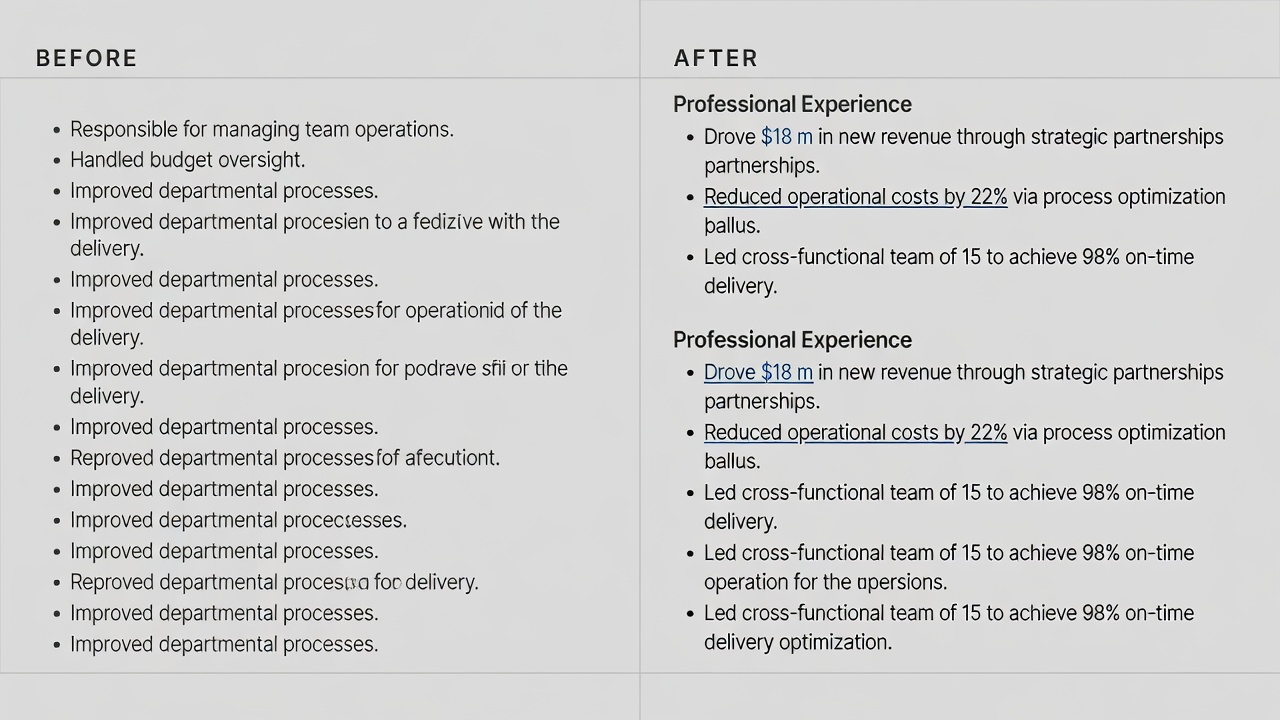
Every bullet point at this level should answer: "What changed because I was there?" Replace vague duties with precise, outcome-oriented statements backed by numbers. When direct metrics are confidential, use relative percentages or ranges. For example, instead of listing team size, quantify the revenue or efficiency gains achieved under your leadership. Incorporate time-bound results to demonstrate momentum and sustained performance over multi-year tenures.
Before: "Led sales team and managed client relationships."
After: "Orchestrated a cross-functional sales transformation that delivered 47% revenue growth and expanded enterprise accounts by 28% within 18 months, directly contributing to a successful Series C round."
Additional examples include transforming supply chain operations to reduce costs by 22% while improving delivery reliability to 99.4%, or leading a digital overhaul that increased customer retention by 35% and generated $18 million in incremental annual revenue. These statements not only prove capability but also allow recruiters to quickly map your contributions to their organization's strategic priorities.
Incorporating Board-Level Language
Executive resumes must speak the language of governance, risk oversight, and long-term value creation. Swap operational verbs for strategic ones: "catalyzed," "stewarded," "architected," and "fortified." Reference concepts such as stakeholder alignment, ESG integration, and capital allocation without unnecessary jargon. This linguistic shift signals readiness for board discussions and investor relations. Audit each bullet for action verbs that imply leadership at scale, integrate phrases like "shaped enterprise strategy," "governed multimillion-dollar P&L," and "navigated regulatory complexity," and ensure language remains authentic to your voice while elevating perspective from manager to visionary.
Structuring Resumes for C-Suite Readability
Busy executives scan resumes in under 30 seconds. Use clear sections with strategic white space, consistent formatting, and an inverted pyramid approach—most critical information first. Consider a two-page core document with an optional third page for detailed board or advisory experience. Recommended order includes an Executive Profile, Core Competencies, Professional Experience in reverse chronological order with impact bullets, Education & Credentials, and Selected Achievements or Publications. This structure respects the reader's limited attention while providing enough depth for thorough evaluation during later interview stages.
Showcasing Strategic Impact Through Case Examples
Illustrate complex achievements with mini case studies embedded in experience sections. For instance, detail how you repositioned a business unit during market disruption, including the strategic rationale, execution levers, and measurable outcomes. Another effective approach is to highlight crisis leadership, such as steering an organization through supply chain shocks by diversifying vendor networks and implementing predictive analytics that stabilized margins within two quarters. These embedded narratives demonstrate both analytical depth and execution excellence, differentiating you from peers who list responsibilities without context.
Balancing Brevity with Depth in Multi-Page Formats
While brevity remains essential, multi-page executive resumes allow room for nuance when justified by career complexity. Limit each role to four to six powerful bullets, reserving additional space for board service or thought leadership. Use appendices or separate documents only when requested, ensuring the primary resume remains self-contained and compelling from the first paragraph onward.
Common Mistakes to Avoid
Many senior professionals undermine their applications through avoidable errors. These include overloading the document with operational details instead of strategic outcomes, failing to tailor language for specific industries, neglecting to quantify international or cross-cultural impact, and using outdated formatting that signals disconnection from current executive expectations. Another frequent pitfall is omitting soft-power achievements such as culture transformation or succession planning, which boards increasingly value alongside financial results.
Handling Career Gaps at the Executive Level: FAQ
Q: How should I address an 18-month career gap resulting from a company acquisition?
A: Frame the gap transparently in one concise line under the relevant role, then pivot immediately to value-adding activities such as advisory work, board service, or strategic consulting. Emphasize skills maintained or enhanced during the period.
Q: Is it acceptable to use a multi-page resume when gaps exist?
A: Yes, provided the additional space is used to demonstrate continuous strategic engagement rather than filler. Recruiters at this level expect context and forward momentum.
Q: Should I explain personal reasons for extended time away?
A: Keep explanations brief and professional, focusing on how the time contributed to renewed perspective or skill development relevant to the target role.
Conclusion
Mastering executive resume strategies in 2026 requires shifting from task documentation to strategic storytelling. By integrating robust metrics, board-level language, and reader-centric formatting, senior professionals position themselves as indispensable leaders. Apply these techniques consistently, and consider tailoring further with insights from Harvard Business Review, LinkedIn, and SHRM resources on leadership positioning.
No comments yet. Be the first!