 Jobboy

Why Aligning Your Resume with Company Values Matters in 2026
Modern hiring trends place increasing emphasis on cultural fit alongside skills. Employers seek candidates who naturally embody organizational principles, leading to higher retention and engagement. In 2026, recruiters use advanced tools to scan for value alignment during initial reviews, making authentic integration essential rather than optional. This approach helps candidates stand out in competitive applicant pools where technical qualifications alone no longer guarantee interviews. By demonstrating shared values early, job seekers signal long-term potential and reduce the risk of early turnover that costs companies time and resources.
Researching Target Company Values Effectively
Start by visiting the company's official website and reviewing their mission, vision, and values pages. Cross-reference with recent press releases and social media activity. Examine employee testimonials on professional networks to understand lived values versus stated ones. Tools like annual reports provide deeper insights into priorities such as sustainability or innovation. Professional platforms like LinkedIn offer real employee insights through posts and comments that reveal how values translate into daily operations. Government resources from the U.S. Department of Labor can also contextualize broader industry expectations around workplace culture and employee rights.
Analyzing Job Postings for Value Clues
Break down postings by highlighting repeated themes. Words like "collaborative," "innovative," or "customer-centric" signal core expectations. Compare multiple postings from the same company to identify consistent priorities. This analysis reveals how to frame your experience without forcing keywords. Create a simple spreadsheet to track recurring phrases across five or more postings, noting frequency and context. Pay attention to soft skills sections and company-specific language that indicates cultural priorities beyond technical requirements.
Techniques for Weaving Values into Your Resume
Focus on achievements rather than duties. Instead of listing "managed team," describe "led cross-functional collaboration that advanced our shared commitment to inclusive growth." Quantify impacts where possible and tie them directly to the company's stated principles. Use the summary section to echo 2-3 core values naturally. Incorporate action verbs that mirror company language while remaining true to your experience. For instance, if a firm values "agility," rephrase project management bullets to emphasize rapid adaptation and iterative improvements that delivered measurable outcomes.
Real-World Examples Across Industries
In tech, a software engineer might highlight "developed ethical AI solutions aligned with transparency and accountability standards" for a company emphasizing responsible innovation. In healthcare, a nurse could note "delivered patient-centered care that reflected our dedication to compassion and excellence," citing specific patient satisfaction improvements. Retail examples often focus on community impact, such as "organized local sustainability initiatives supporting environmental stewardship" with details on reduced waste percentages. Finance professionals might frame risk management as "implemented compliance protocols that upheld integrity and trust in client relationships." Manufacturing roles could emphasize "optimized production processes that reinforced safety-first and efficiency values," including before-and-after metrics. These examples show how to blend personal accomplishments with organizational language without exaggeration.
Successful vs. Ineffective Approaches
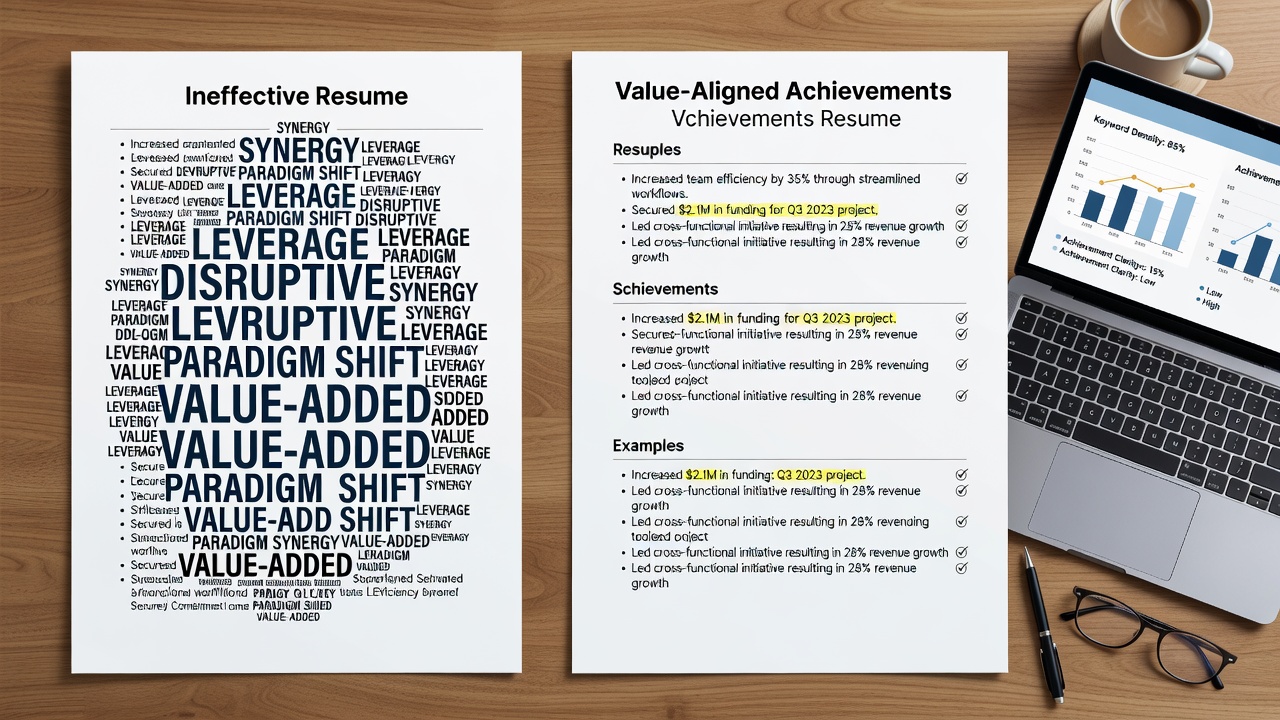
Successful resumes integrate values into quantified achievements with context. Ineffective versions simply paste company language into bullet points, creating awkward keyword stuffing that ATS and humans both reject. Compare: "Improved sales by 30% through team collaboration" succeeds, while "Collaboration: worked in teams" fails to demonstrate alignment. Another ineffective pattern involves listing values in a separate skills section without proof, whereas strong approaches embed them throughout the experience section with concrete stories. Review your draft by reading it aloud to ensure it sounds like your natural voice rather than copied text.
Ensuring ATS Compatibility While Maintaining Authenticity
ATS systems parse for both skills and cultural signals. Use standard section headings and natural language. Avoid overusing exact phrases; instead, vary wording while preserving meaning. Test your resume with free online ATS simulators to verify readability before submission. Format documents in common file types like PDF or DOCX, and incorporate standard fonts to prevent parsing errors. Balance value alignment with keyword optimization by including both exact company terms and synonyms throughout the document.
Practical Checklist for Value Alignment
- Identify 3-5 core company values from official sources and recent communications.
- Map personal achievements to each value with specific, quantifiable results from your career history.
- Review for natural flow and avoid repetition of the same value across multiple sections.
- Customize the cover letter to expand on one key value story with a short narrative example.
- Proofread for authenticity and remove generic buzzwords that dilute your message.
- Compare your final version against the original job posting to confirm balanced coverage.
- Seek feedback from a mentor or peer familiar with the target industry.
Frequently Asked Questions
How do I measure the impact of value alignment?
Track response rates from applications and interview feedback mentioning cultural fit. Over time, aligned applications often yield faster callbacks and stronger offers. Maintain a simple log noting which tailored resumes led to interviews versus generic submissions to refine your strategy.
Can I align values if my past roles differ?
Yes, translate transferable experiences. Emphasize universal themes like integrity or teamwork that bridge industries. Focus on how your background supports the company's forward-looking goals rather than exact role matches.
What if company values conflict with my experience?
Reconsider the application. Authentic alignment prevents future mismatches and supports long-term satisfaction. Research thoroughly upfront to avoid investing time in roles where misalignment is evident from public statements.
How often should I update value alignment in applications?
Review and refresh your resume for each new target company, as values can evolve with leadership changes or market shifts. Set a quarterly reminder to revisit your core achievements and reframe them as needed.
Conclusion
Authentic value alignment transforms resumes from skill lists into compelling narratives of fit. By researching thoroughly and integrating thoughtfully, job seekers position themselves as ideal cultural matches in today's competitive landscape. Apply these strategies consistently to stand out in 2026 hiring processes and build more meaningful career connections.


No comments yet. Be the first!