 Jobboy

Introduction to Juggling Multiple Remote Jobs
In today's gig economy, the flexibility of remote work has opened doors for professionals to take on multiple jobs simultaneously. Whether you're freelancing across platforms or holding down part-time roles from home, managing several remote positions can boost your income and diversify your skills. However, it comes with unique challenges like overlapping deadlines, mental fatigue, and blurred boundaries between work and personal life.
This guide dives deep into practical time management techniques, essential productivity tools, and strategies for maintaining a healthy work-life balance. By implementing these tips, you can maximize your efficiency and avoid the pitfalls of overcommitment. Whether you're a seasoned freelancer or just starting to explore multi-job setups, these insights will help you navigate the demands of remote work effectively.
The Benefits and Challenges of Multiple Remote Roles
Embracing multiple remote jobs offers several advantages. Financially, it provides a safety net and higher earnings potential. Skill-wise, it allows you to build a versatile portfolio, making you more marketable in the long run. The remote aspect means no commuting, giving you control over your schedule.
Yet, challenges abound. Time conflicts can lead to missed deadlines, while constant context-switching drains cognitive resources. Burnout is a real risk if you don't prioritize self-care. Ethically, ensure your contracts don't prohibit moonlighting, and be transparent where required to avoid conflicts of interest.
Effective Time Management Techniques
Time management is the cornerstone of success when handling multiple jobs. Start by auditing your current commitments. Track how you spend your days for a week using a simple journal or app to identify time-wasters.
- Prioritize Tasks with the Eisenhower Matrix: Categorize tasks by urgency and importance. Focus on high-impact activities first, delegate or eliminate the rest. This method, popularized by President Dwight D. Eisenhower, helps you avoid reactive work.
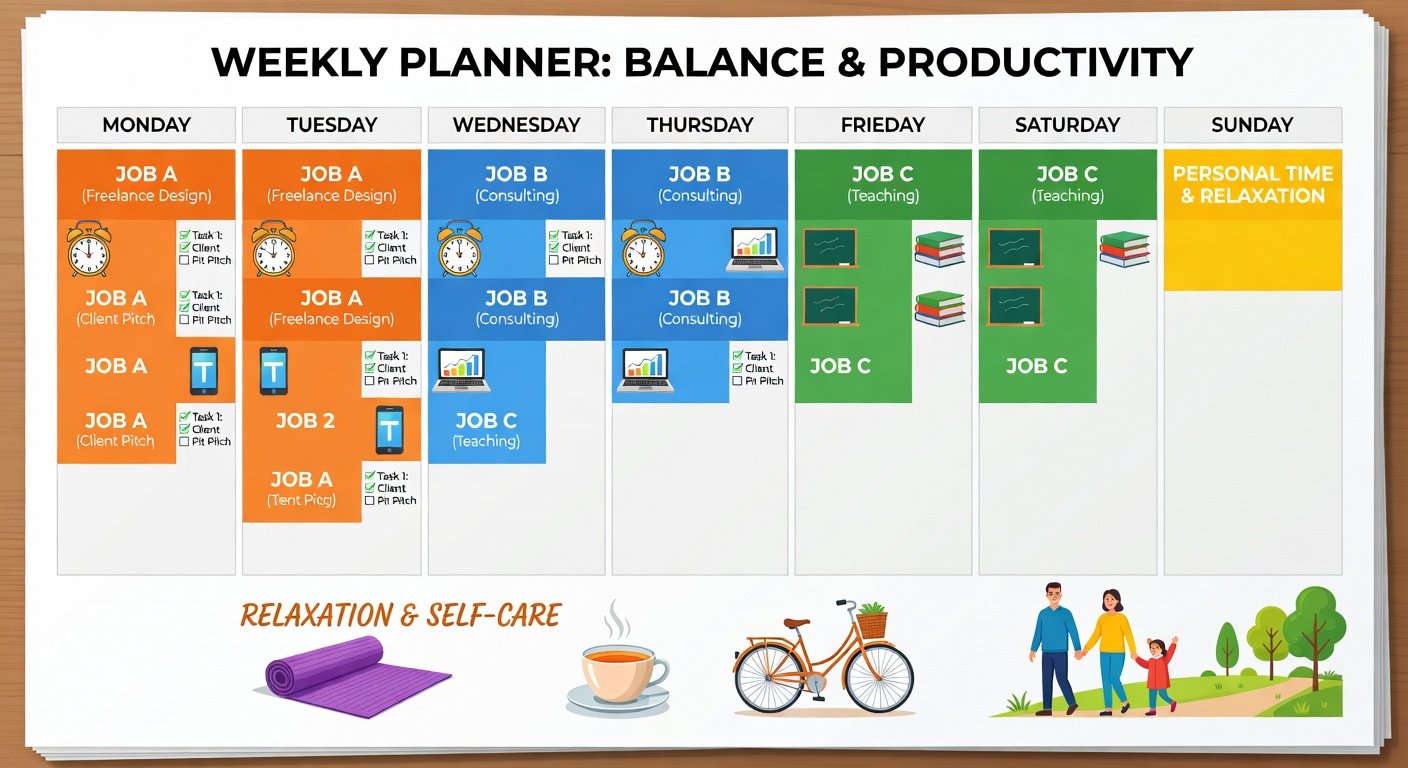
- Time Blocking: Divide your day into dedicated blocks for each job. For example, mornings for Job A, afternoons for Job B, and evenings for wrap-up tasks. Include buffers for unexpected interruptions.
- The Pomodoro Technique: Work in 25-minute focused sprints followed by 5-minute breaks. After four cycles, take a longer 15-30 minute rest. This combats fatigue during long remote workdays.
- Set Clear Boundaries: Communicate availability to clients or employers. Use shared calendars to prevent overlaps and respect your off-hours.
Implementing these techniques requires discipline but pays off in reduced stress and higher output. Remember, quality trumps quantity—it's better to excel in fewer hours than scramble through more.
Top Productivity Tools for Multi-Job Remote Workers
Leveraging the right tools can streamline your workflow and keep everything organized across jobs. Here's a curated list of reliable options:
- Project Management Software: Tools like Asana help you create separate boards for each job, track progress, and set reminders. Its intuitive interface is perfect for visual thinkers managing diverse tasks. For more on getting started, visit the Asana homepage.
- Time Tracking Apps: Toggl or Clockify allow you to log hours per job accurately, ensuring fair billing and personal accountability. These apps generate reports to analyze your productivity patterns over time.
- Communication Hubs: Slack or Microsoft Teams keep channels separate for each role, reducing email overload. Integrate bots for automated updates to stay on top without constant checking.
- Note-Taking and Automation: Evernote for centralized notes across jobs, or Zapier to automate repetitive tasks like syncing calendars between platforms.
Start with 2-3 tools to avoid tool overload, then scale as needed. Many offer free tiers, making them accessible for beginners.
Maintaining Work-Life Balance Amid Multiple Commitments
Balancing multiple jobs doesn't mean sacrificing your well-being. Without intentional boundaries, remote work can consume your life, leading to exhaustion. The World Health Organization recognizes burnout as an occupational phenomenon, emphasizing the need for preventive measures.
For guidance on managing stress, check resources from the World Health Organization.
- Schedule Downtime: Treat personal time as non-negotiable. Block out hours for exercise, hobbies, and family—stick to them like work meetings.
- Monitor Workload: Regularly assess if your jobs align with your energy levels. If one role consistently drains you, consider scaling back.
- Physical and Mental Health Practices: Incorporate daily walks, meditation, or yoga. Aim for 7-9 hours of sleep nightly to recharge. Tools like Headspace can guide short mindfulness sessions during breaks.
- Seek Support: Join online communities for remote workers, such as forums on Reddit's r/freelance or LinkedIn groups, to share experiences and tips.
Ultimately, work-life balance is about sustainability. Periodically review your setup: Are you fulfilled? Adjust as your circumstances evolve.
Legal and Ethical Considerations
Before diving into multiple remote jobs, understand the legal landscape. Non-compete clauses or exclusivity agreements in contracts can restrict moonlighting. In the U.S., for instance, at-will employment allows job-switching, but disclose conflicts to maintain trust.
Tax implications are crucial—track income from each source meticulously. Consult a professional for advice tailored to your location. Ethically, deliver your best to every role; underperformance due to overcommitment harms your reputation.
For official tax guidance, refer to the IRS website if you're in the United States.
Conclusion: Thrive in Your Multi-Job Remote Career
Managing several remote jobs is a high-wire act, but with solid time management, productivity tools, and a commitment to balance, you can achieve professional growth without sacrificing health. Start small: pick one technique and one tool to implement this week. Over time, refine your approach to fit your unique rhythm.
Remote work's flexibility is a gift—use it wisely to build the career you envision. If you're feeling overwhelmed, remember: it's okay to say no to new opportunities until you're ready.


No comments yet. Be the first!