 Jobboy

Negotiating freelance contracts effectively has become essential for success in the 2026 gig economy. Remote work continues to expand, creating both opportunities and complexities for independent professionals. This guide provides practical, in-depth strategies tailored to current market conditions, helping freelancers build confidence in online work agreements while addressing key search intent around remote jobs and freelancing.
Understanding the 2026 Gig Economy Landscape
The freelance sector has evolved significantly, with digital nomads and remote contractors facing unique challenges in client agreements. Economic shifts and technological advancements influence how contracts are structured and negotiated today. Professionals must stay informed about trends to build confidence in online work agreements. Remote jobs now account for a larger share of the workforce, with platforms enabling cross-border collaborations that require careful attention to jurisdiction and payment methods. Digital nomads often juggle multiple time zones, making clear contract language more critical than ever. Understanding these dynamics allows freelancers to anticipate client expectations and position themselves as reliable partners rather than vendors.
Spotting Red Flags in Proposals
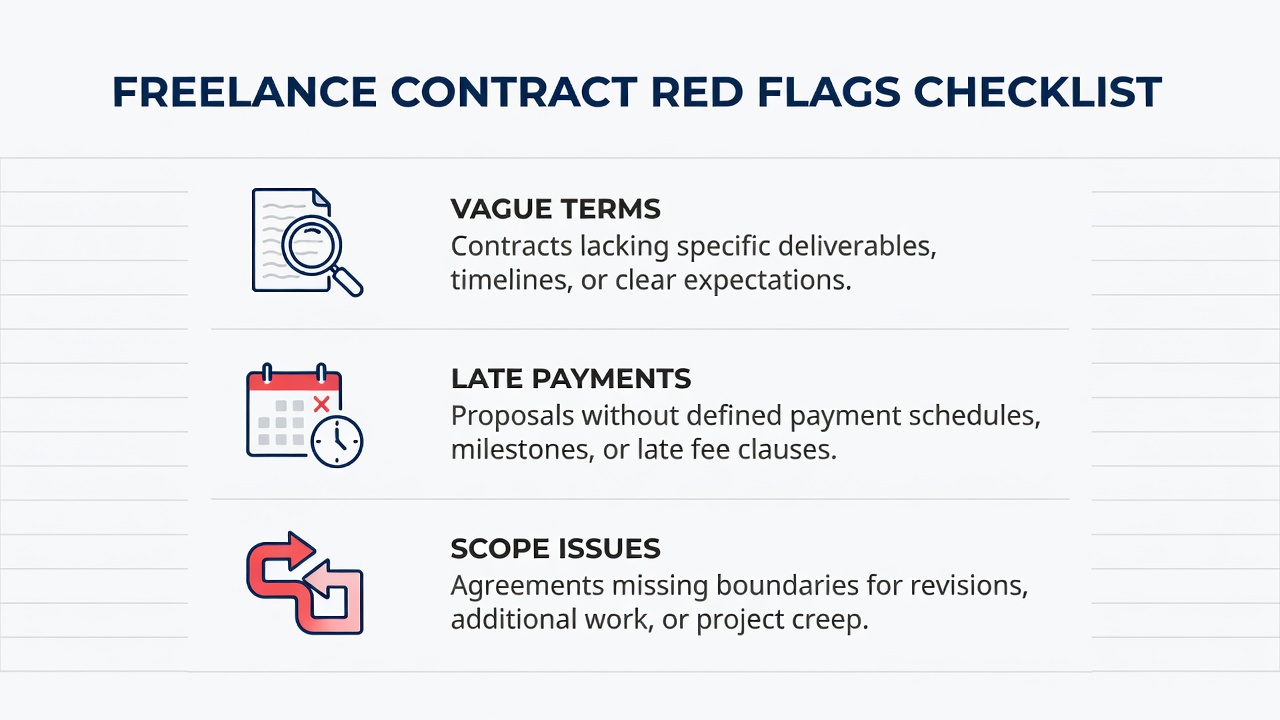
Identifying problematic elements early prevents future disputes. Common issues include vague deliverables, unrealistic timelines, or requests for unlimited revisions. Always review payment schedules and termination clauses carefully. For instance, a proposal that states "complete the project as needed" without defining milestones can lead to endless iterations. Experienced freelancers report that proposals demanding work on spec or free revisions beyond two rounds often signal clients who undervalue professional time. Another red flag appears when clients insist on non-disclosure agreements that extend indefinitely or attempt to claim ownership of all future ideas generated during the project. To handle these, create a personal checklist before signing: examine the scope section for measurable outcomes, verify that payment terms specify exact dates rather than vague "net 30" language, and confirm that intellectual property rights are clearly assigned only after full payment.
- Vague scope descriptions that leave room for interpretation
- Requests for work samples without compensation
- Payment terms exceeding 60 days without justification
- Clauses demanding exclusive rights without fair compensation
- Absence of a clear revision policy or dispute resolution process
Experienced freelancers recommend walking away from proposals that ignore these warning signs. In one real-world example, a digital nomad in Portugal declined a contract that required 24-hour response times without additional compensation, later securing a better agreement with defined communication windows.
Leveraging Market Data for Rate Justification
Supporting your rates with reliable data strengthens your position. Research industry benchmarks through professional networks and reports from established organizations. Present this evidence calmly during discussions to demonstrate value. Freelancers can reference aggregated salary surveys from government sources to show average compensation ranges for specific skills in remote roles. When a client questions your proposed fee, respond with phrases like "Based on current market data for similar remote positions, this rate aligns with industry standards for the deliverables outlined." This approach shifts the conversation from opinion to facts. Prepare a short slide or document summarizing relevant statistics before calls to maintain professionalism and authority.
Small Business Administration resources offer guidance on pricing strategies for independent contractors. Additionally, Bureau of Labor Statistics data provides up-to-date insights into occupational wages that can support your justifications.
Digital Tools for Contract Management
Modern platforms streamline agreement creation, tracking, and storage. Tools like DocuSign and HelloSign facilitate electronic signatures and version control. Integrating these with project management software ensures all parties remain aligned. Other popular options include PandaDoc for proposal templates that embed negotiation history and HoneyBook for client relationship management that logs all contract versions automatically. When selecting a tool, prioritize those offering audit trails and mobile access, since digital nomads frequently review documents on the go. Many freelancers combine these with cloud storage solutions to maintain organized records accessible from any location.
Handling Scope Creep and Payment Terms
Scope creep remains a frequent challenge. Use scripted responses such as: "I appreciate the additional request. To maintain quality, let's adjust the timeline and fee accordingly." For payment issues, propose milestone-based structures with clear due dates. A practical script for discussing scope creep might sound like this: "Thank you for the new ideas. These fall outside our original agreement, so I suggest we add them as a separate phase with an updated rate of X and an extension of two weeks. Does that work for your timeline?" Real-world examples from digital nomads show that addressing creep immediately in writing prevents misunderstandings later. On payment terms, always request a 30-50% deposit upfront for new clients and tie remaining payments to specific deliverables rather than calendar dates alone. This protects cash flow during long projects.
Beginner vs. Experienced Freelancer Approaches
Beginners often accept initial offers too quickly, while veterans prepare counter-proposals backed by data and past experiences. Beginners benefit from templates and mentorship, whereas experienced professionals leverage long-term relationships for flexibility. A beginner might respond to a low offer by immediately agreeing, whereas an experienced freelancer pauses, researches comparable rates, and returns with a polite counter that includes added value such as faster turnaround or extra deliverables. Over time, experienced freelancers develop intuition for when to compromise on minor points to secure larger concessions elsewhere, such as trading a slightly lower rate for guaranteed monthly retainers.
Practical Negotiation Checklists
- Review all proposal details before responding
- Prepare alternative solutions for common objections
- Document every agreement in writing
- Follow up within 48 hours of verbal discussions
- Include a kill fee clause for early termination
- Test contract language with a peer or mentor before signing
Frequently Asked Questions
How do I respond to lowball offers?
Politely counter with market-supported rates and emphasize your unique expertise. Provide specific examples of past results that justify your pricing.
What if a client pushes for unlimited revisions?
Define a set number of rounds in the contract and charge extra for additional changes. Offer a tiered pricing model where extra revisions come at a premium rate.
Are non-compete clauses enforceable for freelancers?
Many jurisdictions limit these; consult local regulations via IRS guidelines on independent contractor status.
How should I handle late payments?
Include late fees in the contract and send polite reminders at 7, 14, and 21 days past due. Consider using automated invoicing tools to track receivables.
What digital tools help most with international contracts?
Platforms that support multi-currency payments and localized tax forms reduce friction when working across borders.
Mastering these skills leads to stronger client relationships and sustainable income. Start applying these tactics in your next proposal to see immediate improvements. Consistent practice with the scripts and checklists outlined above will transform how you approach every remote contract negotiation in 2026 and beyond.


No comments yet. Be the first!