 Jobboy

Introduction: Building Economic Resilience in 2026
As global markets continue evolving, solo remote freelancers face unique challenges in maintaining stable income amid shifting economic conditions. This guide explores practical methods to create financial buffers, diversify revenue streams, and adapt effectively to 2026 realities. From client diversification to emergency fund strategies, these approaches help protect against volatility while fostering long-term stability. Economic uncertainty can strike suddenly through inflation spikes, platform policy changes, or client budget cuts, making proactive planning essential for anyone operating independently.
Understanding 2026 Economic Shifts for Freelancers
Economic forecasts indicate continued emphasis on remote work alongside potential inflation pressures and platform algorithm changes. Freelancers must move beyond single income sources to create layered financial protections. Diversification reduces dependency on any one client or platform, providing a safety net during downturns. Monitoring indicators from authoritative sources such as the Bureau of Labor Statistics helps anticipate trends in employment and pricing. In addition, understanding broader global patterns from institutions like the Federal Reserve allows freelancers to adjust strategies before disruptions occur.
Client Diversification Tactics
Concentrating on one or two clients creates vulnerability. Effective tactics include targeting clients across industries, geographies, and project types. Start by auditing your current client base and identifying gaps. Aim to secure work from at least five distinct sources. Use professional networks and targeted outreach to expand reach without overextending capacity. Consider niching your services in complementary areas to attract varied prospects while maintaining expertise depth. Attend virtual industry events and maintain an active LinkedIn presence to uncover opportunities in emerging sectors.
Step-by-Step: Negotiating Retainers
- Assess your average monthly earnings and identify recurring needs clients may have.
- Propose retainers covering ongoing tasks like content updates or maintenance, emphasizing mutual benefits such as priority access and predictable budgeting for both parties.
- Include clear deliverables, timelines, and renewal clauses in proposals to set expectations upfront.
- Follow up with performance metrics to justify ongoing agreements and demonstrate value over time.
- Review and adjust retainer terms quarterly based on workload and market conditions.
Emergency Fund Building with Real Freelancer Case Studies
Creating an emergency fund tailored to irregular income is essential. Aim for six to twelve months of essential expenses saved in accessible accounts. Consider the case of Maria, a graphic designer who built her fund by allocating 20% of every project payment over 18 months, reaching her target after consistent deposits despite variable project sizes. Similarly, developer Alex maintained stability during a platform outage by relying on his diversified savings after losing two major clients simultaneously; he used the buffer to cover living costs while securing new contracts. Another example involves content strategist Priya, who combined freelance income with side digital sales to accelerate fund growth during a slow quarter. These examples demonstrate how consistent small contributions compound into meaningful security. Track progress monthly and adjust based on income fluctuations to stay motivated.
Platform Risk Mitigation Strategies
Over-reliance on marketplaces exposes freelancers to sudden policy or algorithm changes. Mitigation involves building direct client relationships alongside platform use. Maintain an independent website with portfolio and contact forms. Export client data regularly and nurture relationships through email newsletters or direct outreach. Create a personal brand site that showcases case studies and testimonials to attract inbound leads. When using platforms, treat them as lead generators rather than primary revenue sources, and always have offline contracts ready for repeat clients.
Tracking Expenses: Step-by-Step Actions
Accurate expense tracking forms the foundation of financial planning. Begin by categorizing all business costs such as software subscriptions, internet, and equipment. Use dedicated apps or manual logs to record every transaction with dates and categories. Review weekly to identify overspending areas and optimize for tax deductions. Integrate receipt scanning tools to reduce manual entry errors. At month-end, reconcile accounts and project future expenses based on historical data. This disciplined approach reveals patterns that support better decision-making during lean periods.
Creating Backup Revenue Sources Like Digital Products
Digital products offer passive income potential. Examples include e-books, templates, online courses, or stock assets. Start with one product based on your expertise, such as a Notion template pack for project management or a downloadable guide on client onboarding. Develop the product once and sell repeatedly through platforms like Etsy or your own site. Promote through your existing client network and social channels. This creates recurring revenue that operates independently of active client work. Update products periodically based on user feedback to maintain relevance and encourage repeat purchases.
Comparing Airtable Versus Spreadsheets for Resilience Planning
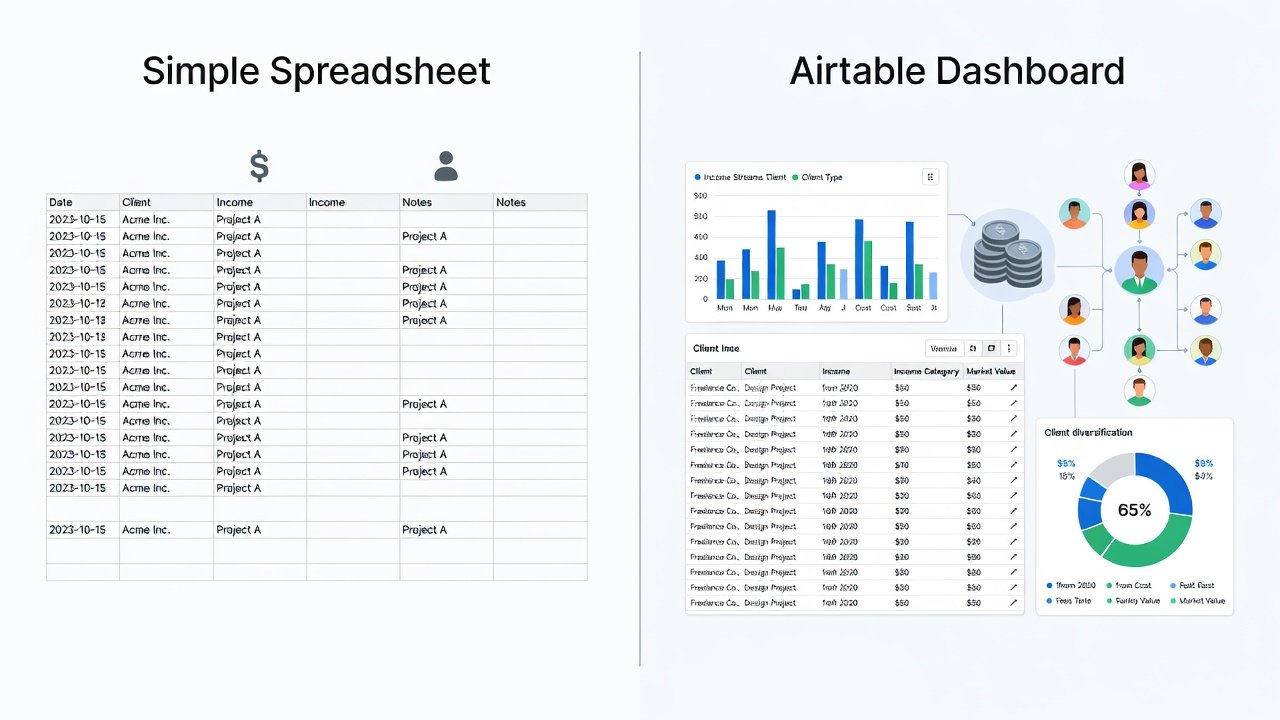
Choosing the right tool impacts planning efficiency. Spreadsheets offer simplicity and zero cost for basic tracking of income, expenses, and goals. They suit freelancers comfortable with formulas and manual updates, allowing quick customization for personal metrics like monthly diversification scores. Airtable provides relational databases, automation, and visual interfaces ideal for managing complex client pipelines or project timelines. Its templates support resilience tracking like client diversification metrics and automated reminders for fund contributions. For solo users, spreadsheets may suffice initially, while Airtable scales better as operations grow or when collaboration with accountants becomes necessary. Evaluate based on your technical comfort and need for collaboration features. Many freelancers begin with spreadsheets and migrate to Airtable once they require advanced filtering or integrations with calendars and email tools.
Adapting to Inflation and Market Volatility
Inflation affects purchasing power and client budgets alike. Review service rates annually and communicate value clearly when proposing increases. Build buffers by prioritizing high-value clients and reducing non-essential expenses. Diversify into inflation-resistant offerings such as evergreen digital products. Maintain flexibility in contracts to accommodate cost adjustments without losing relationships.
FAQs on Handling Inflation and Client Loss Scenarios
How should freelancers adjust for inflation in 2026?
Regularly review and increase rates to match rising costs. Build buffers by prioritizing high-value clients and reducing non-essential expenses. Monitor economic indicators from sources like the Bureau of Labor Statistics to anticipate changes. Consider indexing certain retainer agreements to inflation benchmarks for automatic adjustments.
What immediate steps follow losing a major client?
Activate your emergency fund for essentials while accelerating outreach to prospects. Diversify immediately by pitching existing leads and reactivating past clients. Document lessons to refine future diversification efforts and update your marketing materials to reflect current expertise.
How many backup income streams should a freelancer maintain?
Most experts recommend at least two to three additional streams beyond primary client work. These can include digital products, affiliate partnerships, or teaching workshops to create layered protection against single-point failures.
Is it better to focus on one niche or diversify services broadly?
A balanced approach works best: deepen expertise in one core niche while offering adjacent services that allow entry into new client segments. This prevents over-specialization risks while still commanding premium rates.
Conclusion
Implementing these resilience strategies equips solo remote freelancers to navigate 2026 economic shifts confidently. Through diversification, disciplined fund building, and smart tool use, sustainable success becomes achievable regardless of external conditions. Consistent application of these tactics builds both financial security and professional adaptability over time.

No comments yet. Be the first!